Author: rfelix

  • 10 Key Types of Promotions to Boost Your Sales in 2025

    10 Key Types of Promotions to Boost Your Sales in 2025

    In a marketplace where customers are inundated with offers, generic sales banners have become digital background noise. The key to capturing attention and driving meaningful growth isn’t just about slashing prices; it’s about deploying the right promotion for the right audience at precisely the right moment. A well-executed strategy can turn a one-time buyer into a lifelong advocate, rescue a failing payment, or launch a new product with unstoppable momentum.

    This guide moves beyond theory to provide a practical playbook for modern marketing. We will break down 10 essential types of promotions, from classic BOGO offers to sophisticated loyalty nudges and high-urgency flash sales. For each type, you’ll find a clear definition, ideal use cases for DTC, SaaS, and publishing, and the specific performance metrics you need to track.

    We’ll also provide actionable implementation tips, including how to launch each campaign with a tool like LoudBar, ensuring your message not only reaches your audience but also inspires them to act. Whether you aim to boost immediate revenue, enhance customer loyalty, or increase user engagement, mastering these promotional tactics is critical. This roundup is your blueprint for creating high-impact campaigns that deliver measurable results and build lasting brand value.

    1. Discount and Sales Promotions

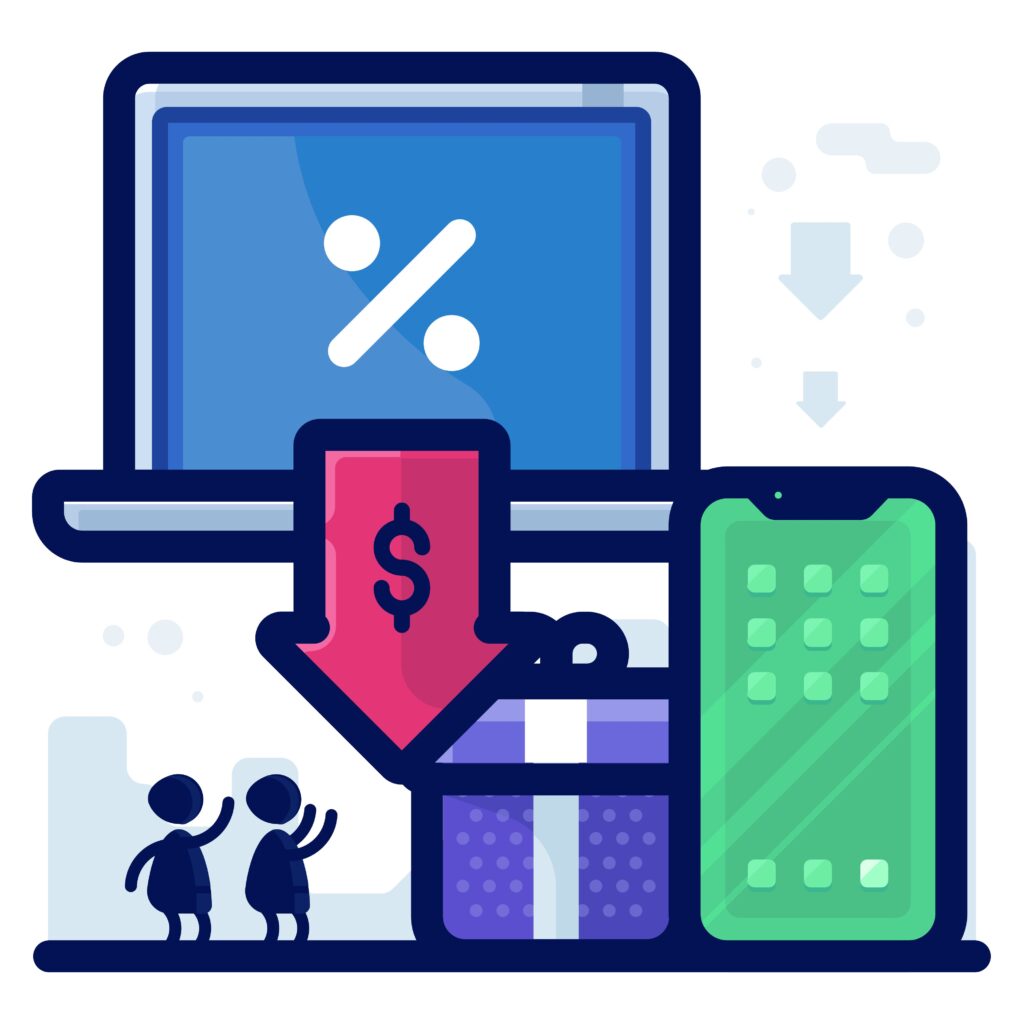
    Discount and sales promotions are a classic and highly effective marketing strategy, involving a direct price reduction on products or services. These are among the most recognizable types of promotions, offering an immediate and tangible incentive for customers to make a purchase by lowering the financial barrier. This can manifest as a percentage off, a specific dollar amount reduction, or a site-wide sales event.

    This approach is particularly powerful for driving short-term revenue, clearing out old inventory, and acquiring new customers who may have been hesitant at the original price point. Major retail events like Black Friday and end-of-season clearances by brands like Nike or Zara demonstrate the immense traffic-driving power of a well-timed sale.

    How to Implement This Promotion

    To maximize impact, it’s crucial to be strategic rather than reactive. Clearly define the goal of your discount, whether it’s increasing order value or moving specific products.

    • Create Urgency: Always attach a clear start and end date to your promotion. This scarcity encourages immediate action and prevents customers from delaying their purchase.
    • Segment Your Audience: Offer exclusive discounts to specific customer segments, such as first-time buyers or loyal customers, to make the offer feel more personal and valuable.
    • Use Tiered Discounts: Encourage larger purchases by offering progressively larger discounts. For example, offer 10% off orders over $50, 15% off over $75, and 20% off over $100.
    • Promote Across Channels: Announce your sale via email, social media, and on-site banners to ensure maximum visibility.

    Pro Tip: Running a discount using a tool like LoudBar allows you to display a prominent, non-intrusive banner or popup announcing the sale. You can set it to appear for specific user segments and include a countdown timer to amplify urgency, directly boosting conversion rates.

    2. Loyalty Programs and Rewards

    Loyalty programs are structured marketing efforts designed to encourage repeat business from existing customers. Rather than focusing on one-time transactions, these types of promotions build long-term relationships by offering rewards, points, or exclusive benefits for continued engagement. This strategy shifts the focus from customer acquisition to customer retention, significantly increasing customer lifetime value.

    This approach is invaluable for fostering brand advocacy and creating a loyal customer base that is less sensitive to price changes. Industry-defining examples like Sephora’s Beauty Insider or Starbucks Rewards demonstrate how a well-executed program can integrate into a customer’s lifestyle, creating a powerful incentive to choose one brand over its competitors.

    How to Implement This Promotion

    A successful loyalty program must be simple to understand and provide tangible value. The goal is to make customers feel appreciated and give them a compelling reason to return.

    • Make it Accessible: Ensure the process for earning and redeeming rewards is straightforward and transparent. Integrate the program into your mobile app or website for a seamless user experience.
    • Personalize the Experience: Use purchase history to offer tailored rewards and recommendations. This shows you understand your customers’ preferences and makes the program feel exclusive. Find out more about how you can use personalized marketing.
    • Offer Tiered Benefits: Create different membership levels with increasing perks. This gamifies the experience and motivates customers to spend more to unlock higher-tier benefits like early access to sales or exclusive products.
    • Communicate Clearly: Actively promote your program and remind members of their points balance and available rewards across email, social media, and on-site notifications.

    Pro Tip: Use a tool like LoudBar to create targeted announcements exclusively for logged-in loyalty members. You can display a personalized banner that shows their current points balance or notifies them of exclusive member-only offers, reinforcing the value of the program and driving repeat purchases.

    3. Coupons and Vouchers

    Coupons and vouchers function as redeemable certificates or digital codes that grant customers specific discounts or offers at the point of purchase. Unlike a general sale, this type of promotion requires a specific action from the customer, such as entering a code or presenting a voucher, which allows for precise tracking and targeted distribution. This method blends the incentive of a discount with enhanced measurability.

    This approach is excellent for acquiring new customers through specific campaigns, re-engaging past purchasers, and measuring the ROI of different marketing channels. Classic examples range from Procter & Gamble’s newspaper inserts to modern digital codes from platforms like Groupon or RetailMeNot. For more detailed strategies on this promotional type, consider exploring resources focused on coupons.

    How to Implement This Promotion

    Effective coupon strategies focus on targeted delivery and clear redemption paths to drive desired actions without heavily discounting your entire catalog.

    • Offer Unique Codes: Use single-use codes for specific customer segments (e.g., new subscribers, abandoned cart recovery) to prevent a code from being shared widely and overused.
    • Set Clear Conditions: Attach conditions like a minimum purchase value or product-specific limitations to protect your profit margins and guide customer behavior.
    • Optimize for Mobile: Ensure digital coupons are easy to copy and apply on mobile devices, as a significant portion of online shopping happens on smartphones.
    • Track Redemption Rates: Monitor which coupons are being used and through which channels. This data is invaluable for understanding customer preferences and campaign effectiveness.

    Pro Tip: Use LoudBar to deliver targeted coupon codes in a top bar or popup. You can trigger the offer based on user behavior, such as exit-intent or time on page, and set the code to be copied with a single click, making it frictionless for customers to apply at checkout.

    4. Buy One Get One (BOGO) Offers

    Buy One Get One (BOGO) offers are a compelling promotional strategy where a customer receives a second item for free or at a reduced price upon purchasing the first item at its full price. This tactic creates an irresistible sense of value, making customers feel like they’re getting a significant deal, which can dramatically increase the perceived worth of their purchase.

    This type of promotion is exceptionally effective for moving slow-selling inventory, introducing new products, or simply boosting average order value. For example, a shoe store might run a seasonal BOGO sale on sandals to clear stock before winter, or a beauty brand could offer a BOGO deal to encourage trial of a new lipstick shade. The key is the high perceived value that motivates immediate action.

    How to Implement This Promotion

    A successful BOGO campaign requires careful planning to ensure profitability while delighting customers. The goal is to increase sales volume without heavily damaging your profit margins on popular items.

    • Pair High-Margin Items: To protect your bottom line, pair a high-margin product as the “buy one” item with a lower-cost “get one” item.
    • Move Excess Inventory: Use BOGO offers to clear out seasonal or overstocked products. This turns potential losses into a revenue-generating marketing event.
    • Create Product Bundles: Offer a BOGO deal on complementary items, like “Buy a shampoo, get a conditioner free,” to encourage customers to try related products.
    • Set Clear Terms: Clearly state the rules. Is it “Buy One Get One Free” or “Buy One Get One 50% Off”? Define which specific items qualify for the promotion.

    Pro Tip: When launching a BOGO offer, use a tool like LoudBar to create an attention-grabbing top bar or modal. You can announce “BOGO Event Ends Soon!” and link directly to the eligible products page, ensuring visitors don’t miss out on one of the most effective types of promotions.

    5. Seasonal and Holiday Promotions

    Seasonal and holiday promotions are time-sensitive campaigns strategically aligned with holidays, seasons, or cultural events. These types of promotions tap into the heightened consumer spending and specific purchasing behaviors that occur during these periods, creating a natural and relevant reason for customers to engage with your brand.

    This approach is incredibly effective for capturing a share of predictable revenue spikes throughout the year. From massive retail events like Black Friday and Cyber Monday to themed campaigns like Valentine’s Day gift guides or “Back-to-School” essentials, seasonal promotions create a sense of occasion and urgency that drives significant traffic and sales.

    How to Implement This Promotion

    Successful seasonal campaigns require proactive planning and creativity, not just a last-minute offer. Align your promotion with the spirit of the occasion to create a more authentic connection with your audience.

    • Plan in Advance: Begin planning your campaigns at least 3-6 months ahead. This gives you ample time to prepare inventory, create themed marketing assets, and schedule your promotional calendar.
    • Create Themed Offers: Go beyond a simple discount. Develop holiday-specific bundles, limited-edition products, or themed gift guides that resonate with the season’s intent.
    • Build Anticipation: Use email and social media to tease your upcoming holiday sale. Offer early-bird access or exclusive previews to your most loyal subscribers to build excitement and spread out traffic.
    • Leverage Urgency: Emphasize the limited-time nature of the promotion with clear start and end dates. Use countdown timers on your website and in your marketing messages.

    Pro Tip: Use LoudBar to launch a themed notification bar for your seasonal event. You can schedule it to appear during your promotional window, customize its design with holiday colors, and include a countdown timer to maximize urgency and ensure every visitor knows about your special offer.

    6. Bundle Promotions and Product Packaging

    Bundle promotions involve combining multiple products or services into a single package offered at a special price. This strategy is designed to increase the perceived value for the customer, encouraging them to purchase more than they might have initially intended. By packaging items together, brands can effectively raise their average order value (AOV) and introduce customers to a wider range of their product catalog.

    This tactic is extremely versatile and is used across many industries. Think of Microsoft’s Office 365 suite, Sephora’s curated beauty gift sets, or fast-food value meals. Bundles are powerful because they simplify the purchasing decision while offering a clear value proposition, making them one of the most effective types of promotions for upselling customers and moving slower-selling inventory alongside popular items.

    How to Implement This Promotion

    Successful bundling is about more than just grouping random products; it requires a thoughtful approach to curation and pricing to create an irresistible offer.

    • Create Complementary Pairings: Group products that logically go together, such as a gaming console with a popular game or a shampoo with its matching conditioner.
    • Highlight the Savings: Clearly display the total value of the items if purchased separately versus the discounted bundle price. This transparency makes the value proposition undeniable.
    • Offer Tiered Bundles: Provide a few bundle options at different price points, like a “Starter Kit” and a “Deluxe Kit,” to appeal to a broader range of budgets and needs.
    • Use Themed or Seasonal Bundles: Create limited-time bundles around holidays, seasons, or specific themes like a “Summer Skincare Essentials” kit to drive urgency and relevance.

    Pro Tip: Use a tool like LoudBar to announce your new product bundles with an eye-catching banner. You can set it to appear on specific product pages where a customer might be considering a single item, nudging them toward the higher-value bundle with a clear call-to-action.

    7. Referral and Word-of-Mouth Promotions

    Referral and word-of-mouth promotions are incentive-based programs that turn your existing customer base into a powerful marketing engine. They encourage satisfied customers to recommend your products or services to friends and family, leveraging trusted personal relationships to acquire new leads. This strategy builds on social proof, resulting in high-quality customer acquisition at a lower cost than many traditional advertising channels.

    This method is exceptionally effective because it harnesses the most powerful form of marketing: a genuine recommendation from a trusted source. Tech giants like Dropbox, which famously grew by offering extra storage for referrals, and fintech innovators like Revolut, built their initial user bases on the back of compelling “give-get” referral offers.

    How to Implement This Promotion

    A successful referral program must be simple to use and rewarding for both the referrer and the new customer. The goal is to make sharing feel effortless and beneficial.

    • Offer Dual-Sided Incentives: Reward both the existing customer for making the referral and the new customer for signing up. For example, “Give $10, Get $10.”
    • Make Sharing Effortless: Provide a unique, easily shareable link or code. Integrate social sharing buttons and offer pre-written messages to remove friction.
    • Provide Clear Tracking: Create a dedicated dashboard where customers can see the status of their referrals, track their rewards, and access their sharing link.
    • Promote the Program: Don’t just launch a referral program; actively promote it via email, in-app messages, and post-purchase notifications when customers are most satisfied.

    Pro Tip: Use a tool like LoudBar to create targeted announcements promoting your referral program. You can display a persistent banner to logged-in customers, reminding them of the rewards they can earn by inviting friends, or trigger a popup after a successful purchase, capitalizing on their positive experience.

    8. Contest and Sweepstakes Promotions

    Contest and sweepstakes promotions are interactive marketing campaigns that leverage games of chance or skill to drive customer participation. These promotions excel at generating excitement and increasing brand awareness by offering desirable prizes in exchange for engagement. Participants typically provide contact information or perform a specific action, such as sharing a post, to enter.

    This strategy is highly effective for rapidly growing an email list, boosting social media following, and collecting valuable user-generated content. Iconic examples include McDonald’s Monopoly sweepstakes and the countless Instagram photo contests that use branded hashtags to create a groundswell of buzz and organic marketing content. This is one of the most powerful types of promotions for building community.

    How to Implement This Promotion

    A successful contest requires clear rules, an attractive prize, and a strong promotional strategy. The goal is to make participation easy and exciting.

    • Define Clear Rules: Ensure your terms and conditions are transparent and comply with all local and national laws regarding contests and sweepstakes. This builds trust and avoids legal issues.
    • Keep Entry Simple: Minimize friction. A simple email signup or social media follow is often more effective than a complex, multi-step entry process.
    • Offer a Relevant Prize: The prize should be highly desirable to your target audience. A generic prize attracts low-quality leads, while a brand-relevant prize attracts potential customers.
    • Promote Heavily: Use all your channels, from email to social media, to announce the contest. Encourage sharing by offering bonus entries for referrals.

    Pro Tip: Announce your contest using a LoudBar banner to capture the attention of every website visitor. You can link directly to the entry page and use an eye-catching design to maximize participation and improve overall website engagement.

    9. Flash Sales and Limited-Time Offers

    Flash sales are high-intensity, time-sensitive promotional events offering significant discounts for an extremely limited period, typically lasting just a few hours to a couple of days. These types of promotions are engineered to create a powerful sense of urgency and FOMO (fear of missing out), compelling customers to make rapid purchasing decisions and driving massive, short-term traffic spikes.

    This tactic is perfect for clearing inventory quickly, acquiring a burst of new customers, or re-engaging a dormant email list. E-commerce giants like Amazon with their “Lightning Deals” and daily deal sites like Woot.com have perfected this model, proving its effectiveness in generating immediate revenue and excitement around a brand.

    How to Implement This Promotion

    A successful flash sale requires careful planning to handle the surge in activity and maximize conversions. The key is to build anticipation and make the checkout process seamless.

    • Build Anticipation: Promote the sale heavily before it starts. Use email and social media to tease the products and announce the exact start time to your audience.
    • Emphasize Scarcity: Clearly display countdown timers and stock level indicators (“Only 5 left!”) on product and promotional pages to amplify urgency.
    • Prepare Your Site: Ensure your website or app server can handle a significant increase in traffic. A site crash during a flash sale can be disastrous for sales and brand reputation.
    • Segment and Remind: Send targeted reminder emails to subscribers who showed interest, and notify them once the sale is live and again before it ends.

    Pro Tip: Use a tool like LoudBar to announce your flash sale with a site-wide banner featuring a countdown timer. This keeps the offer top-of-mind for every visitor and is a key tactic in learning how to increase website conversion rate during high-stakes events.

    10. Influencer and Brand Ambassador Partnerships

    Influencer and brand ambassador partnerships are a powerful promotional strategy that leverages the trust and reach of influential individuals to promote products to their dedicated audiences. This method relies on sponsored content, endorsements, and authentic product placements to build brand credibility and drive sales through a trusted voice. Unlike traditional advertising, it taps into an existing relationship between the creator and their followers.

    This approach is highly effective for reaching niche demographics, building social proof, and driving authentic conversations around your brand. Iconic examples include Daniel Wellington’s watch ambassador program, which fueled its initial growth, and Fashion Nova’s extensive network of Instagram influencers. For a comprehensive perspective on this, including details on what a brand ambassador is and how they drive growth, consider exploring more specialized resources.

    How to Implement This Promotion

    Success in influencer marketing hinges on authenticity and strategic alignment rather than just follower count. A well-chosen partner can become a long-term advocate for your brand.

    • Prioritize Authentic Fit: Partner with influencers whose audience demographics and personal values align with your brand. An authentic connection leads to more genuine and effective endorsements.
    • Establish Clear Deliverables: Clearly define expectations, including the number of posts, content formats (e.g., Reels, Stories), and key messaging points, but allow for creative freedom.
    • Track Performance with Unique Codes: Provide each influencer with a unique discount code or trackable affiliate link. This allows you to measure the direct ROI of each partnership accurately.
    • Build Long-Term Relationships: Move beyond one-off campaigns by fostering long-term relationships with high-performing ambassadors. This builds deeper trust with their audience over time.

    Pro Tip: Use LoudBar to create a dedicated landing page or an on-site banner that welcomes traffic from an influencer’s campaign. You can trigger a special offer that automatically applies their unique discount code, creating a seamless and high-converting experience for their followers.

    Top 10 Promotion Types Comparison

    Promotion Type 🔄 Implementation Complexity ⚡ Resource Requirements 📊 Expected Outcomes 💡 Ideal Use Cases ⭐ Key Advantages
    Discount and Sales Promotions Low — simple price changes; POS/email updates Low–Medium — marketing, margin cost Short-term sales spike; inventory clearance Clearance, holiday events, price-sensitive buyers Immediate volume lift; easy to communicate
    Loyalty Programs and Rewards High — platform, tracking, program rules High — CRM, app, data analytics, ops Increased customer lifetime value; repeat purchases Subscription brands, frequent-purchase retailers Builds long-term retention; valuable customer data
    Coupons and Vouchers Medium — code management, distribution Low–Medium — printing/digital distribution Measurable conversions; targeted short-term uplift Trial offers, targeted segments, omnichannel promos Trackable and targeted; flexible formats
    Buy One Get One (BOGO) Offers Low–Medium — pricing rules & POS logic Medium — inventory & margin implications Higher AOV; moves slow inventory Apparel, F&B, beauty, clearance events Strong perceived value; simple for customers
    Seasonal and Holiday Promotions Medium–High — creative, timing, planning High — marketing spend, inventory prep Large, time-limited revenue peaks Holidays, back-to-school, seasonal product lines Emotional relevance; predictable traffic windows
    Bundle Promotions and Product Packaging Medium — SKU combos, pricing strategy Medium — packaging, mix of margins Increased AOV; moves complementary/slow SKUs Gift sets, cross-sell, subscriptions Perceived value; simplifies purchasing decisions
    Referral and Word-of-Mouth Promotions Medium — tracking & incentive design Low–Medium — referral rewards & tracking Lower CAC; high-quality referred customers SaaS, marketplaces, apps, local services Cost-effective acquisition; leverages trust
    Contest and Sweepstakes Promotions Medium–High — rules, legal compliance Low–Medium — prize costs, promotion Brand buzz; data capture; variable conversion Engagement drives, UGC campaigns, awareness High engagement and viral potential
    Flash Sales and Limited-Time Offers Medium — timing, inventory allocation High — tech capacity, heavy promotion Rapid traffic and sales spikes; thin margins E‑commerce, clearance, product drops Strong urgency/FOMO; quick inventory turn
    Influencer & Brand Ambassador Partnerships Medium — vetting, contracts, content Medium–High — fees, creative production Targeted reach; credibility; ROI varies DTC brands, product launches, lifestyle categories Authentic endorsements; access to engaged audiences

    Turning Your Promotion Strategy into a Conversion Machine

    Navigating the diverse landscape of promotional tactics can feel overwhelming, but understanding these various types of promotions is the foundational step toward building a resilient and profitable marketing strategy. We’ve explored everything from the immediate revenue boost of a well-timed flash sale to the long-term customer allegiance fostered by a loyalty program. The journey doesn’t end with simply knowing the difference between a BOGO offer and a referral campaign; it begins with strategic implementation.

    The most successful brands don’t just pick a promotion and hope for the best. They build a cohesive promotional calendar that strategically blends different approaches to achieve a spectrum of business objectives. One quarter might focus on customer acquisition using aggressive discount codes and influencer partnerships, while the next could prioritize retention with exclusive loyalty rewards and product bundles.

    From Strategy to Action: Key Takeaways

    The true power of a promotional strategy lies in its execution. To transform your plans into a high-performing conversion engine, focus on these core principles:

    • Align Promotions with Goals: Don’t run a promotion just for the sake of it. Define your objective first. Are you trying to liquidate old inventory, acquire new customers, increase average order value, or boost engagement? Your goal dictates the best promotional type to use. For example, a bundle deal is perfect for increasing AOV, while a contest excels at driving engagement.
    • Segment and Personalize: A one-size-fits-all approach rarely works. Use your customer data to deliver targeted offers. A new visitor might see a first-time purchase discount, while a loyal, repeat customer could be nudged with an exclusive reward or early access to a new product. Personalization makes customers feel valued and significantly increases conversion rates.
    • Visibility is Non-Negotiable: Your perfectly crafted promotion is useless if no one sees it. Effective communication is the bridge between your offer and the customer’s action. This means going beyond a simple email blast. On-site visibility is critical to capture attention at the peak moment of interest.

    Your Next Steps to Promotional Mastery

    Mastering these concepts transforms your marketing from a series of disjointed campaigns into a predictable system for growth. Your promotions become more than just discounts; they become strategic tools for shaping customer behavior, building brand loyalty, and driving sustainable revenue. The key is to start small, measure everything, and iterate based on the data.

    Select one or two promotional types from this guide that directly address your most pressing business need right now. Launch the campaign, but ensure you have a powerful tool to announce it and a clear method for tracking its performance. By continuously testing different offers, messaging, and channels, you’ll uncover what truly resonates with your audience, turning your promotional strategy into your most reliable asset.


    Ready to ensure your next promotion gets the attention it deserves? LoudBar makes it effortless to launch high-visibility announcement bars for any type of promotion, from flash sales to new product launches. Create your first attention-grabbing notification bar in minutes and watch your conversions climb. Get started with LoudBar today!

  • Create a High-Converting Website Testimonials Page

    Create a High-Converting Website Testimonials Page

    A website testimonials page is more than just a place to stick a few nice quotes. It’s a dedicated spot on your site that’s all about showcasing real-world success stories from your happy customers. Think of it as your digital trophy case, filled with the social proof that builds instant trust and nudges hesitant visitors toward becoming confident buyers.

    Why a Testimonials Page Is Your Secret Sales Weapon

    A person pointing at a screen showing positive customer feedback.

    Let’s stop thinking about a testimonials page as just a “nice-to-have.” It’s time to see it for what it truly is: your most effective salesperson. This page works around the clock, validating your promises and tackling one of the biggest hurdles in any sales funnel—purchase anxiety.

    When new visitors arrive, they’re naturally skeptical. They’ve been burned by marketing claims before. A powerful website testimonials page cuts right through that doubt. It puts a human face on your brand and offers unbiased proof from real people who got real results. It’s the online version of a trusted recommendation from a friend.

    Building Trust and Overcoming Skepticism

    Picture a new SaaS company trying to make a name for itself in a crowded market. Their software could be amazing, but without a proven track record, prospects will be wary. By featuring detailed stories from early adopters who solved specific, painful problems, they can dissolve that initial skepticism. The testimonials page proves their claims aren’t just marketing fluff.

    The same goes for an e-commerce brand. In a sea of competitors, customer stories make you stand out. A quote highlighting your lightning-fast shipping or incredible customer service carries far more weight than any flashy banner ad ever will. These stories build an emotional bridge and foster a genuine sense of community.

    A testimonials page isn’t just a collection of quotes. It’s a strategic tool designed to shorten the sales cycle by answering a prospect’s biggest unspoken question: “Can I trust this company to deliver on its promise?”

    The Data-Backed Impact on Conversions

    This isn’t just theory; the numbers tell the same story. Online reviews are a massive influence on buying decisions. In fact, studies show that roughly 2 out of 3 consumers are more likely to buy something after watching a testimonial video. Even just adding written customer testimonials to your key pages can lift conversion rates by 22% to 29%, depending on the industry. You can dig into more of this data in a detailed report on online review statistics.

    This is clear proof that social proof is one of the most reliable ways you can boost conversions. A dedicated page consolidates this powerful asset, making it simple for prospects to find the reassurance they need to finally click “Buy Now,” book that demo, or get in touch with your team.

    How to Get Testimonials People Actually Trust

    Hoping for glowing reviews to magically appear isn’t a strategy. If you want a testimonials page packed with powerful, authentic customer stories, you need to build a system for gathering them. It all boils down to asking the right people at the right time.

    Timing is everything. You want to catch customers when they’re riding high on a recent success. Did they just wrap up a huge project with your tool? Did your support team save the day? That’s your moment. Reach out while the positive emotions are still fresh and the details are sharp in their mind.

    Put Your Outreach on Autopilot

    One of the best ways to keep a steady stream of feedback coming in is by automating your requests. You can set up simple triggers at key moments in their journey with you.

    • After the Purchase: A week or two after their product arrives, an email asking “How’s it going?” can be a great way to start the conversation.
    • Following a Great Support Chat: If a customer gives your support team a 10/10 rating, that’s a perfect signal. A follow-up email asking if they’d share their experience can work wonders.
    • When They Hit a Milestone: For software products, this is a goldmine. When a user achieves a specific goal or reaches a key usage level, that’s an ideal time to ask for their story.

    This “set it and forget it” approach ensures you’re constantly building a library of potential testimonials without having to chase down every single one manually. For more hands-on advice, check out our guides on improving customer interaction.

    Don’t Be Afraid to Make a Personal Ask

    Automation is fantastic for volume, but your most compelling and detailed stories will almost always come from a direct, personal request. Think about your power users, your longest-standing clients, or the customers who have seen an unbelievable return on investment.

    These are the people you email directly. Don’t send a generic template. Mention their specific wins and explain why their story would be so valuable for others to hear. I like to frame it as an opportunity for them to highlight their own success, not just do us a favor. This approach is absolutely essential if you’re hoping for an in-depth case study or a video testimonial. For more in-depth guidance, explore these effective strategies to get customer reviews.

    The impact of this effort is massive. Customers spend 31% more with businesses that have excellent reviews, and 86% will actively avoid a company with negative ones. It’s a make-or-break element for building trust.

    Effective Testimonial Collection Methods

    Deciding how to ask is just as important as when. Different methods work better for different goals, from getting a quick star rating to sourcing a detailed video story. Here’s a quick breakdown of the most common approaches.

    Method Best For Pros Cons
    Email Automation Scaling feedback collection at key journey points. Low effort, consistent, and easy to track. Can feel impersonal; lower response rate.
    Personal Outreach Getting in-depth stories and video testimonials. High-quality, detailed responses; relationship-building. Time-consuming; doesn’t scale well.
    Review Platforms Building broad social proof on third-party sites. High credibility; great for SEO and brand visibility. Less control over content; requires monitoring.
    Surveys/Forms Gathering structured feedback and specific quotes. Easy for customers; you can guide the narrative. Can feel clinical; may lack authentic voice.
    Social Media Contests Generating user-generated content (UGC) and buzz. High engagement; fun for the community. Testimonials might be less focused on product value.

    Ultimately, a mix of these methods will give you the richest library of testimonials to work with, covering everything from quick soundbites to in-depth narratives.

    A great testimonial doesn’t just say your product is “good.” It tells a specific story of transformation—a problem solved, a metric achieved, or a workflow improved.

    Finally, whatever method you choose, make it dead simple for them to say yes. Give them a direct link, a simple form, or a few clear questions to get them started. The less friction, the more likely you are to get the kind of story-driven testimonial that truly sells.

    Designing a Testimonials Page That Builds Credibility

    A well-designed website testimonials page showing a grid of customer photos and quotes.

    (more…)

  • How to Split Test Landing Pages for Higher Conversions

    How to Split Test Landing Pages for Higher Conversions

    So, you want to get more out of your landing page? The best way I’ve found to do that is through split testing. It’s a straightforward concept: you pit two versions of your page against each other—an ‘A’ and a ‘B’ version—to see which one actually gets more people to act.

    This isn’t about guesswork or following the latest design trend. It’s the single most effective way to use real user data to improve your conversion rates.

    Why You Can’t Afford to Skip Split Testing

    A person with two speech bubbles above their head, one that says A and one that says B

    Forget what generic marketing blogs tell you. The only way to truly figure out what makes your specific audience click is to test your ideas with cold, hard data. When you build a structured split testing program, you stop gambling with your marketing budget and start making predictable, scientific improvements.

    This data-first mindset is essential for any business that’s serious about growth. Think about it: every visitor who hits your page and leaves without converting is a lost opportunity. If you aren’t testing, you’re just assuming your page is as good as it can be—and you’re almost certainly leaving money on the table.

    From Hunches to Hard Evidence

    I’ve seen tiny, almost insignificant tweaks produce massive results. A simple headline change, a different color on a call-to-action (CTA) button, or a new hero image can completely change how people behave on your page. Split testing is just the framework that lets you measure these changes accurately.

    The data backs this up. The median conversion rate for a landing page is around 6.6%, but that number swings wildly depending on the industry. E-commerce often sees a lower rate of 4.2%, while something like events can pull in an average of 12.6%. This just goes to show there’s no magic formula; you have to test what resonates with your audience.

    By constantly testing and refining, you turn your landing page from a static digital flyer into a dynamic, high-performance conversion engine. Every test gives you another piece of the puzzle, and those insights build on each other over time.

    What It Really Costs You to Not Test

    When you decide against split testing, you’re essentially running your marketing on gut feelings. That’s a risky and expensive way to operate, especially when you might be missing out on huge improvements in leads, sales, and ROI.

    Embracing a testing culture brings some clear wins:

    • More Conversions: You directly move the needle on the metrics that actually impact your bottom line.
    • Deeper Customer Insights: You stop guessing and start understanding what your audience truly wants and what their pain points are.
    • Lower Risk: You can make changes with confidence, knowing they’re backed by data, instead of rolling out expensive redesigns that might flop.

    If you’re ready for a deeper dive, check out this excellent guide to Boost Conversions with Split Test Landing Pages. At the end of the day, learning https://blog.loudbar.co/how-to-increase-website-conversion-rate/ starts with a commitment to methodical testing.

    How to Build a Powerful Testing Hypothesis

    Every truly successful split test is won long before you ever launch a variant. Forget guesswork like “let’s change the button color” and hope for the best. The real wins come from a solid, data-backed hypothesis that gives your test purpose.

    Blue cartoon with hat and magnifying glass

    The best experiments are born from observation, not just a sudden spark of creativity. You need to dig into your existing data to find the real conversion roadblocks your visitors are hitting. This approach ensures every test you run is designed to teach you something valuable, whether it wins or loses.

    Start By Finding The Problem In Your Data

    Your first job is to play detective. Before you can propose a solution, you need to identify a specific, measurable problem in how users are interacting with your landing page. Don’t just glance at your overall conversion rate; you have to find the why behind the numbers.

    Where should you look for clues? Here are a few of my go-to sources for finding testing gold:

    • Website Analytics: Dive into your analytics platform. Look for pages with unusually high bounce rates or a steep drop-off at a particular stage in your conversion funnel. Is there one specific step where a huge chunk of your visitors just gives up?
    • Heatmaps and Session Recordings: These tools are fantastic for seeing your page through your users’ eyes. Heatmaps can show you that everyone is clicking on a non-clickable element, while session recordings might reveal people scrolling frantically up and down, looking for information they can’t find.
    • User Feedback and Support Tickets: Your customers are telling you what’s wrong—you just have to listen. Are you getting the same questions over and over? Those repetitive support tickets are often a direct signal that your landing page messaging is unclear or your user experience is confusing.

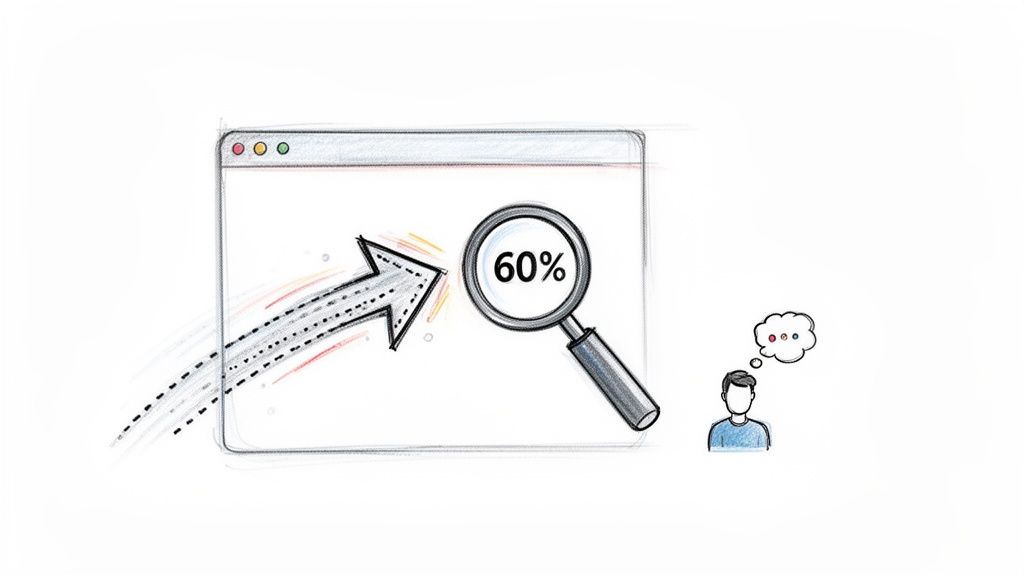
    Let’s say your analytics show that 60% of visitors abandon your five-field signup form. That’s a clear problem. A potential solution could be to slash it down to just two fields: name and email. The prediction? You might aim to see your conversion rate jump from 3% to 5%. This is the kind of problem-solution-prediction thinking that leads to impactful tests. For a deeper dive, there’s a great breakdown on building strong test foundations on leadpages.com.

    Frame Your Hypothesis With A “Because” Statement

    Once you’ve pinpointed a problem, it’s time to frame it as a formal hypothesis. A simple but incredibly effective framework is what I call the “If-Then-Because” statement. It forces you to connect your proposed change to a measurable outcome and, crucially, to justify your reasoning.

    If we make [this specific change], then [this key metric] will improve, because [this is the user behavior we are addressing].

    This simple structure is what separates a random guess from a strategic experiment. Below is a quick comparison showing how to level up your ideas into something truly testable.

    Hypothesis Framing Examples

    Weak Idea Data Observation (The Why) Strong Hypothesis
    “Let’s make the CTA button bigger.” Heatmaps show users scroll past the CTA without clicking it. The current button blends in with the background. If we increase the CTA button size by 50% and change its color to high-contrast orange, then we’ll see a 10% lift in clicks, because it will be more visually prominent and draw user attention.
    “We should add some testimonials.” Session recordings show users hesitating on the pricing section and scrolling up and down before leaving the page. If we add three customer testimonials directly below the hero section, then we predict a 15% increase in demo requests, because this provides immediate social proof to build trust before users evaluate the offer.
    “The headline is too long.” The bounce rate for this page is over 80%, and analytics show the average time on page is under 10 seconds. If we replace the current 20-word headline with a 7-word, benefit-driven one, then the bounce rate will decrease by 20%, because visitors will be able to understand our core value proposition instantly.

    See the difference? The strong hypotheses are precise, measurable, and directly tied to an observed user behavior. This level of clarity turns your split test from a shot in the dark into a calculated experiment designed to drive real learning and growth.

    Designing Landing Page Variants That Get Results

    Once you have a solid, data-backed hypothesis, it’s time for the fun part: creating a “challenger” landing page that could genuinely outperform your current version. This is where you translate all those insights about user behavior into actual design changes that aim to move the needle on conversions.

    The golden rule here is to isolate variables. It’s tempting to change the headline, tweak the button color, and swap the hero image all at once. But if you do that, you’ll have no idea which specific change caused the uplift (or the drop). Start with focused, high-impact changes that directly tackle the problem your hypothesis identified.

    Focus on High-Impact Page Elements

    While you can technically test almost anything, some parts of your landing page carry a lot more weight than others. To get the biggest bang for your buck, focus your first tests on the components that most directly influence a visitor’s decision.

    Here are a few of the most powerful places to start:

    • The Headline: This is your first impression. Test a benefit-driven headline (“Get More Leads in Less Time”) against one that’s more feature-focused (“Our Software Uses AI Automation”). See which one hooks them.
    • Call-to-Action (CTA): This is the final step before conversion. Play with the button copy (“Get Started Free” vs. “Create Your Account”), its color (is it popping off the page?), and its placement.
    • Hero Section Media: The main image or video immediately sets the tone. You could test a clean product screenshot against a photo of a happy customer, or see if a short explainer video beats a static image.
    • Social Proof: Nothing builds trust like seeing that others have already found success. Pit a row of impressive client logos against a single, compelling video testimonial. Which one feels more authentic to your audience?

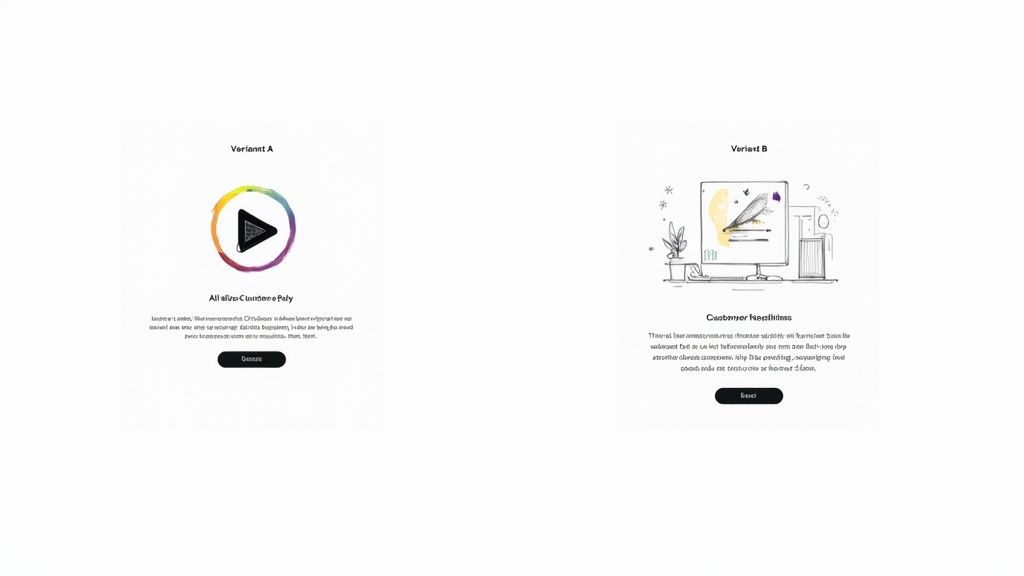
    The image below is a fantastic example of testing two completely different hero section concepts to see what truly connects with visitors.

    Two split test landing page variants showing video player design versus customer headlines illustration with call-to-action buttons

    Here, a video-centric design is tested against a more traditional headline-and-illustration layout. They’re both chasing the same goal, but they’re using very different psychological triggers to get there.

    Testing Page Layout and Form Design

    Beyond tweaking individual elements, sometimes the entire structure of your page needs a shake-up. A more radical redesign can help you test a fundamentally different approach to the user’s journey.

    For instance, you could test a long-form, single-column sales page against a more compact, multi-column layout for a B2B service. The question is, which format does a better job of guiding the user toward the conversion goal?

    Form design is another area where layout is king. One study I’ve seen compared a horizontal form bar to a vertical one. The vertical layout pulled in a 0.32% conversion rate, while the horizontal one only managed 0.23%. That small tweak delivered a 52% improvement in performance—proof that layout is a powerful lever. You can check out more landing page testing results to see just how much these kinds of changes can matter.

    Remember, the goal of designing a variant isn’t just to make something that looks different—it’s to create an experience that behaves differently in a way that helps the user achieve their goal more easily.

    At the end of the day, your variant design should flow directly from your hypothesis. Every change needs a clear “why” behind it. For more ideas on how design choices influence conversions, feel free to explore our articles on improving user experience. By always tying your design decisions back to observed user behavior, you guarantee that every split test is a valuable learning opportunity, win or lose.

    Running Your Split Test Without Technical Mishaps

    A brilliant hypothesis is worthless if the test itself is technically flawed. I’ve seen it happen too many times: a sloppy setup corrupts the data, wastes weeks of traffic, and sends the team chasing phantom results. Getting the mechanics right from the get-go is the only way to ensure you can actually trust your findings.

    Thankfully, you don’t have to be a developer to get this right. Most modern testing platforms handle the heavy lifting for you, especially the critical task of randomizing traffic. You need to be certain your tool is delivering a truly random 50/50 split. If it isn’t, you’re introducing a bias that invalidates everything before you even start.

    First Things First: Calculate Your Sample Size

    Before you even dream of launching your test, you have to know what your target is. How many people need to see your pages, and how many conversions do you need to count, before you can confidently call a winner?

    Launching a test without this number is like flying blind. You might see one version pull ahead after a couple of days and be tempted to stop the test, but that’s a classic rookie mistake.

    You’ll need an A/B test sample size calculator to figure this out. You’ll plug in a few numbers:

    • Baseline Conversion Rate: This is just your current landing page’s conversion rate.
    • Minimum Detectable Effect: What’s the smallest lift you care about? Are you looking for a 10% increase or something more dramatic?
    • Statistical Significance: This is your confidence level. The industry standard is 95%, and you should stick to it.

    This simple calculation is your defense against making decisions based on random chance. Early leads are often just statistical noise, not a real signal.

    If you remember one thing, make it this: be patient. Ending a test prematurely because one variation is “winning” is the single biggest—and most destructive—mistake in A/B testing. You have to let the test run until it hits the sample size you calculated. No exceptions.

    How Long Should You Run the Test?

    While hitting your sample size is the primary goal, the duration of the test also matters. You need to run it long enough to account for the natural ebbs and flows of user behavior. Someone visiting your site on a Tuesday morning might behave very differently than someone browsing on a Saturday night.

    As a general rule, aim to run your test for at least one full business cycle. For most businesses, this means one or two full weeks. This duration helps average out any weirdness from specific days of the week, giving you a much more realistic picture of performance.

    Also, be aware of what else is going on in your business. Kicking off a split test right in the middle of a massive Black Friday sale or a viral social media campaign is a recipe for disaster. Those events will send unusual, highly-motivated traffic to your page and completely pollute your test data. Unless the promotion is what you’re testing, try to isolate your experiments from major marketing pushes. This way, you’ll know your results are from your changes, not a temporary traffic spike.

    How to Analyze Your Results and Declare a Winner

    The test is over, the data is in, and now comes the moment of truth. This is where you turn all that hard work into real, measurable improvements. But I’ve seen it time and again—this is also where a lot of well-intentioned efforts fall apart.

    Picking a winner isn’t as simple as just pointing to the variant with the higher conversion rate. You need to make a statistically sound decision that you can count on to boost your landing page’s performance for the long haul.

    Teamwork building success

    It’s tempting to glance at the main numbers and call it a day, but the real gold is usually buried a little deeper. You have to understand the confidence behind your results.

    Get a Handle on Statistical Significance

    If there’s one concept you absolutely need to nail when you split test a landing page, it’s statistical significance. This is the metric that tells you how likely it is that your results happened because of the changes you made, not just random luck. It’s basically a confidence score for your entire experiment.

    In the world of testing, the gold standard for declaring a winner is a 95% confidence level. What this means is you can be 95% sure that the difference you’re seeing between your control and your variant is the real deal and will happen again.

    If your testing tool shows a confidence level below that magic number, you don’t have a true winner. It doesn’t matter if one version looks like it’s pulling ahead.

    A test result with 80% confidence might feel promising, but think about it this way: there’s still a one-in-five chance it’s a total fluke. You wouldn’t want to build a business strategy on those odds. Stick to the 95% rule to make sure your changes are built on solid ground.

    Dig Deeper: Segment Your Results

    Just looking at the overall conversion rate is only scratching the surface. The real magic, the kind that leads to breakthroughs, happens when you start segmenting your results. You need to understand how different groups of people reacted to your changes. This is how you uncover those powerful, nuanced insights that a bird’s-eye view will always miss.

    Start by slicing your data based on:

    • Device Type: Did your new, slick design kill it with mobile users but fall flat on desktop?
    • Traffic Source: How did visitors from your latest email campaign respond compared to people clicking your paid ads?
    • New vs. Returning Visitors: Does your bold new messaging resonate more with first-timers or with your loyal followers?

    This kind of granular analysis is where the game is won. For example, a test might show Version B winning by 10% overall. Good, but not great. But when you segment, you might discover it actually crushes it with mobile users by 25% while losing by 15% on desktop.

    Now that’s an insight you can act on. You can deploy the winning design just for mobile while keeping the original for desktop, maximizing your gains across the board. You can learn more about how segmentation clarifies test results on leadpages.com.

    Making the Final Call

    Once you’ve got a winner with at least 95% statistical confidence, it’s go-time. Push the winning variation live as the new control for all the relevant traffic segments.

    But don’t just pop the champagne and move on. The real power of testing is that your learnings fuel your next hypothesis. Your insights on conversion rate optimization are cumulative; every test you run should build on the knowledge you gained from the last one.

    And if you’re ready to look beyond basic split tests, there are some great resources on enhanced incrementally testing and A/B experiments that can offer even deeper insights.

    Common Landing Page Testing Mistakes to Avoid

    Even the most experienced optimizers trip over common pitfalls that can completely tank their test results. Running a clean, reliable split test involves more than just a clever hypothesis; you have to be vigilant about avoiding critical errors that will corrupt your data and point you in the wrong direction.

    These mistakes might seem minor on the surface, but they can easily waste weeks of valuable traffic and lead to disastrous business decisions. Knowing what they are ahead of time is the best way to protect your testing program from being built on a foundation of bad data.

    Testing Too Many Variables at Once

    It’s always tempting to try and fix everything at once. You want to change the headline, swap out the hero image, and rewrite the CTA button. While it might feel like you’re being efficient, you’re actually setting yourself up to learn absolutely nothing.

    If your new Frankenstein-page wins, you’ll have no clue why. Was it the powerful new headline? Or was it just the brighter button color?

    To run a meaningful A/B test, you have to isolate a single variable. This is the only way to know with certainty that your change was responsible for the change in performance. Real optimization is a game of inches—a series of small, proven gains, not a chaotic overhaul.

    Calling a Test Too Early

    This is probably the single most common—and most damaging—mistake I see. You launch a test, and two days in, your new variation is crushing it with a 20% higher conversion rate. The urge to declare victory, push the winner live, and pop the champagne is almost irresistible. But you have to fight it.

    Early results are often just statistical noise. A test isn’t done until it reaches its predetermined sample size and hits a statistical significance of at least 95%. If you stop before that, you’re basically just flipping a coin and letting random chance dictate your strategy.

    Patience is everything in good A/B testing. You have to let the test run its course, even when one variation is jumping ahead or falling behind. Trust the math, not your gut feeling.

    Ignoring Technical Pitfalls

    Your results are only as reliable as your technical setup. A few gremlins hiding behind the scenes can quietly sabotage your data without you ever knowing it. One of the most infamous culprits is the “flicker effect.”

    This is when the original page flashes on screen for a split second before the testing tool swaps in the variant. That brief, jarring flash can annoy visitors and negatively influence their behavior, unfairly biasing the results against your new version.

    A few other technical issues to keep an eye on:

    • Improper Cookie Handling: Make sure your tool correctly remembers which version a returning visitor has seen. A consistent experience is crucial for clean data.
    • Slow Page Load Speeds: If your variant takes longer to load than the control, you aren’t just testing a new design—you’re testing your visitors’ patience.

    By sidestepping these common blunders, you can run clean split tests on your landing page, trust that your data is accurate, and be confident that the insights you’re gathering are the real deal.

    Got Questions About Split Testing? We’ve Got Answers

    Even with the best plan, you’re bound to run into a few head-scratchers once you start testing your landing pages. It happens to everyone. Let’s walk through some of the most common questions that pop up, so you can keep your experiments on track and trust the data you’re collecting.

    How Long Should My Landing Page Test Run?

    There’s no one-size-fits-all answer here, but there are a couple of hard-and-fast rules.

    First, you need to run the test long enough to get a complete picture of your traffic patterns. Think in terms of a full business cycle, which for most companies is about one to two weeks. This helps average out the natural ups and downs you see in visitor behavior—after all, your B2B traffic on a Monday morning is probably a whole lot different than it is on a Friday afternoon.

    Even more critical, however, is hitting statistical significance. Before you launch anything, plug your numbers into an A/B test duration calculator. It’ll give you a solid estimate based on your page’s current conversion rate and the improvement you’re hoping to see.

    Whatever you do, never stop a test early. I can’t stress this enough. It’s tempting to call it when one variant shoots ahead, but those early results are often just statistical noise. Making a call based on a random fluke can send your whole strategy down the wrong path.

    What if My Test Results Are Inconclusive?

    Getting an “inconclusive” result feels like a letdown, but it’s not a failure. It’s actually a piece of valuable feedback. Most of the time, it simply means the change you tested wasn’t powerful enough to make a real difference to your visitors.

    Another possibility is that different segments of your audience reacted in opposite ways, essentially canceling each other out. This is where you get to do some real detective work. Dive into your analytics and segment the results. Did the new version work better for mobile users but worse for desktop? Did it resonate with visitors from paid ads but fall flat with your organic traffic?

    Use those insights to build a smarter, more targeted hypothesis for your next round of testing.

    Should I Test a Radical Redesign or Just Tweak Small Details?

    This is a classic debate, and the truth is, you need both in your optimization toolkit. The right approach really depends on your goals and how much risk you’re willing to take on.

    • Iterative Changes: Small, focused tests—like changing your button copy or swapping out a headline—are the bread and butter of continuous optimization. They’re low-risk and perfect for dialing in the performance of a page that’s already doing pretty well.
    • Radical Redesigns: If your current page is a serious underperformer, incremental tweaks might not be enough. Testing a completely different layout or value proposition is a high-risk, high-reward move designed to find a big breakthrough.

    The most sophisticated teams I’ve worked with do both. They’ll run a radical redesign to establish a new, higher-performing baseline, and then they’ll immediately follow up with a series of iterative tests to fine-tune that new winner.


    Ready to make sure your most important messages get seen? LoudBar helps you create unmissable, conversion-focused notification bars that break through banner blindness. Start grabbing your visitors’ attention today at https://loudbar.co.

  • Email Marketing And Lead Generation For Sustainable Growth

    Email Marketing And Lead Generation For Sustainable Growth

    Email marketing and lead generation are two sides of the same coin. Think of it as a conversation starter. You offer something genuinely useful—a free guide, a checklist, maybe a webinar—in exchange for an email address. From there, you use a series of well-timed, helpful emails to build trust and show how your product or service can solve their problems. It’s a process that carefully turns casual website visitors into people who are actually ready to buy.

    Building Your Lead Generation Foundation

    Great lead generation isn’t about tricking someone into handing over their email. It’s about starting a relationship based on real value. So, let’s forget about those generic, annoying pop-ups that everyone hates. The real goal is to build a system that naturally attracts your ideal customers by solving a problem for them right from the get-go. This foundation is what separates a list of disengaged subscribers from a community of loyal fans who actually want to hear from you.

    Digital marketing and social media icons on a white background

    This whole process kicks off with what we call a lead magnet. This is that irresistible, valuable resource you give away for free in exchange for an email. The quality of your lead magnet directly dictates the quality of your leads. A flimsy offer brings in people who couldn’t care less, but a high-value, problem-solving resource attracts people who are actively looking for what you sell.

    Designing Compelling Lead Magnets

    A truly effective lead magnet delivers a quick, immediate win for your audience. It needs to be specific, easy to consume, and directly tied to the solutions your business provides.

    We have to move beyond the tired “subscribe to our newsletter” plea. Instead, ask yourself: what tangible result can I deliver in just a few minutes?

    • Checklists and Worksheets: These are fantastic for breaking down a complex topic into simple, actionable steps. An SEO agency, for instance, could offer a “10-Point Website Audit Checklist.”
    • Templates: People love resources that save them time. Think a “Social Media Content Calendar Template” for marketers or a “Project Budget Template” for freelancers.
    • Exclusive Video Content: A short, punchy masterclass or a behind-the-scenes tutorial feels incredibly valuable and instantly positions you as a go-to expert.
    • Ebooks or Whitepapers: These are best for diving deep into a subject. They establish serious authority, but be warned—they must be packed with genuine insight to work.

    The core principle is simple: if your lead magnet solves a small problem effectively, your audience will trust you to solve their bigger problems later. This initial interaction sets the tone for the entire customer relationship.

    The trick is to match the lead magnet to your audience’s intent. Someone downloading a beginner’s guide is in a different mindset than someone requesting a pricing calculator. For a deeper dive into these strategies, check out a comprehensive guide to lead generation campaigns.

    To help you brainstorm, here are a few ideas that consistently get great results.

    High-Impact Lead Magnet Ideas

    Choosing the right lead magnet is all about matching the format to your audience’s needs and where they are in their journey. This table breaks down some of the most effective options to help you decide.

    Lead Magnet Type Best For Example Conversion Potential
    Checklist Breaking down complex tasks into simple, actionable steps. A “Pre-Launch Website Checklist” for developers. High
    Template Saving users time and effort with a pre-made structure. A “Monthly Budget Template” for a personal finance blog. Very High
    Ebook/Guide Establishing authority with an in-depth, comprehensive resource. A “Complete Guide to SaaS Marketing” for a B2B agency. Medium-High
    Webinar Engaging users who prefer visual learning and direct interaction. A live Q&A session on “Mastering Google Ads.” Very High
    Free Tool/Calculator Providing instant, personalized value and demonstrating utility. An “ROI Calculator” for a marketing software company. High
    Case Study Showcasing proven results and building social proof. A detailed breakdown of a successful client campaign. Medium

    Ultimately, the best lead magnet is one that gives your ideal customer a tangible win, making them eager to hear more from you.

    Strategic On-Site Lead Capture

    Once you’ve created a killer lead magnet, you need to present it on your site in a way that’s helpful, not disruptive. Where and when you ask for that email address is just as important as what you’re offering.

    Plastering a generic pop-up on every single page is a surefire way to annoy visitors and send your bounce rate through the roof. A smarter email marketing and lead generation strategy is far more effective.

    For instance, smart notification bars from a tool like LoudBar can announce a new resource without blocking the content a user is trying to read. Exit-intent pop-ups are another great option; they only appear when someone is about to leave your site, giving you one last chance to offer something valuable.

    Even better are behavior-triggered offers. If someone spends five minutes reading a blog post about project management, you can trigger a pop-up offering a highly relevant “Project Kickoff Checklist.” This feels helpful, not intrusive. We cover more of these techniques in our guide on how to increase website conversion rate.

    The data doesn’t lie. Email is a powerhouse for lead generation, with 89% of marketers citing it as their primary channel. For small and medium-sized businesses, 81% rely on email as their main customer acquisition method. It’s no wonder—building a quality email list can lead to a 760% increase in revenue. The proof is in the numbers.

    Crafting Emails That Actually Get Opened

    Building a huge email list is one thing, but it’s just a vanity metric if no one’s actually opening what you send. The real muscle in email marketing and lead generation comes from writing messages that your subscribers genuinely want to read. This isn’t about gimmicks; it’s about understanding the crowded inbox and earning that click, every single time.

    People interacting with technology

    This all starts the second someone signs up. That first touchpoint sets the precedent for the entire relationship. A killer welcome series is your chance to make a stellar first impression, showing them they made the right call and turning a new lead into an invested follower.

    The Anatomy of an Irresistible Email

    Before you can build a relationship, you have to get past the inbox preview. This is where the initial battle is won or lost, and it hinges on a few key pieces working together. Every element has to earn its keep.

    • Compelling Subject Lines: This is your headline. It has to be intriguing, spark curiosity, or scream “benefit!” A subject line like “Our New Products” is a one-way ticket to the trash folder. “Your Weekend Project Just Got Easier”? Now that makes a promise.
    • Intriguing Preview Text: This is the little snippet of text that follows the subject line. Don’t waste it! So many brands let it default to “View this email in your browser.” Instead, use it as a sub-headline to add more context and intrigue.
    • A Natural Call-to-Action (CTA): Your CTA shouldn’t feel like a command. It should feel like the obvious next step in the conversation you’re having. Frame it around the value they’ll get from clicking.

    Of course, even the most brilliant copy is worthless if it lands in spam. That’s why understanding email deliverability best practices is absolutely non-negotiable.

    The Power of the Welcome Series

    A welcome email isn’t just a formality; it’s your first real conversation. These emails consistently have the highest open rates—often topping 80%. Wasting that opportunity is a massive own-goal.

    A great welcome series should deliver the lead magnet they signed up for instantly. It should also introduce your brand’s personality, set expectations for what’s coming, and offer an immediate, valuable tip to start building goodwill right away.

    A great welcome series doesn’t just say “hello.” It says, “You made a smart choice, and here’s the immediate proof.” It’s the foundation of a long-term, trust-based relationship.

    For example, a simple but effective three-part welcome flow could look like this:

    1. Email 1 (Immediately): Deliver the goods! Send the lead magnet with a warm, personal welcome.
    2. Email 2 (Day 2): Share your brand’s origin story or a “quick win” tip related to their interest.
    3. Email 3 (Day 4): Gently introduce your core products or services as the solution, maybe framed within a customer success story.

    Mix Up Your Email Types to Keep People Hooked

    Blasting the same type of email to everyone is a surefire way to get ignored. To keep your audience engaged, your content needs variety and relevance. This is where knowing your audience pays off. If you’ve been collecting data on their interests, you can send messages that feel like they were written just for them. It’s worth exploring different methods of target audience segmentation to make your emails land with more impact.

    Try weaving these email types into your content calendar:

    • Personal Stories: People connect with people, not logos. Sharing a behind-the-scenes story, a personal failure, or a hard-won lesson creates a real bond.
    • Educational Content: Be their go-to expert. Send genuinely helpful how-to guides, industry deep dives, or curated resources. This proves you’re here to add value, not just to sell.
    • Benefit-Focused Messages: When you do talk about a product, focus on the transformation, not just the features. Instead of “Our software has a new dashboard,” try “Manage your entire workflow in half the time.”

    By rotating these approaches, you keep your content feeling fresh and give subscribers plenty of reasons to be excited when your name pops up in their inbox. This strategy is how you turn a lead generation tool into a thriving community.

    Building Your Automated Lead Nurturing Engine

    Okay, so you’ve got a steady stream of new subscribers coming in. Fantastic. But now the real work starts. This is where we move beyond simple lead capture and start building a sophisticated nurturing system that scales your efforts without chaining you to a desk 24/7.

    Smart automation is the engine that drives this whole process. It’s your secret weapon for building relationships and guiding leads toward becoming customers, all while you sleep.

    People engaged in digital marketing and communication activities

    This isn’t about blasting out robotic, one-size-fits-all messages. The magic of automation lies in smart segmentation. You have to divide your audience based on who they are and what they do, ensuring every email feels personal, timely, and genuinely helpful.

    The results speak for themselves. Proper automation in email marketing and lead generation can lead to a staggering 451% increase in qualified leads. It’s no wonder that 67% of marketers run automated drip campaigns. A huge 68.5% of them say the biggest benefit is better targeting, which is exactly how you turn a cold lead into a hot prospect. You can dig into more of these powerful email marketing statistics if you’re curious.

    The Art of Smart Segmentation

    Think of segmentation as breaking down your big email list into smaller, more focused groups. Instead of shouting the same message at everyone, you’re whispering the right message to the right people at the right time. This simple practice sends open rates, click-throughs, and conversions through the roof because the content is actually relevant.

    Here are a few of my favorite ways to segment an audience:

    • Behavioral Segmentation: This is all about grouping people based on their actions (or lack thereof). Did they visit your pricing page? Did they abandon their shopping cart? Are they a first-time buyer? Every one of these behaviors is a perfect opportunity for a targeted, automated follow-up.
    • Demographic Segmentation: This is the classic stuff—location, age, job title. An e-commerce brand, for example, could send a promotion for winter coats only to subscribers living in colder climates. Simple, but incredibly effective.
    • Stated Interests: Why guess when you can just ask? Use the information subscribers give you. If you run a food blog, ask new subscribers if they prefer vegan, gluten-free, or keto recipes, then send them exactly what they asked for.

    Think of segmentation as creating personalized pathways for your subscribers. A brand new lead who downloaded a beginner’s guide needs a completely different journey than a loyal customer who has bought from you five times. Automation is what makes managing all these individual journeys possible.

    Essential Automation Blueprints to Set Up Now

    Once your segments are defined, you can build automated workflows—often called drip campaigns or sequences—that trigger based on specific actions. These sequences become your always-on sales and relationship-building team.

    Here are three foundational workflows every single business should have in place.

    1. The Indispensable Welcome Sequence

    We touched on this earlier, but it’s worth repeating: this is your most important automation. It’s your one chance to make a great first impression, deliver that lead magnet they signed up for, and set the tone for your entire relationship.

    • Goal: Build trust and deliver instant value.
    • Trigger: A user subscribes to your list.
    • Example Flow:
      1. Email 1 (Instant): Deliver the lead magnet and a warm, personal welcome.
      2. Email 2 (2 days later): Share your brand’s story or a link to your most popular blog post.
      3. Email 3 (4 days later): Talk about a common problem your audience has and gently introduce how your product or service helps solve it.

    2. The Revenue-Saving Abandoned Cart Sequence

    For any e-commerce or SaaS business, this is a goldmine. The stats are wild—roughly 70% of online shopping carts get abandoned. That’s a massive pile of potential revenue just sitting there. A simple, automated reminder can claw back a huge chunk of those sales.

    • Goal: Remind users what they left behind and nudge them over the finish line.
    • Trigger: A user adds an item to their cart but doesn’t complete the purchase.
    • Example Flow:
      1. Email 1 (1 hour later): A simple, friendly reminder: “Did you forget something?”
      2. Email 2 (24 hours later): Amp up the value. Highlight the product’s benefits or include a glowing customer testimonial.
      3. Email 3 (48 hours later): Create a little urgency. A small, time-sensitive discount can work wonders. “Complete your order in the next 24 hours for 10% off.”

    3. The Win-Back Re-Engagement Campaign

    It’s natural. Over time, some subscribers will go cold. A re-engagement campaign is your strategy for waking them up. And if they don’t respond, it automatically cleans them from your list, which is crucial for keeping your email deliverability high.

    • Goal: Re-engage inactive subscribers or politely remove them from your active list.
    • Trigger: A subscriber hasn’t opened an email in, say, 90 days.
    • Example Flow:
      1. Email 1: A direct, friendly subject line like, “Is this goodbye?” Ask if they still want to hear from you with a simple one-click poll.
      2. Email 2: If they didn’t click, try one last time. Offer a compelling, exclusive discount or a super valuable resource as a final incentive to stay.
      3. Final Action: Still no response? Automatically unsubscribe them. It keeps your list healthy and your engagement metrics accurate.

    Putting these automated systems in place is how you build a scalable, effective email marketing program that truly nurtures leads—from that first flicker of curiosity all the way to becoming a loyal, paying customer.

    Measuring What Matters to Drive Growth

    An email marketing strategy isn’t something you can just set up and walk away from. Think of it as a living system that needs constant attention—you have to measure, test, and tweak it continuously. If you’re not looking at the right data, you’re just guessing. Let’s cut through the noise of email analytics and focus on the metrics that actually move the needle for your business.

    Digital marketing concept with megaphone and analytics

    It’s easy to get caught up in high open rates, but honestly, they don’t tell you the whole story. A good open rate means your subject lines are catchy, which is a great start. But on its own, it’s a vanity metric. It won’t tell you if your email actually convinced anyone to take the next step. To really understand what’s working, we have to dig deeper.

    Focusing on Actionable KPIs

    To see the real-world impact of your emails, you need to track Key Performance Indicators (KPIs) that are directly tied to your bottom line. These are the numbers that show you how people are really interacting with your content and progressing toward a sale.

    Here are the big ones I always keep my eye on:

    • Click-Through Rate (CTR): This is the percentage of people who clicked on at least one link in your email. A solid CTR tells you that your message and call-to-action were compelling enough to spark genuine interest.
    • Conversion Rate: This is the gold standard. It measures the percentage of people who not only clicked but also completed the desired action—like filling out a form, downloading your guide, or making a purchase. This is the ultimate proof that your email did its job.
    • List Growth Rate: This metric shows you how fast your email list is expanding. A healthy growth rate is a clear sign that your lead magnets and sign-up forms are hitting the mark with new prospects.
    • Unsubscribe Rate: Nobody likes to see people leave, but a low, steady unsubscribe rate is actually a good sign of a healthy, engaged list. If you see a sudden spike, it’s a red flag that something might be off with your email frequency, content, or targeting.

    Shifting your focus from open rates to conversion rates is the single most important mindset change you can make. It’s the difference between measuring attention and measuring results. One is interesting; the other builds your business.

    This focus on results is absolutely critical because the potential return is massive. The ROI from email marketing is legendary, often averaging between $36 and $42 for every single dollar spent. When you consider that 99% of users check their email every day, the opportunity is right there for the taking. You can dive into more of these powerful email marketing statistics to see just how big the opportunity is.

    Table: Essential Email Marketing KPIs To Track

    To get a clear picture of your performance, you need to know which metrics matter most. This table breaks down the essential KPIs, explaining what they measure, why they’re important, and what a good benchmark looks like.

    Metric (KPI) What It Measures Why It Matters Industry Benchmark
    Open Rate Percentage of recipients who opened your email. Indicates subject line effectiveness and brand recognition. A good starting point, but not a final measure of success. 15% – 25%
    Click-Through Rate (CTR) Percentage of recipients who clicked a link in your email. Shows how compelling your email copy, offer, and call-to-action are. A strong indicator of engagement. 2% – 5%
    Conversion Rate Percentage of recipients who completed a desired action (e.g., purchase, download). Directly measures the email’s ability to achieve its primary business goal. This is your most important metric. 1% – 3%
    Unsubscribe Rate Percentage of recipients who opted out of your email list. A high rate can signal issues with content relevance, frequency, or list quality. Below 0.5%
    List Growth Rate The rate at which your email list is growing over a period. Shows the effectiveness of your lead generation efforts and the overall health of your marketing funnel. Varies widely, but positive growth is key.

    These benchmarks can vary by industry, but they give you a solid starting point for evaluating your own campaigns.

    The Power of Systematic A/B Testing

    Data shows you what’s happening, but testing tells you why. A/B testing (or split testing) is your secret weapon for making consistent improvements. It’s a simple process: you send two slightly different versions of an email to small, random segments of your audience to see which one performs better. This is how you stop guessing and start making decisions based on real evidence.

    The key is to not test everything at once. Isolate one variable at a time to get the clearest insights.

    Key Elements to A/B Test

    1. Subject Lines: This is a classic. Try a question versus a statement. Pit a benefit-driven line against one that creates a little mystery.
    2. Call-to-Action (CTA): Experiment with the button text (“Get My Free Guide” vs. “Download Now”). Even changing the button color or its placement can make a surprising difference.
    3. Email Copy: Test the overall tone and length. Does a short, punchy email get more clicks than a more detailed, story-driven one? Your audience will tell you.
    4. Visuals: Send one version with a compelling image or GIF and another with just plain text. Sometimes, simplicity wins.

    By running these kinds of tests consistently, you’ll build an invaluable library of insights about what your audience actually wants. You’ll learn exactly what they respond to, which will help you fine-tune your segmentation, personalize your messaging, and make smarter decisions that boost your ROI and drive real, sustainable growth.

    Advanced Strategies To Scale Your Efforts

    Once you’ve got your foundational email marketing and lead generation systems humming along nicely, it’s time to stop just maintaining and start amplifying. Moving past the basic “set it and forget it” automations is where things get really interesting. This is how you truly scale your results—by treating different slices of your audience with the personalized attention they deserve.

    Mature email programs don’t just blast the same message to everyone. They’re built on advanced tactics that recognize and reward the people who matter most to the business. The goal is to create experiences that feel less like mass marketing and more like a helpful, one-on-one conversation.

    Pinpoint Your Best Customers With RFM Analysis

    Let’s be honest: not all subscribers are created equal. Some are just browsing, while others are loyal, repeat buyers who hang on your every word. RFM analysis is a brilliantly simple but powerful way to figure out who’s who. It helps you identify your best customers using just three data points:

    • Recency: How recently did they buy something?
    • Frequency: How often do they come back to buy more?
    • Monetary: How much have they spent with you over time?

    By scoring each customer on these three factors, you can group them into incredibly useful segments. For instance, your “Champions” are the folks who bought recently, buy often, and spend a lot. At the other end, you might have an “At-Risk” group—people who used to spend a lot but haven’t bought anything in a while.

    This kind of insight is a total game-changer. You can now send an exclusive early-access offer to your Champions, a gentle “we miss you” campaign to your At-Risk segment, and a special introductory deal to brand-new customers. This targeted approach makes your emails dramatically more relevant, which almost always boosts your ROI.

    Create Hyper-Personalized Emails With Dynamic Content

    Imagine sending one email that automatically changes its content based on who’s opening it. That’s the magic of dynamic content. It lets you swap out specific blocks within your email—like images, product suggestions, or even the call-to-action button—based on what you know about the subscriber.

    For an e-commerce brand, this is huge. Instead of a generic “New Arrivals” email, you could show men’s shoes to subscribers who have only ever bought men’s footwear and feature women’s dresses for those who have purchased them before. We’re talking way beyond just using a {{first_name}} tag; this is about tailoring the entire message to their known tastes and past behavior.

    Dynamic content can turn a single email campaign into thousands of unique, personalized versions. It’s how you ensure every single subscriber sees the most relevant message possible—a key driver for higher engagement and, ultimately, more sales.

    And this technique isn’t just for retail. A SaaS company could use dynamic content to show different case studies based on a lead’s industry. Or, they could display a CTA for an advanced webinar only to users who have been loyal customers for over a year. The possibilities for creating a genuinely tailored experience are pretty much endless.

    Build Viral Loops And Referral Programs

    Your most passionate customers are your single greatest marketing asset. A truly advanced email marketing and lead generation strategy doesn’t just talk to them; it empowers them to become your best source of new, high-quality leads. Building referral programs and viral loops directly into your campaigns is the fastest way to make this happen.

    The classic “give $20, get $20” model is a perfect example. You can email your existing customers an offer that gives them a $20 credit for every friend they refer who makes a purchase. That friend also gets $20 off their first order. This creates a powerful, self-fueling cycle where your happiest customers are actually incentivized to spread the word for you.

    To make this work, the process has to be completely seamless. Give them a unique referral link right in the email and a simple, one-click way to share it on social media. By turning your customers into advocates, you tap into a trusted, low-cost acquisition channel that can scale your growth exponentially.

    Of course, constantly refining these advanced campaigns requires rigorous testing. For deeper insights, you can explore our resources on effective A/B testing.

    Your Top Email and Lead Generation Questions, Answered

    Even the most seasoned marketers have questions when they’re deep in the trenches of email and lead generation. It’s just part of the game. So, let’s tackle some of the most common hurdles you’ll face with straight-to-the-point answers you can use right away.

    What’s a Good Email Open Rate, Really?

    Trying to pin down a single “good” open rate is tough because it swings wildly depending on your industry, the health of your list, and the email’s purpose. But if you need a number to shoot for, a healthy benchmark is generally between 15% and 25%.

    If you’re consistently dipping below that, your subject lines are the first place to look. Are they intriguing? Or do they scream “sales pitch”? Keep in mind, your welcome emails are an outlier—they often see massive open rates, sometimes north of 80%. That first email is your golden opportunity to make a great impression, so make it count.

    How Often Should I Actually Email My List?

    This is the million-dollar question, and the honest answer is “it depends.” But let’s get more specific. The key isn’t frequency, it’s consistency. Blasting your subscribers daily is a fast track to the unsubscribe button. On the other hand, showing up once a quarter is a great way to be forgotten.

    For most brands, sending an email once or twice a week is the sweet spot. It keeps your name on their radar without becoming inbox clutter.

    Ultimately, your audience will tell you what they want. The best way to find out is to test it. Try sending a few more emails one month and watch your engagement metrics. If they drop, you have your answer. If they hold steady, you’ve found a good cadence.

    Remember, a single email packed with value will always outperform three emails filled with fluff. Quality over quantity, every time.

    Is It Ever Okay to Buy an Email List?

    Let me make this simple: No. Never. It might feel like a quick win or a clever shortcut, but buying an email list is one of the worst mistakes you can make in email marketing. It’s guaranteed to backfire.

    Here’s exactly why this is a terrible move:

    • You’ll Wreck Your Sender Reputation: These lists are notoriously low-quality. When people who never asked to hear from you start marking your emails as spam, inbox providers like Gmail notice. They’ll start flagging you as a spammer, and your deliverability will plummet across the board.
    • You’ll Break Trust (and Maybe the Law): You’re emailing people without their permission. That’s a huge breach of trust. It can also put you in hot water with anti-spam laws like GDPR and CAN-SPAM, which come with some serious fines.
    • Your ROI Will Be Zero: You’re shouting into a void. These people don’t know you, don’t care about your brand, and won’t buy from you. You’ll just be wasting your time and money on a strategy that was dead on arrival.

    Building your email list the right way—organically, with valuable lead magnets—takes effort. But it pays off with an audience of real people who are genuinely interested in what you have to say. There’s no substitute for that.


    Ready to make sure your important messages get seen? LoudBar helps you create attention-grabbing notification bars that cut through the noise and drive action. Stop letting your announcements go unnoticed and start converting more visitors today. Learn more and get started for free at LoudBar.co.
  • 10 Proven Headlines for Advertising That Work in 2025

    10 Proven Headlines for Advertising That Work in 2025

    In a world saturated with content, your headline is the single most critical element of your advertising. It’s the gatekeeper to your message, the hook that pulls prospects from a sea of digital noise, and the deciding factor between a click and a scroll. Legendary copywriter David Ogilvy famously stated that on average, five times as many people read the headline as read the body copy. When you have only seconds to make an impression, your headline does the heavy lifting.

    Get it right, and you capture attention, drive engagement, and boost conversions. Get it wrong, and even the most brilliant ad creative or compelling offer goes completely unseen. A powerful headline makes a promise, sparks curiosity, and gives a potential customer a clear reason to stop what they’re doing and pay attention to you. It’s the difference between a campaign that flops and one that delivers a remarkable return on investment.

    This guide breaks down 10 battle-tested formulas for crafting headlines for advertising that don’t just get noticed-they get results. We’ll move beyond generic advice to provide you with actionable templates, industry-specific examples, and platform-specific tweaks that you can implement immediately.

    You will learn how to leverage frameworks like:

    • The Curiosity Gap / Open Loop
    • The Benefit-Driven / Promise Formula
    • The Scarcity / Urgency / FOMO Formula

    Whether you’re writing for social media, display ads, or a high-impact notification bar, mastering these frameworks will fundamentally change your campaign performance. Let’s dive into the formulas that will make your ads impossible to ignore.

    1. The Curiosity Gap / Open Loop

    The Curiosity Gap, also known as the Open Loop, is a powerful psychological trigger that forms some of the most compelling headlines for advertising. This technique works by creating a void between what the reader knows and what they want to know. It presents a tantalizing piece of information while deliberately withholding the conclusion, compelling the user to click to satisfy their curiosity and “close the loop.”

    A circle frames a question mark, symbolizing search or inquiry.

    Popularized by viral content sites like Buzzfeed, this method leverages the brain’s natural desire for resolution. When a story is left unfinished, it creates a subtle tension that our minds are driven to resolve. This makes it an incredibly effective tool for driving clicks to blog posts, landing pages, and social media ads.

    How to Implement the Curiosity Gap

    The key is to hint at a valuable or surprising outcome without giving it away. Your headline should pose an implicit question that the content answers.

    • For SaaS: “The One Feature Our Top 1% of Users Can’t Live Without”
    • For E-commerce: “Why This $20 Skincare Tool Is Selling Out Everywhere”
    • For Agencies: “The Metric We Tracked That Doubled Our Client’s ROAS”

    Key Insight: To avoid being perceived as pure clickbait, you must deliver on the headline’s promise immediately. The payoff in your content should be clear, valuable, and directly related to the curiosity you created.

    Actionable Tips for This Formula

    • Be Specific: Vague claims are weak. Instead of “A Secret to Better Sleep,” try “This 5-Minute Habit Before Bed Transformed My Sleep.” The specificity adds credibility.
    • Target a Pain Point: Connect the unknown information to a problem your audience desperately wants to solve. For example, “Are You Making This Common Mistake with Your Facebook Ads?”
    • Test the Intensity: There’s a fine line between intriguing and unbelievable. A/B test variations to see what level of curiosity generates the most engagement without alienating your audience.

    2. The Numbered List / Listicle

    The Numbered List, or listicle, is one of the most reliable and effective formulas for creating high-performing headlines for advertising. This approach works by leveraging the human brain’s preference for order, logic, and predictability. Numbers signal a well-organized, finite, and easily digestible piece of content, making the reader feel like they know exactly what they are getting into.

    List numbered 1, 2, 3

    Popularized by content platforms like Buzzfeed and HubSpot, this format promises a scannable and valuable experience. It sets a clear expectation of the time and effort required, which reduces friction and encourages clicks. A headline like “7 Ways to…” feels more manageable and concrete than a vague promise like “How to…”

    How to Implement the Numbered List

    The key is to promise a specific quantity of insights, tips, or reasons that directly address a user’s need or interest. This formula is incredibly versatile and can be adapted for almost any industry or offer.

    • For E-commerce: “5 Reasons Our Best-Selling Moisturizer Has 10,000+ 5-Star Reviews”
    • For SaaS: “The 3 Critical SEO Metrics You Need to Start Tracking Today”
    • For Agencies: “9 Simple Website Tweaks That Will Instantly Boost Conversions”

    Key Insight: The number in your headline creates a specific promise. You must deliver exactly that number of points in your content. Failing to match the number erodes trust and makes your ad feel like misleading clickbait.

    Actionable Tips for This Formula

    • Favor Odd Numbers: Studies suggest that odd numbers (3, 5, 7) often feel more authentic and less manufactured than even numbers, leading to higher click-through rates.
    • Combine with Power Words: Amplify the impact by pairing the number with strong, benefit-driven words. For example, “7 Proven Strategies…” or “5 Effortless Ways…”
    • Be Realistic: Choose a number that aligns with your audience’s available time and the depth of the topic. A “3-step” guide is perfect for a quick social media ad, while “21 tips” is better for an in-depth blog post.

    3. The How-To / Educational Formula

    The How-To or Educational formula is one of the most direct and trustworthy headlines for advertising. This approach immediately signals value by promising to teach the reader how to achieve a specific, desirable outcome. It works by tapping into our innate drive for self-improvement and problem-solving, positioning your brand as a helpful expert rather than just a seller.

    Popularized by educational platforms like Coursera and countless content marketers, this headline establishes an explicit value exchange: in return for their attention, the reader will gain a new skill or solution. This makes it a powerful tool for building trust and attracting a high-intent audience actively seeking knowledge in your niche.

    How to Implement the How-To Formula

    The key to this formula is promising a clear, tangible result. Your headline should state what the user will learn and, ideally, hint at the benefit of that knowledge.

    • For SaaS: “How to Automate Your Onboarding Flow and Reduce Churn by 15%”
    • For E-commerce: “How to Choose the Right Running Shoes for Your Foot Type”
    • For Agencies: “How to Structure a Google Ads Campaign for Maximum ROI”

    Key Insight: The more specific the promise, the more credible the headline. A vague “How to Improve Your Marketing” is far less compelling than “How to Get Your First 1,000 Email Subscribers.”

    Actionable Tips for This Formula

    • Be Specific About the Outcome: Clearly define what the reader will be able to do after engaging with your content. This specificity helps increase website conversion rates by setting clear expectations.
    • Include a Time Frame or Number: Adding a number makes the goal feel more concrete and achievable. For example, “How to Master Photoshop in 7 Days” or “5 Steps to Writing the Perfect Blog Post.”
    • Use Power Words: Incorporate words like ‘Master,’ ‘Learn,’ ‘Discover,’ or ‘Proven’ to add authority and appeal to the reader’s desire for expertise.

    4. The Benefit-Driven / Promise Formula

    The Benefit-Driven headline, also known as the Promise Formula, is one of the most direct and effective types of headlines for advertising. This approach cuts straight to the chase by clearly stating the positive outcome or result a reader will get from your product or service. It works by appealing directly to the user’s self-interest, answering their core question: “What’s in it for me?”

    Popularized by direct response marketers and conversion rate optimization experts, this formula removes ambiguity and builds immediate trust. By focusing on tangible results rather than product features, you connect with the reader’s deepest motivations, whether they want to save time, make money, or solve a nagging problem. This clarity makes it a powerful choice for landing pages, pricing pages, and ads where the value proposition must be understood instantly.

    How to Implement the Benefit-Driven Formula

    The key is to translate your product’s features into concrete, desirable outcomes for the customer. Lead with the end result they care about most.

    • For SaaS: “Automate Your Invoicing and Save 10 Hours Every Week”
    • For E-commerce: “Get Smoother, Brighter Skin in Just 14 Days”
    • For Agencies: “Double Your Website’s Conversion Rate with Our Proven Framework”

    Key Insight: The most powerful benefit-driven headlines are specific and measurable. Vague promises like “Improve Your Marketing” are weak; specific promises like “Get 50+ Qualified Leads Every Month” are compelling because they create a clear picture of success in the reader’s mind.

    Actionable Tips for This Formula

    • Use Numbers and Metrics: Quantify the benefit whenever possible. “Save $300/Year” is much stronger than “Save Money.”
    • Focus on Transformation: Highlight the “after” state. Instead of “Our Advanced Protein Powder,” try “Build Lean Muscle Faster Than Ever Before.” This paints a picture of their future success. For a deeper look, you can learn more about e-commerce optimization strategies here.
    • Include a Time Element: Adding a timeframe like “in 7 Days” or “by Tomorrow” creates urgency and makes the promise feel more achievable.

    5. The Contradiction / Paradox Formula

    The Contradiction or Paradox formula is a sophisticated technique for creating headlines for advertising that immediately capture attention by challenging conventional wisdom. This method presents a statement that seems logically absurd or contradictory, creating a powerful sense of cognitive dissonance that the reader feels compelled to resolve.

    Popularized by thought leaders, industry disruptors, and platforms like TED Talks and Medium, this formula positions your brand as a source of unique, counterintuitive insight. It works because our brains are hardwired to notice and attempt to solve puzzles. By presenting a paradox, you signal that you hold valuable, non-obvious information, encouraging a click to understand the “why” behind the claim.

    How to Implement the Contradiction / Paradox Formula

    The goal is to take a widely accepted belief within your industry and turn it on its head. Your headline should make a bold, counterintuitive claim that your content then substantiates with evidence, data, or a unique perspective.

    • For SaaS: “Why Our Fastest-Growing Customers Use Fewer of Our Features”
    • For E-commerce: “The Reason This ‘Expensive’ Face Cream Saves You Money”
    • For Agencies: “How We Fired Our Biggest Client and Tripled Our Profit”

    Key Insight: This formula thrives on credibility. The paradoxical claim must be backed by a strong, logical argument in your content. If the payoff feels weak or fails to justify the headline, you risk losing your audience’s trust.

    Actionable Tips for This Formula

    • Be Specific: A vague contradiction is confusing, not compelling. “Why You Should Ignore Your Best Customers” is far more intriguing than “A New Way to Think About Customers.”
    • Target Open-Minded Audiences: This approach works best on readers who are actively seeking new ideas and are open to challenging their existing beliefs.
    • Prepare for Pushback: A genuinely disruptive idea will attract skeptics. Be ready to defend your position with data and engage with critical comments to reinforce your authority.

    6. The Power Word / Emotional Trigger Formula

    The Power Word formula focuses on embedding single, emotionally charged words into your headlines for advertising to provoke an immediate psychological response. These are words that copywriters have tested and proven to trigger feelings like urgency, exclusivity, fear, or aspiration, significantly boosting engagement and conversion rates.

    Pioneered by direct response legends like David Ogilvy and refined in the digital age, this technique relies on precise word choice rather than a rigid structure. Words like “Secret,” “Free,” “Instantly,” and “Guaranteed” tap into fundamental human desires, making a headline feel more compelling and valuable.

    How to Implement the Power Word Formula

    The goal is to select a word that amplifies the core benefit of your offer and aligns with the desired emotional state of your audience. Sprinkle these words strategically into your existing headline ideas to add an extra punch.

    • For SaaS: “Get Effortless Team Collaboration with Our New Integration”
    • For E-commerce:Limited Edition: The Summer Collection That’s Almost Gone”
    • For Agencies: “The Proven Framework for Unlocking Explosive Growth”

    Key Insight: The effectiveness of a power word is context-dependent. A word that creates urgency for an e-commerce sale (“Last Chance”) might not work for a high-trust B2B service, where words like “Certified” or “Official” are more impactful.

    Actionable Tips for This Formula

    • Categorize Your Words: Group power words by the emotion they trigger (e.g., Urgency, Safety, Exclusivity, Greed) and test different categories to see what resonates most with your audience.
    • Combine with Specificity: Power words are most effective when paired with concrete numbers or outcomes. “The Secret to Doubling Your Income” is stronger than “The Secret to Earning More.”
    • Avoid Overuse: Saturating a headline with too many power words can make it sound like spam and erode trust. Choose one or two impactful words for maximum effect.

    7. The Question Formula

    Posing a direct question is one of the most reliable formulas for creating engaging headlines for advertising. This technique immediately shifts the reader from a passive observer to an active participant. Our brains are hardwired to subconsciously seek answers to questions, making this approach an excellent way to capture attention and stimulate consideration of a problem your product or service solves.

    Popularized in email marketing and social media, this method excels at opening a dialogue with the audience. By framing the headline as a question, you invite the reader to self-identify with a specific challenge or goal. This personalizes the message and primes them for the solution you are about to present in your ad copy or landing page content.

    How to Implement the Question Formula

    The goal is to frame a question where the implied answer leads directly to your solution. The question should target a specific pain point or desire that resonates deeply with your target audience, making them think, “Yes, that’s me.”

    • For SaaS: “Is Your Team Wasting Hours on Manual Data Entry Every Week?”
    • For E-commerce: “Struggling to Find Jeans That Actually Fit? We Can Help.”
    • For Agencies: “What If You Could See Your Campaign’s ROI in Real-Time?”

    Key Insight: The most effective question-based headlines address a problem the reader might not have consciously articulated. By bringing a hidden pain point to the forefront, you position your solution as an essential discovery rather than just another advertisement.

    Actionable Tips for This Formula

    • Be Hyper-Specific: Avoid generic questions like “Want to save money?” Instead, try “Are You Paying Too Much for Your Cloud Hosting?” Specificity makes the problem feel more real and urgent.
    • Target a Known Pain Point: Your question should reflect a genuine challenge your audience faces. Conduct customer research to understand their frustrations and use their language.
    • Avoid Simple Yes/No Answers: Unless a “yes” directly qualifies the user, frame questions to encourage deeper thought. A question like “What’s the #1 Thing Holding Your Sales Team Back?” is more compelling than “Is your sales team struggling?”

    8. The Social Proof / Credibility Formula

    The Social Proof formula is one of the most persuasive tools for creating headlines for advertising. It leverages a core psychological principle: people are more likely to trust and adopt a behavior if they see others doing it. By embedding proof elements like user counts, expert endorsements, or media mentions directly into the headline, you disarm skepticism from the very first impression.

    This technique instantly builds credibility and reduces perceived risk. Instead of just claiming your product is great, you’re showing that thousands of customers, reputable brands, or industry experts already believe it. This shifts the user’s mindset from “Should I trust this?” to “Why are so many people trusting this?”

    How to Implement the Social Proof Formula

    The goal is to integrate a verifiable data point or a trusted name that signals widespread approval. This proof should be the central anchor of your headline, immediately establishing authority.

    • For SaaS: “Join 250,000+ Teams That Build Better Products with [Your Platform]”
    • For E-commerce: “The 5-Star Rated SPF That Sold Out 3 Times This Summer”
    • For Agencies: “Trusted by Industry Leaders Like Google, Meta, and Netflix”

    Key Insight: The power of social proof lies in its specificity. “Join thousands of users” is good, but “Join 117,492 active users” is far more believable and impactful because it feels like a real, current statistic.

    Actionable Tips for This Formula

    • Use Precise Numbers: Instead of rounding down, use exact figures where possible. “1,283 companies switched to us last month” adds a layer of authenticity that a generic claim lacks.
    • Leverage Authority: Mentioning a well-known client or a media feature (“As Seen in Forbes”) borrows their credibility and transfers it to your brand.
    • Combine with a Benefit: Pair the proof with a clear outcome. For example, “How 50,000+ Marketers Doubled Their Leads With This Simple Framework.”

    9. The Storytelling / Narrative Formula

    The Storytelling Formula transforms a standard marketing message into an engaging narrative. These types of headlines for advertising tap into humanity’s innate attraction to stories, framing your product or service as a key part of a journey with a protagonist, a challenge, and a resolution. This approach is powerful because our brains process stories differently than pure data, creating emotional connections that make the message more memorable and persuasive.

    Silhouette with arms raised in victory

    Popularized by brand marketing strategists and entrepreneurs building personal brands, this technique turns a simple advertisement into a mini-saga. It positions your offering not just as a solution, but as the tool that enabled a protagonist’s triumph. This makes the value proposition feel earned and authentic rather than just another sales claim.

    How to Implement the Storytelling Formula

    The goal is to present a relatable transformation story where your product is the catalyst for change. The headline should hint at the beginning and the triumphant end of the journey, inviting the reader to learn how it happened.

    • For E-commerce: “How a Single Mom Turned $500 Into a $2M Shopify Store”
    • For SaaS: “From Struggling Freelancer to 6-Figure Consultant: The Tool That Changed Everything”
    • For Info Products: “The Unlikely Journey of a High School Dropout Who Now Teaches at Harvard”

    Key Insight: The most effective narrative headlines focus on a transformation that mirrors the audience’s own aspirations. The story isn’t about your company; it’s about a customer who is just like them, making the outcome feel achievable.

    Actionable Tips for This Formula

    • Identify a Relatable Protagonist: Choose a success story featuring someone your target audience can see themselves in. Their starting point should reflect your audience’s current pain points.
    • Use Specific Details: Numbers and concrete details make the story credible. “From 10 to 10,000 Subscribers in 90 Days” is far more compelling than “How We Grew Our Email List Fast.”
    • Hint at the Conflict: Every good story has a challenge. The headline should allude to the struggle (e.g., “struggling freelancer,” “zero marketing budget”) to make the resolution more impactful.
    • Connect to Your Solution: Ensure the content that follows the headline clearly and authentically connects the protagonist’s success back to your product or service.

    10. The Scarcity / Urgency / FOMO Formula

    The Scarcity, Urgency, and FOMO (Fear of Missing Out) formula is one of the most powerful and time-tested drivers in human psychology. These headlines for advertising work by tapping into our innate aversion to loss. When we believe an opportunity is limited, time-sensitive, or exclusive, we assign it greater value and are compelled to act quickly to avoid missing out.

    Hourglass with sand running out signifying limited time

    This technique is a cornerstone of direct response marketing, used extensively by e-commerce stores, software companies during launches, and event organizers. It creates a sense of immediacy that shortens the consideration phase of the buyer’s journey, pushing prospects to make a decision now rather than later. By framing the offer as fleeting, you transform passive interest into active engagement.

    How to Implement the Scarcity / Urgency / FOMO Formula

    The goal is to clearly communicate that the window of opportunity is closing. This can be related to time, quantity, or access.

    • For E-commerce: “Final Hours: 40% Off Ends at Midnight”
    • For SaaS: “Only 50 ‘Founder’ Spots Left at This Price”
    • For Agencies: “Last Chance to Claim Your Free Q1 Strategy Audit”

    Key Insight: Authenticity is crucial. If you constantly create false scarcity (e.g., a “closing soon” sale that never ends), you will erode customer trust and diminish the tactic’s effectiveness. The threat of loss must be real for the psychological trigger to work long-term.

    Actionable Tips for This Formula

    • Be Specific: Instead of “Limited Time Offer,” use “Offer Ends Sunday at 11:59 PM EST.” Specific deadlines are more believable and create stronger urgency.
    • Use Countdowns: For digital ads and landing pages, adding a live countdown timer can significantly boost action. It visually reinforces the fleeting nature of the offer.
    • Leverage Social Proof: Combine urgency with social proof, like “Join 1,000+ Students Before We Close Enrollment Tonight.” This shows others are taking advantage of the limited opportunity, amplifying FOMO. For more tips on this, explore strategies to increase e-commerce conversion rates.

    Top 10 Ad Headline Formulas Compared

    Headline Formula 🔄 Implementation Complexity ⚡ Resource Requirements & Speed 📊 Expected Outcomes / Metrics ⭐ Key Advantages 💡 Ideal Use Cases / Tips
    The Curiosity Gap / Open Loop Medium — craft intrigue without misleading Low effort to write; requires quality follow-through Very high CTR; higher bounce if promise unmet Highly engaging and shareable Use for viral/social content; always deliver on the hook; add credibility
    The Numbered List / Listicle Low — formulaic structure, easy to assemble Moderate — compile and organize items quickly High CTR and scanability; SEO-friendly Clear expectations; easy to read Use odd numbers; match number to content; good for tips/how-to
    The How‑To / Educational Formula Medium–High — needs substantive, authoritative content High — research and depth required; slower to produce Strong SEO and long‑term traffic; good conversions for intent Builds authority and trust Best for tutorials and long‑form guides; include timeframe and specificity
    The Benefit‑Driven / Promise Formula Low–Medium — needs precise audience insight Medium — requires evidence/metrics to support claims High conversion potential; lower bounce when credible Directly aligns with reader motivation Use in B2B/CRO contexts; state specific outcomes and substantiate them
    The Contradiction / Paradox Formula Medium–High — requires nuance and defensible claims Medium — needs supporting data or clear logic Memorable and distinctive; risk of backlash/misinterpretation Positions brand as thought leader Use sparingly for thought leadership; back claims with evidence
    The Power Word / Emotional Trigger Formula Low — focused on word choice and tone Low–Medium — easy to implement; testing advised Immediate CTR lift; effectiveness can decay with repetition Strong emotional response; highly testable Rotate words; test angles; avoid overuse to prevent skepticism
    The Question Formula Low — straightforward to frame Low — quick to produce but must be specific Good engagement and conversational responses; variable CTR Encourages active participation Use specific, problem‑focused questions; follow with clear answers
    The Social Proof / Credibility Formula Medium — requires verifiable proof Medium–High — gather testimonials, stats, endorsements Increases trust and conversions; particularly strong in B2B Reduces skepticism; boosts credibility quickly Use real numbers and recognized sources; update proof regularly
    The Storytelling / Narrative Formula High — needs strong narrative craft and authenticity High — longer content and production time Deep engagement and brand affinity; slower direct conversion Exceptional memorability and emotional impact Use for brand building and case studies; keep protagonist relatable
    The Scarcity / Urgency / FOMO Formula Low–Medium — simple to write but must be authentic Low — fast to deploy; must ensure legitimacy Rapid conversion spikes; risk of trust erosion if abused Accelerates decisions; proven for promotions Use real limits and clear timeframes; avoid frequent reuse

    Putting These Formulas Into Action

    You now have a powerful arsenal of ten proven formulas for crafting compelling headlines for advertising. We’ve moved beyond generic advice, exploring the psychological triggers behind the Curiosity Gap, the structured authority of the Numbered List, and the immediate urgency driven by Scarcity. You’ve seen how these frameworks can be adapted for everything from a high-stakes SaaS launch to a niche e-commerce promotion.

    However, the true value isn’t in simply knowing these formulas exist; it’s in the strategic application. The transition from a good marketer to a great one happens when you stop guessing and start testing with intent. The collection of templates and examples in this guide isn’t just a swipe file; it’s a strategic toolkit designed to help you build hypotheses and validate them with real-world data.

    From Theory to Tangible Results

    Mastery comes from deliberately matching the right formula to the right context. Think of it as a strategic pairing:

    • Your Audience: Is your target audience analytical and data-driven? A Social Proof headline (“Join 50,000+ Developers Who Switched To Our API”) will likely outperform an emotional one. Are they looking for quick solutions to a pressing problem? The How-To formula (“How to Fix Your Leaky Faucet in Under 5 Minutes”) is a direct and powerful choice.
    • Your Platform: A headline for a Facebook ad needs to stop a user mid-scroll, making the Contradiction or Curiosity Gap formulas highly effective. Conversely, a headline for an SEO-focused blog post must serve both the user and the search engine, often favoring the Benefit-Driven or Numbered List approach for clarity and value.
    • Your Goal: Are you driving last-minute sign-ups for a webinar? The Scarcity/FOMO formula (“Last Chance: Only 15 Spots Left”) is your best bet. Are you building long-term brand trust with a comprehensive guide? A Benefit-Driven promise (“The Ultimate Guide to Achieving Financial Freedom”) sets the right expectation.

    The A/B Testing Imperative

    The single most critical takeaway from this entire article is this: never assume you know which headline will win. Your intuition is a great starting point, but data is the ultimate arbiter. The process of continuous improvement is built on a foundation of rigorous A/B testing.

    Start small but be consistent. Pit a direct, benefit-focused headline against a mysterious, curiosity-driven one. Test a question against a bold statement. Over time, you won’t just find winning headlines for individual campaigns; you will uncover deep insights into your audience’s core motivations. You’ll learn what language resonates, which triggers drive action, and how to speak directly to their needs. To streamline this creative process and generate dozens of variants for testing, many teams now use an AI headline writer to quickly produce options based on these proven formulas.

    By systematically applying and testing these frameworks, you elevate your advertising from an art to a science. You’ll build a repeatable process for capturing attention, creating desire, and, most importantly, driving the actions that fuel business growth. The perfect headline isn’t just written; it’s discovered.


    Ready to put your most powerful headlines directly in front of your audience? LoudBar lets you add a high-visibility notification bar to any website in seconds, making it the perfect tool for deploying your A/B-tested, action-driving headlines. Start converting more visitors today with a free bar at LoudBar.

  • 10 Powerful Words That Persuade: Copywriting Tips for 2025

    10 Powerful Words That Persuade: Copywriting Tips for 2025

    In a world saturated with messages, getting heard is only half the battle. The real challenge is getting your audience to act. It’s not about magic; it’s about psychology. Certain words and phrases are hardwired into our decision-making processes, triggering specific emotional and cognitive responses. These are the words that persuade—powerful catalysts that can transform a passive reader into an active customer.

    This guide moves beyond simple definitions to break down 10 of the most effective persuasive words. We’ll explore the psychological triggers behind each one and provide practical microcopy examples tailored for ecommerce sites, SaaS platforms, and digital publishers. You will find actionable A/B testing ideas you can implement today.

    Whether you’re crafting a call-to-action, a headline, or a notification bar, mastering these specific words is a direct path to unlocking higher conversions and deeper customer engagement. This is a practical toolkit designed to give your copy a measurable lift by focusing on the language that truly drives decisions.

    1. You

    Of all the words that persuade, “you” is arguably the most powerful. It’s a direct bridge to your reader, instantly shifting the focus from your brand, product, or service onto their needs, goals, and perspective. This pronoun makes communication personal, transforming a generic broadcast into a one-on-one conversation. By speaking directly to the user, you acknowledge their presence and signal that their experience is the priority.

    This simple word makes benefits feel tangible and immediate. Instead of saying, “Our software helps businesses,” you can say, “You can manage your projects more efficiently.” The second version resonates because it places the reader directly into the successful outcome. It’s a foundational element of effective copywriting, turning passive observers into active participants.

    Actionable Tips & Examples

    • Ecommerce CTA: Instead of “Shop the Collection,” try “Find Your Perfect Style.”
    • SaaS Onboarding: Change “Users can customize their dashboard” to “You can customize your dashboard.”
    • Publisher Notification Bar: Use “Get Your Free Ebook” rather than “Download the Ebook.”

    A/B Test Idea: On a features page, test a headline like “Our Platform’s Features” against “Features Built for You.” Measure which version leads to more demo requests or sign-ups.

    Using “you” effectively is a cornerstone of tailored communication. To dive deeper into this strategy, explore more about personalized marketing techniques. Just remember to balance “you” with “we” to maintain a sense of partnership rather than making demands.

    2. Because

    “Because” is a deceptively simple word with a profound psychological impact. It acts as a trigger for compliance by providing a reason, which satisfies our innate need for logic and justification. Groundbreaking research by psychologist Ellen Langer revealed that merely including “because” in a request significantly increases the chances of people agreeing, even if the reason provided isn’t particularly strong. This word bridges the gap between a command and a reasonable request, making it one of the most effective words that persuade.

    Lightbulb moment

    When you explain the “why” behind an action, you frame it as a logical next step rather than an arbitrary instruction. Instead of just saying “Upgrade your plan,” you can say, “Upgrade your plan because you’ll unlock advanced analytics.” This small addition gives the user a concrete justification, making them far more likely to see the value and take action. It transforms a request into a solution.

    Actionable Tips & Examples

    • Ecommerce Checkout: Instead of “Add express shipping,” try “Choose express shipping because it ensures delivery by Friday.”
    • SaaS Feature Update: Change “We’ve updated our interface” to “We’ve improved the user interface because it helps you find tools faster.”
    • Publisher Paywall: Use “Subscribe today because it supports independent journalism” rather than just “Subscribe.”

    A/B Test Idea: On a product page, test a button that says “Add to Cart” against one that says “Get it now because stock is limited.” Analyze which version drives a higher conversion rate for that specific item.

    Using “because” effectively connects your call to action with a direct benefit. For more insights on building logical arguments in your copy, learn about the principles of persuasive design. Just ensure your reason is clear and user-focused to maximize its persuasive power.

    3. Free

    The word “free” is one of the most powerful words that persuade because it taps into a deep-seated psychological trigger. It triggers an immediate, positive emotional response that often bypasses rational decision-making. People assign a disproportionately high value to anything that costs them nothing, creating an irresistible pull that eliminates the biggest barrier to entry: the price. This simple four-letter word can dramatically increase conversion rates by removing risk and financial friction for the user.

    Hand-drawn free sign with burst lines and orange highlighted corners on white background

    From Amazon’s free shipping model to the freemium tiers offered by giants like Spotify and Slack, this concept is proven to attract massive user bases. The key is that “free” provides an easy entry point, allowing potential customers to experience your value firsthand without commitment. Once they see the benefits, the transition to a paid offering becomes a much smaller, more logical step.

    Actionable Tips & Examples

    • Ecommerce Offer: Instead of “Discounted Shipping,” try “Free Shipping on All Orders.”
    • SaaS CTA: Change “Start a Trial” to “Start Your Free 30-Day Trial.”
    • Publisher Lead Magnet: Use “Get Your Free Chapter” rather than “Preview the Book.”

    A/B Test Idea: On a pricing page, test a “Request a Demo” button against “Get a Free, No-Obligation Demo.” Track which call-to-action generates more qualified leads.

    Using “free” effectively requires clarity. Be transparent about what the offer includes, whether it’s a trial, a sample, or a permanently free tier. To learn more about structuring offers that convert, you can explore detailed guides on effective lead generation strategies. This ensures you attract the right audience and build trust from the very first interaction.

    4. Proven

    The word “proven” is a powerful tool for building trust and reducing perceived risk. It taps into our desire for certainty and leverages the principle of social proof, suggesting that a product or method has already been tested, validated, and found successful. This instantly makes your claims feel more credible and your offer a safer choice, as it implies a history of delivering on promises.

    Blue checkmark representing proven

    This term shifts the conversation from a hopeful claim to an established fact. Instead of saying, “Our cream may reduce wrinkles,” you can state, “Clinically proven to reduce wrinkles in 4 weeks.” The latter provides tangible assurance and sets a clear expectation of results. It’s one of the most effective words that persuade because it replaces buyer hesitation with confidence, backed by evidence.

    Actionable Tips & Examples

    • Clinical Skincare Brand: Instead of “Improves skin,” use “Dermatologist-proven to enhance skin radiance.”
    • B2B Software: Change “Our platform is effective” to “Proven to increase team productivity by 30%.”
    • Weight Loss Program: Use “Join our program with a 95% proven success rate” rather than “Lose weight with us.”

    A/B Test Idea: On a product page, test a headline like “An Effective Solution” against “A Proven Solution for [Customer Pain Point].” Measure which version drives more adds-to-cart or trial sign-ups.

    To be effective, “proven” must always be supported by specific data, testimonials, or third-party validation like certifications. To explore how to use proof to boost your site’s performance, learn more about how to increase website conversion rates. Always pair this powerful word with the evidence that gives it meaning.

    5. Instantly

    In a world that values speed and efficiency, “instantly” is one of the most compelling words that persuade. It taps directly into the universal desire for immediate gratification, promising to eliminate the frustrating friction of waiting. This word addresses time scarcity head-on, suggesting that the user can achieve their desired outcome without delay, making your solution feel both modern and powerful.

    Using “instantly” transforms the perceived value of your offer. Instead of just getting a result, users get it now. This immediacy makes the benefit feel more tangible and reduces the psychological barrier to taking action. It’s a promise of effortless efficiency, positioning your product or service as the fastest path from problem to solution.

    Actionable Tips & Examples

    • SaaS Tool: Instead of “Generate a Report,” try “Instantly Generate Your Performance Report.”
    • Ecommerce Download: Change “Get the Discount Code” to “Instantly Reveal Your 20% Off Code.”
    • Fintech Onboarding: Use “Get Your Pre-Approval Instantly” rather than “Check Your Eligibility.”

    A/B Test Idea: On a free trial sign-up button, test the CTA “Start Free Trial” against “Get Instant Access.” Measure which version has a higher conversion rate.

    The power of “instantly” lies in its promise, so ensure your user experience can deliver on that speed. As explored in discussions on customer experience optimization, failing to provide an immediate result can damage trust. When used honestly, it’s an incredibly effective tool for boosting conversions.

    6. Limited

    The word “limited” is a powerful psychological trigger that instantly creates scarcity and urgency. It signals that an opportunity, product, or offer has restricted availability, which activates the fear of missing out (FOMO). This principle of scarcity suggests that when people believe something is in short supply, they perceive it as more valuable and are more motivated to act quickly to secure it.

    Clock on fire representing limited time

    Using “limited” transforms a passive browsing experience into a decisive moment. A “limited-time sale” or a “limited edition collection” changes the stakes, compelling users to consider the immediate consequences of inaction. This word shifts the customer’s mindset from “I’ll think about it” to “I need to get this now before it’s gone,” making it one of the most effective words that persuade in a marketer’s toolkit.

    Actionable Tips & Examples

    • Ecommerce Product Page: Instead of just showing the price, add “Limited stock available – only 3 left!
    • SaaS Offer: Frame a special plan as a “Limited offer for the first 100 sign-ups.”
    • Publisher Webinar: Promote registration with “Seating is limited – reserve your spot today.”

    A/B Test Idea: On an event registration page, test the button copy “Register Now” against “Claim Your Limited Spot.” Measure the impact on the registration conversion rate.

    Credibility is key when using scarcity, so always apply genuine limitations. To explore how to implement scarcity ethically and effectively, discover more strategies for conversion rate optimization. Combining “limited” with specific numbers or a countdown timer can significantly amplify its persuasive power.

    7. Guarantee

    The word “guarantee” is a powerful tool for dismantling buyer hesitation. It directly addresses the customer’s fear of risk by shifting the responsibility for performance from them to you. This single word communicates confidence, reliability, and accountability, making a purchase or commitment feel significantly safer. When you offer a guarantee, you’re not just selling a product; you’re promising a specific, reliable outcome.

    This commitment transforms a potentially risky decision into a secure investment. Instead of a customer worrying, “What if this doesn’t work for me?” a guarantee assures them there is a clear, no-cost recourse. It’s one of the most effective words that persuade because it removes the financial and performance-related downside, making it far easier for a user to say “yes.”

    Actionable Tips & Examples

    • Ecommerce Product Page: Instead of “We offer returns,” use “30-Day Money-Back Guarantee.”
    • SaaS Pricing Page: Change “Cancel your plan” to “Cancel Anytime, No Questions Asked. Guaranteed.
    • Publisher Subscription CTA: Use “Satisfaction Guaranteed: Love our content or get a full refund.”

    A/B Test Idea: On a checkout page, test the button copy “Complete Purchase” against “Complete Your Risk-Free Purchase (Guaranteed).” Measure the impact on cart abandonment rates.

    A strong guarantee must be clear and easy to understand. Vague terms can breed distrust, so ensure your conditions are specific and your process is simple. To learn more about building customer trust, review best practices in creating transparent return policies. Backing your guarantee with social proof, like testimonials, further solidifies its persuasive power.

    8. Secret

    The word “secret” is a powerful trigger for curiosity and exclusivity. It taps directly into the human desire to possess hidden knowledge or gain special access, making an offer feel more valuable and urgent. Using “secret” frames your information not just as content, but as a privileged insight, transforming a passive audience into eager insiders who want to know what others don’t.

    This word creates immediate psychological intrigue that motivates clicks, opens, and downloads. By promising to reveal something previously unknown, you build anticipation and position your message as a solution that isn’t widely available. It’s one of the most effective words that persuade because it leverages the fear of missing out on a crucial advantage, compelling users to engage to uncover the promised information.

    Actionable Tips & Examples

    • Publisher Headline: Instead of “Tips for Higher Productivity,” try “The Secret to a More Productive Workday.”
    • Ecommerce Email Subject Line: Change “Our New Collection Is Here” to “Secret Launch: Get Early Access to Our New Collection.”
    • SaaS Webinar: Use “Discover the 3 Secrets of Top-Performing Teams” rather than “Learn How to Improve Team Performance.”

    A/B Test Idea: On a blog post or landing page, test a CTA button that reads “Download the Guide” against “Unlock the Secrets.” Measure the click-through and conversion rates to see which drives more engagement.

    The key is to ensure the “secret” you reveal is genuinely valuable and delivers on the promise of intrigue. Overusing it or failing to provide a real insight can backfire, so reserve it for content that truly offers a unique perspective or a little-known tactic.

    9. Imagine

    The word “Imagine” is a powerful narrative tool that bypasses logical resistance and speaks directly to your audience’s emotions. It invites them to step into a story where they are the main character, mentally experiencing the benefits of your product or service. This word activates the creative, visual parts of the brain, making abstract outcomes feel concrete and desirable. By asking someone to imagine, you move them from a state of passive analysis to active participation in a positive future.

    This technique transforms a feature into an experience. Instead of listing specifications for a vacation package, you can ask, “Imagine yourself waking up to the sound of waves on a pristine beach.” This command doesn’t just describe a benefit; it creates a mental simulation of it. This makes it one of the most effective words that persuade, as it helps people feel the value proposition before they commit to a purchase.

    Actionable Tips & Examples

    • Ecommerce Product Page: Instead of “Durable outdoor furniture,” try “Imagine relaxing on your new patio all summer long.”
    • SaaS Sales Pitch: Change “Our tool increases productivity by 30%” to “Imagine your team finishing projects a week ahead of schedule.”
    • Publisher Subscription CTA: Use “Imagine having all the key insights you need delivered to your inbox daily” rather than “Subscribe to Our Newsletter.”

    A/B Test Idea: On a high-value product page, test a headline focused on features against one that starts with “Imagine,” like “Imagine Your Life with [Product Benefit].” Measure which headline drives a higher add-to-cart rate.

    Using “imagine” effectively hinges on painting a vivid, desirable picture for your audience. The word can transport your audience, helping them visualize benefits and outcomes, a cornerstone of persuasive writing. You can learn more about the power of the word ‘Imagine’ to further enhance your copy. Follow the imaginative prompt with a clear call to action to bridge the gap between dream and reality.

    10. Don’t

    The word “don’t” is a fascinating persuasive tool that works through reverse psychology. By forbidding an action, it often triggers psychological reactance, a natural human impulse to resist being controlled. This creates a “forbidden fruit” effect, where the prohibited option suddenly seems more appealing. It’s a powerful way to frame a choice, tapping into our innate desire for autonomy and control.

    This command doesn’t just warn; it frames the alternative as a missed opportunity or a risk. When used in marketing, “Don’t miss out” immediately reframes a purchase as a way to avoid loss, which can be a stronger motivator than the promise of gain. It’s one of those words that persuade by highlighting potential negative consequences, making the positive action seem like the only logical choice.

    Actionable Tips & Examples

    • Ecommerce Promotion: Instead of “Shop Our Sale,” use “Don’t pay full price again.
    • SaaS Exit-Intent Popup: Change “Stay on Page” to “Don’t lose your progress.
    • Publisher Clickbait Headline: A classic example is “Don’t click this link” to pique curiosity.

    A/B Test Idea: On a final checkout page, test a button that says “Complete Purchase” against one that says “Don’t Miss Today’s Deal.” See which version reduces cart abandonment.

    Using “don’t” effectively requires a careful touch. It excels in creating urgency and highlighting risk, but it should be used sparingly to avoid sounding overly negative or manipulative. To learn more about how cognitive biases influence decisions, explore resources on psychological triggers in marketing.

    10 Persuasive Words Comparison

    Word 🔄 Implementation complexity ⚡ Resource requirements ⭐ Expected effectiveness 💡 Ideal use cases / 📊 Key advantages
    You Low — simple copy change Low — minimal writing/testing ⭐⭐⭐⭐ — high personalization impact Headlines, CTAs, emails / 📊 Increases relevance, engagement, conversions
    Because Low — add a brief reason Low — needs a plausible justification ⭐⭐⭐⭐ — proven compliance boost Requests, explanations, asks / 📊 Raises agreement and perceived fairness
    Free Medium — offer model changes Medium — cost or product allocation ⭐⭐⭐⭐⭐ — very high attention & CTR Trials, freemium, promotions / 📊 Removes price barrier, drives traffic & upsells
    Proven Medium — requires evidence Medium — studies, testimonials, certifications ⭐⭐⭐⭐ — strong credibility builder B2B, regulated industries, skeptical buyers / 📊 Reduces risk, builds trust
    Instantly Medium — must deliver speed Medium — infrastructure or process changes ⭐⭐⭐ — effective if credible Digital tools, services, lead magnets / 📊 Encourages immediate action, reduces friction
    Limited Low–Medium — copy + inventory/timers Low — stock control or countdowns ⭐⭐⭐⭐ — strong urgency trigger Flash sales, events, exclusives / 📊 Drives quick decisions and FOMO
    Guarantee Medium–High — policy & legal work Medium–High — financial and support systems ⭐⭐⭐⭐ — increases conversions and trust High‑risk purchases, subscriptions / 📊 Removes buyer risk, differentiates brand
    Secret Low — copy framing Low — content creation ⭐⭐⭐ — attention + curiosity Subject lines, content hooks, exclusives / 📊 Captures attention, encourages sharing
    Imagine Low–Medium — creative writing/assets Low — creative time, multimedia ⭐⭐⭐⭐ — strong emotional engagement Storytelling, branding, travel, real estate / 📊 Enhances visualization and memory
    Don’t Low — framing choice (risky) Low — minimal ⭐⭐⭐ — variable, context‑dependent Warnings, contrarian hooks, attention grabs / 📊 Triggers reactance and strong attention

    Putting Persuasion into Practice

    We’ve explored the psychology and practical application behind ten of the most impactful words that persuade. From the personal connection forged by “You” to the urgent scarcity created by “Limited,” each word serves as a key to unlock a specific emotional or logical trigger in your audience. Understanding them is the foundational step; weaving them into your copy with intent and authenticity is where true conversion magic happens.

    The journey doesn’t end with simply knowing these words. The real power comes from moving beyond a “copy-and-paste” mentality and adopting a strategic approach. It’s about diagnosing the specific friction point in your user’s journey and prescribing the right persuasive word to resolve it. Is a customer hesitating at checkout? A powerful “Guarantee” can dissolve their final doubts. Are users ignoring a new feature? Framing it as a “Secret” or “Proven” method can pique their curiosity and drive adoption.

    From Theory to Tangible Results

    The most successful brands treat persuasive language not as a tactic, but as an integral part of their communication strategy. They understand that a well-placed “Because” provides the logical clarity needed to justify a decision, while “Instantly” satisfies the modern consumer’s demand for immediate gratification. The goal is to build a toolkit of these powerful words, ready to be deployed with precision.

    To start implementing these concepts, follow these actionable steps:

    • Audit Your Core Funnel: Review the headlines, CTAs, and microcopy on your highest-traffic pages. Identify one key touchpoint, like a sign-up form or an “add to cart” button, as your first testing ground.
    • Formulate a Hypothesis: Choose one persuasive word from this list. Ask yourself: “By adding the word ‘Free’ to our trial button, we believe we can increase sign-ups because it lowers the perceived risk for new users.”
    • Run a Controlled A/B Test: Use a simple testing tool to show 50% of your audience the original copy and 50% the new version. Let the test run long enough to gather statistically significant data.
    • Analyze and Iterate: Whether your hypothesis was proven correct or not, you’ve gained valuable insight into your audience’s motivations. Use this learning to inform your next test.

    Mastering the art of persuasive language is an ongoing process of testing and refinement. One of the most effective ways to put the power of persuasive words into action is through designing high-converting email marketing campaigns that drive engagement and sales. By consistently applying and measuring the impact of these words, you transform your website from a passive brochure into an active, compelling conversation that guides visitors toward meaningful action.


    Ready to put these persuasive words into action on your site instantly? LoudBar lets you create and deploy targeted notification bars and popups in seconds. Test headlines using “Limited,” “Proven,” or “You” and watch your conversions climb, no code required.

  • How to Build Email Lists That Actually Grow Your Business

    How to Build Email Lists That Actually Grow Your Business

    At its core, building an email list is a simple value exchange. You offer something valuable—a guide, a discount, some exclusive insight—and in return, a visitor gives you their email address. The real work is in creating an offer people can’t resist, capturing those emails effectively on your site, and then getting the right people to see your forms in the first place.

    Building Your Foundation for a Powerful Email List

    A person working on a laptop with charts and graphs in the background, symbolizing the strategic foundation of email list building.

    Before you even think about collecting that first email, you need to lay the groundwork. Your email list isn’t just another marketing channel; it’s arguably your most important digital asset. It’s a direct line to your audience that you completely own, one that isn’t subject to the whims of social media algorithms or sudden search engine updates.

    This is why permission-based marketing is so critical. Every single person on your list should have explicitly agreed to hear from you. It’s about building trust from the very first handshake and setting the stage for a real, long-term relationship.

    Define Your Ideal Subscriber

    First things first: who do you actually want on this list? If you skip this step, you risk attracting a crowd of “freebie seekers” who grab their download and unsubscribe immediately. Defining your ideal subscriber profile ensures your offers and content hit the mark, pulling in people who are genuinely interested in what you have to say.

    To get a clear picture of this person, ask yourself:

    • Demographics: What’s their age, where do they live, what’s their job title?
    • Pain Points: What specific problem keeps them up at night that you can help solve?
    • Goals: What are they trying to achieve? How can your brand be their guide?
    • Content Preferences: Do they like quick checklists, deep-dive video tutorials, or comprehensive reports?

    Knowing these details helps you craft lead magnets that feel like they were made just for them.

    The goal isn’t just to build a list; it’s to build the right list. A small, hyper-engaged audience of 1,000 true fans is infinitely more valuable than a list of 50,000 indifferent contacts.

    Choose the Right Tools for the Job

    Your tech stack doesn’t need to be overwhelming, but it does need to work for you. The heart of your operation is your Email Service Provider (ESP). This is where you’ll store your contacts, design emails, and manage your campaigns. Big names like Mailchimp, ConvertKit, and Klaviyo offer everything from basic newsletters to sophisticated automation workflows.

    When picking an ESP, keep an eye out for:

    • Ease of Use: You want an interface you can actually use without calling a developer.
    • Automation Capabilities: The power to set up automated sequences, like a welcome series, is a game-changer.
    • Segmentation Features: You need tools to group subscribers based on who they are and what they do.
    • Scalability: Look for a pricing plan that can grow with you, not hold you back.

    Beyond your ESP, you’ll also need tools for creating your opt-in forms and landing pages. While many ESPs offer these, dedicated tools can give you more design control and advanced features. You might even want to get creative and explore how you can grow your mailing list with interactive video.

    Understand the Legal Landscape

    Finally, getting compliance right isn’t just about avoiding hefty fines—it’s about showing respect for your subscribers’ privacy. The two big regulations you need to know are the GDPR (General Data Protection Regulation) for anyone in the EU and the CAN-SPAM Act in the United States.

    In short, these laws require clear consent, an obvious unsubscribe link in every email, and transparency about who you are. By building your list ethically from day one, you start every new relationship on solid ground. That trust is the bedrock of a successful email strategy.

    In a world of constant digital noise, that trust is everything. With 4.6 billion email users worldwide and around 376 billion emails sent daily as of 2025, you have both a massive opportunity and a huge responsibility.

    Creating Lead Magnets People Genuinely Want

    A person is designing an eBook cover on a laptop, surrounded by creative elements like color palettes and typography, representing the creation of a high-value lead magnet.

    A powerful lead magnet is the heart of any email list growth strategy. It’s the irresistible offer—the “ethical bribe”—that makes someone happy to trade their email address for the value you’re promising. Forget those generic, low-effort checklists everyone else is pushing out. The real secret is to solve a very specific, very real problem for your ideal subscriber.

    Think of it as your first impression. A genuinely helpful lead magnet instantly frames you as an expert and gives your new subscriber a quick win, making them eager to hear from you again. A weak one, on the other hand, often leads to a fast unsubscribe and can chip away at your credibility before the relationship even has a chance to start.

    Find Your Audience’s Most Urgent Pain Point

    The best lead magnets don’t just dump information on people; they provide a direct solution. To figure out what that is, you have to get inside your audience’s head. What’s that one nagging problem or frustrating question that keeps them up at night?

    Here are a few ways I uncover these crucial pain points in my own work:

    • Look at your top-performing content: Check your blog analytics or social media insights. Which topics consistently get the most engagement—the views, comments, and shares? That’s your audience telling you exactly what they care about.
    • Become a fly on the wall in online communities: Spend some time in Reddit threads, Quora forums, or industry-specific Facebook groups. What questions pop up over and over again? Those are golden opportunities.
    • Just ask your current audience: If you already have some customers or followers, a simple poll or survey can work wonders. Asking something like, “What’s your single biggest challenge with [your topic] right now?” will give you a treasure trove of ideas.

    Your lead magnet needs to be a direct answer to one of those recurring problems. For example, if you’re a fitness coach, don’t offer a generic “Healthy Foods List.” Instead, create a “7-Day Meal Plan to Beat the Afternoon Energy Slump.” The first is forgettable; the second solves a specific, relatable issue.

    A lead magnet’s worth isn’t measured by its page count, but by its ability to deliver a tangible result. A one-page template that saves someone hours of work is infinitely more valuable than a 50-page ebook full of recycled advice.

    Choose a High-Converting Format

    Once you know the problem you’re solving, it’s time to decide how to package the solution. The format should make sense for both the problem itself and how your audience likes to consume content. Not everyone wants to read a long-form guide, and a video course isn’t always the right fit.

    It’s worth exploring different formats to see what clicks:

    • Interactive Quizzes: These are fantastic for engagement. A quiz like “What’s Your Marketing Blind Spot?” provides personalized results, feels custom, and is highly shareable on social media.
    • Templates & Swipe Files: Give your audience something they can put to use immediately. Think social media templates, proven email outreach scripts, or a pre-built project budget spreadsheet. The utility is undeniable.
    • Exclusive Video Workshops: A pre-recorded training on a specific, high-value skill often feels more substantial than a simple PDF. It also helps build a stronger personal connection by letting people see and hear you.
    • In-Depth Industry Reports: If you’re in the B2B space, a report packed with original data and fresh insights can be an incredibly powerful tool for attracting high-quality leads.

    The goal is to match the format to the promise. You can also get more sophisticated by exploring different approaches to personalized marketing within your lead magnets, tailoring the content to specific audience segments for even better results.

    Design It for a Professional First Impression

    Finally, you need to make sure your lead magnet looks as valuable as the information it contains. A poorly designed resource, even with brilliant content, can feel cheap and undermine the trust you’re working so hard to build. The good news is you don’t need to be a professional designer to create something that looks sharp.

    Tools like Canva have completely changed the game, making it incredibly easy to produce professional-looking PDFs, workbooks, and presentations, even if you have zero design experience.

    Here’s a quick checklist to ensure your branding is on point:

    1. Use your brand colors and fonts: Consistency is key. It helps build brand recognition right from that very first interaction.
    2. Create a compelling cover: Just like a real book, the cover of your lead magnet matters. Make it visually appealing and ensure the title clearly communicates the benefit.
    3. Break up the text: Use headings, bullet points, and relevant images to make your content scannable and easy to digest. No one wants to read a wall of text.
    4. Include a call to action: At the end of your lead magnet, tell your new subscriber what to do next. This could be checking out a related blog post, following you on social media, or even looking into one of your core services.

    By zeroing in on a real problem, choosing the right format, and presenting it professionally, you’ll create a lead magnet that doesn’t just grow your list—it starts a valuable relationship with every single person who signs up.

    Turning Your Website Into an Email Capture Engine

    Various types of website email opt-in forms, including pop-ups and embedded forms, displayed on a stylized web page.

    Your website is ground zero for list building. It’s your single biggest asset. Every visitor, every single page view, is a chance to start a relationship. The goal is to transform your site from a passive digital brochure into an active, email-capturing machine—but you have to do it right.

    The secret is making your sign-up offer feel like a natural and helpful next step for your visitor. Forget about those aggressive, full-screen takeovers that hit you the second a page loads. A smarter, more thoughtful approach that respects the user experience will always win you better, more engaged subscribers for the long haul.

    Master the Art of the Opt-In Form

    Let’s be clear: not all opt-in forms are created equal. The type of form you use and where you put it will make or break your conversion rate. A solid strategy usually involves a mix of different form types working together across your site.

    Here’s a look at the heavy hitters I’ve seen work time and again:

    • Embedded Forms: These are the forms you place right inside your content, like at the bottom of a blog post or even in the middle of a super-relevant paragraph. They feel much less intrusive because they’re part of the natural reading flow.
    • Pop-ups (The Smart Way): I know, I know—pop-ups have a bad rap. But modern pop-ups with intelligent triggers can be incredibly powerful. Instead of a generic timed pop-up, use an exit-intent trigger. This only fires when a user’s cursor moves to leave the page, giving you one last chance to offer something valuable and grab their email.
    • Floating Bars: These are the perfect middle ground—less in-your-face than a pop-up, but far more visible than a form buried in your footer. A notification bar, like the kind you can build with a tool like LoudBar, sticks to the top or bottom of the screen as someone scrolls. This keeps your call-to-action in sight without messing up the content they’re trying to read. It’s fantastic for site-wide announcements or your main lead magnet.

    If you’re looking to get more creative, a great guide to a lead generation chatbot can show you how to automate the process. Chatbots can engage visitors conversationally, guiding them to the right info and capturing their email as part of the chat.

    On-Site Email Capture Methods Comparison

    Choosing the right tool for the job is critical. This table breaks down the most common on-site capture methods to help you decide which ones fit your strategy.

    Method Best For Typical Conversion Rate User Experience Impact
    Embedded Form Content-specific offers, end of blog posts 1-5% Low – Feels native to the page.
    Exit-Intent Pop-up Last-chance offers, reducing cart abandonment 3-10% Medium – Can be annoying if not valuable.
    Floating Bar Site-wide announcements, persistent CTAs 2-7% Low-Medium – Always visible but unobtrusive.
    Landing Page Focused campaigns, paid traffic, lead magnets 10-30%+ Low – User has shown intent by clicking.
    Chatbot Interactive lead qualification, 24/7 support 5-15% Medium – Helpful when needed, intrusive if not.

    Ultimately, the best approach is a multi-faceted one. Combine a floating bar for general list building with embedded forms on your best content and a dedicated landing page for your hero offer.

    The Unmatched Power of a Dedicated Landing Page

    While all those on-site forms are crucial, nothing—and I mean nothing—converts traffic into subscribers like a dedicated landing page. This is a standalone page built for a single purpose: getting someone to sign up for your lead magnet.

    It works so well because it’s ruthlessly focused. There’s no navigation, no sidebar, no distracting links. The visitor has a simple choice: sign up or leave. This singular focus is what drives sky-high conversion rates. Every single element on the page, from the headline to the button color, must work together to sell the value of what you’re offering.

    A landing page isn’t just a page with a form on it; it’s a finely-tuned sales pitch for your lead magnet. It’s where you make your case, handle objections, and make the value proposition so clear that signing up feels like an easy decision.

    Crafting Copy and CTAs That Convert

    Form placement gets you seen, but the words you use are what get you the sign-up. Vague, uninspired copy is a conversion killer. Your job is to be crystal clear, persuasive, and completely focused on the benefits.

    Magnetic Headlines: Your headline is 90% of the battle. It has to grab attention and immediately state the big win. Don’t say “Subscribe to Our Newsletter.” Instead, try something like, “Get 10 Marketing Hacks That Will Double Your Traffic in 30 Days.” See the difference?

    Persuasive Copy: Keep the body copy short and sweet. Focus on the outcome for the subscriber. Use bullet points to list the key benefits or takeaways. You always need to be answering their unspoken question: “What’s in it for me?”

    Compelling Calls-to-Action (CTAs): Your button text is the final command. Ditch generic words like “Submit” or “Download.” Go for action-oriented, first-person language that reinforces the value. Think “Send Me the Guide!” or “Unlock the Secrets Now.” If you’re looking for more ideas, you can find great strategies to boost conversions by playing with your CTA copy and design.

    A/B Testing Your Way to Higher Conversions

    Never, ever assume your first draft is the best you can do. A/B testing (or split testing) is your best friend here. It’s simply the process of creating two versions of a form or landing page to see which one performs better. You’d be amazed how tiny changes can lead to huge lifts in sign-ups.

    Not sure where to start? Try testing these elements:

    • Headline: Pit a question against a bold statement.
    • Button Color: Test a high-contrast color (like bright orange) against a more on-brand, subtle one.
    • Form Fields: Does asking for just an email convert better than asking for a name and email? (Hint: It almost always does).
    • Imagery: Try an image of the lead magnet itself (like a mockup of an ebook) vs. a stock photo of a happy person.

    By constantly testing, learning, and refining, you can systematically improve your website’s list-building power, turning casual visitors into a thriving community.

    Getting Eyes on Your Opt-In Forms

    Alright, you’ve done the hard work. You’ve crafted a killer lead magnet and your website has opt-in forms placed in all the right spots. But a beautiful fishing boat is useless if it’s sitting in the middle of a desert. The same goes for your forms—now you have to bring them to where the fish are actually swimming.

    This is where traffic generation comes in. It’s not just about getting more clicks; it’s about attracting the right visitors, people who are genuinely interested in what you have to offer. This is how you turn your list-building efforts from a passive hope into an active, predictable system for growth.

    Using Content Marketing for Organic Growth

    Content marketing is your long-term engine for attracting your ideal subscribers. When you create valuable, problem-solving content, you naturally draw in people who are actively searching for the solutions you provide. It’s an incredibly effective way to build an email list because the traffic is already warm—they’ve found you because they see you as a helpful resource.

    The most reliable place to start is with SEO-optimized blog posts. Use keyword research to figure out exactly what your audience is searching for, then create the best, most thorough resource on that topic you possibly can. Within that article, strategically place calls-to-action for a relevant lead magnet. For instance, a blog post about “Beginner Photography Mistakes” is the perfect place to offer a “Perfect Camera Settings Checklist.”

    But don’t just stop at blog posts. Mix it up with other formats:

    • YouTube Videos: Create a tutorial that solves a specific problem. Mention your free guide in the video and drop a link right at the top of the description.
    • Guides and Pillar Pages: Develop those massive, cornerstone content pieces that cover a broad topic from A to Z. These are magnets for high-quality backlinks and can drive organic traffic for years.
    • Podcasts: Mentioning your lead magnet on your own show or as a guest on another podcast can send a highly engaged audience straight to your sign-up page.

    Your content isn’t just there to inform; its job is to convert. Every piece you create should point to a clear next step, and most of the time, that step should be joining your email list.

    Promoting Your Lead Magnets on Social Media

    While content marketing builds a steady stream of traffic over time, social media is where you can spark immediate interest. The whole game is about meeting your audience where they already hang out and making them an offer they can’t ignore.

    Don’t just post a boring link and cross your fingers. Instead, promote the value of the lead magnet itself. Create some eye-catching graphics or a short video that highlights the #1 benefit of your free resource. Tell people exactly what problem it will solve for them, right now.

    Make it dead simple for them to sign up. Use the “link in bio” on Instagram to point followers to a dedicated landing page. On platforms like Facebook and LinkedIn, you can write posts that directly tease the content of your lead magnet, driving clicks straight to your opt-in form.

    Smart Paid Advertising Strategies

    If you’re ready to really pour some gas on the fire, paid advertising is the most direct path to rapid list growth. Running targeted campaigns on platforms like Facebook, Instagram, or Google Ads can funnel a predictable stream of qualified prospects right to your landing pages.

    The key to not wasting your money is precision targeting. With Facebook Ads, for instance, you can target users based on their interests, job titles, online behaviors, and even their past engagement with your content. A pro move is to create a lookalike audience based on your existing customers to find brand-new people who share the same traits.

    When you set up your ad, don’t just aim for “traffic.” Your campaign objective should be Lead Generation or Conversions. This tells the platform’s algorithm to find people who are most likely to actually fill out a form, not just click a link and bounce. Always send this paid traffic directly to a dedicated landing page—one with no distractions and a single call-to-action—to get the best possible conversion rate and return on your ad spend.

    Nurturing Your New Subscribers for Long-Term Value

    A person tending to a small, thriving plant in a pot, symbolizing the care and nurturing required to grow an engaged email subscriber list.

    Getting someone to hand over their email address isn’t the finish line—it’s the starting gun. A big, silent list might look impressive, but it’s really just a vanity metric. The real win comes from building a community of people who actually trust you, look forward to your emails, and eventually, support your business.

    This is where the real work begins. You’ve got to turn that initial flicker of interest into a genuine connection, and it all starts the moment they hit “subscribe.” Those first few days are absolutely crucial for setting the tone and proving their sign-up was a smart move.

    Crafting the Perfect Welcome Sequence

    Think of your welcome email sequence as your most important first impression. It has one job: to wow them. This is your prime opportunity to deliver on your promise, introduce your brand’s personality, and solidify the relationship while their interest is at its peak.

    A bland “Thanks for subscribing!” just won’t cut it anymore. A powerful welcome sequence usually involves three to five emails spread out over the first week.

    Here’s a structure I’ve seen work time and time again:

    • The Instant Payoff (Email 1): This needs to hit their inbox immediately. Its only goal is to deliver the lead magnet they signed up for. Make the subject line dead simple, like, “Here’s Your [Lead Magnet Name]!”
    • The ‘About Us’ Story (Email 2): Send this a day later. This is where you pull back the curtain and share your story. Who are you? What’s your mission? It’s how you build a human connection.
    • The Value Bomb (Email 3): Now, surprise them with more value. Link to your most popular blog post, a super helpful video tutorial, or a curated list of tools. This shows you’re invested in their success, not just their email address.
    • The Segmentation Nudge (Email 4): This is a slick move to learn more about them. Ask a simple question, like, “What’s your biggest challenge with X right now?” and provide links they can click to self-segment into different interest groups.
    • The Expectation Setter (Email 5): Finish up by being transparent. Tell them how often you’ll email and what kind of stuff you’ll be sending. This simple step builds trust and keeps your unsubscribe rates down.

    The Power of Smart List Segmentation

    Blasting the same email to your entire list is a surefire way to get ignored. Segmentation is the secret sauce—it’s simply the act of dividing your subscribers into smaller, more focused groups based on things they have in common. This lets you send messages that are incredibly relevant and personal.

    When you tailor your content, the results speak for themselves. This targeted approach is a huge reason why email marketing can generate a staggering £42 return for every £1 spent. It’s not magic; segmented campaigns regularly see 30% higher open rates and 50% more click-throughs.

    So, how do you actually start grouping your subscribers?

    Common Ways to Segment Your Audience

    You can slice and dice your audience based on all sorts of data. The more you know, the more personal you can get. I recommend starting with a few of these and expanding over time.

    • Sign-up Source: Where did they come from? A pop-up offering a 10% discount is a different user than someone who downloaded a 50-page technical ebook. One is a shopper looking for deals; the other wants deep, informative content.
    • User Behavior: Group people by what they do (or don’t do). You can create segments for your most engaged fans who opened your last five emails, people who clicked a specific link, or subscribers who have gone quiet for 90 days (perfect for a re-engagement campaign).
    • Declared Interests: Just ask them! Like we touched on in the welcome sequence, let people tell you what they care about. Use links or tags for topics like “Beginner Guides” or “Advanced Tactics” and let them build their own journey.

    Segmentation transforms your email list from a simple broadcast channel into a sophisticated communication engine. It’s the difference between shouting into a crowd and having a meaningful one-on-one conversation.

    By investing the time to properly nurture and segment your subscribers from day one, you build a powerful, long-term asset. You won’t just see better metrics; you’ll cultivate a loyal community that views you as a go-to resource. For a deeper look at this, check out our guides on target audience segmentation. This foundational work ensures your list-building efforts pay off for years to come.

    Your Top Email List-Building Questions, Answered

    Even with the best game plan, you’re bound to have questions as you start building your email list. I’ve been there. Let’s walk through some of the most common hurdles and clear them up so you can move forward with confidence.

    How Many Subscribers Do I Need Before I Start Emailing?

    You need exactly one.

    Seriously, start sending emails the moment that first person signs up. Don’t wait for some arbitrary number like 100 or 1,000 subscribers. The whole point is to build a relationship from day one, and you can’t do that if you’re silent.

    A simple welcome email or a weekly update sent to just 10 genuinely interested people is infinitely more powerful than a blast to 1,000 cold contacts. If you wait too long, those early subscribers will have no idea who you are or why you’re suddenly in their inbox.

    Is a Huge List Always Better?

    Absolutely not. Give me a small, engaged list over a massive, dormant one any day of the week.

    A large list of people who never open your emails is more than just dead weight—it’s actively harmful. It kills your open rates, signals to providers like Gmail that your content might be spam, and inflates the monthly bill from your email service provider.

    Your goal isn’t just to collect emails; it’s to attract the right people and keep them hooked. Quality beats quantity, every single time.

    What’s the Absolute Fastest Way to Grow My List?

    If you’re looking for a quick surge, the most effective combo is a high-value lead magnet that solves a real, urgent problem (think a live webinar or an indispensable template) paired with a paid traffic source.

    For example, running a targeted Facebook ad campaign that sends people to a dedicated landing page for your lead magnet can bring in a flood of quality subscribers fast.

    Just remember that for sustainable, long-term growth, you’ll want to balance these paid sprints with organic, SEO-driven content that attracts subscribers steadily over time.


    Ready to turn more of your website visitors into subscribers? LoudBar helps you create unmissable notification bars with eye-catching animations that grab attention and drive action. See how it works at https://loudbar.co.

  • High-Converting Coming Soon Pages Guide

    High-Converting Coming Soon Pages Guide

    So, you’ve got a great idea for a website or a new product, but it’s not quite ready for the world. What do you do with your domain in the meantime? You put up a “Coming Soon” page.

    But this isn’t just some digital “under construction” sign. A coming soon page is a powerful marketing tool. Think of it as the trailer for your business’s blockbuster movie—it offers a tantalizing sneak peek that gets people hyped for the main event. It’s your first chance to build anticipation, capture leads, and kick off your marketing well before you officially launch.

    What Is a Coming Soon Page and Why It Matters

    A laptop displaying a coming soon page with a lead capture form, symbolizing pre-launch marketing.

    Launching to the sound of crickets is a nightmare for any entrepreneur. A coming soon page helps you avoid that entirely. It turns the quiet, heads-down development phase into an active pre-launch campaign. Instead of greeting early-bird visitors with a blank screen or a confusing error message, you welcome them with a clear message and a compelling reason to come back.

    This single page serves as your brand’s opening act. It lets you test the waters and validate your idea by seeing how many people sign up for updates. More importantly, it opens a direct line of communication with your very first potential customers. You’re not just building a website in a vacuum; you’re building an audience right alongside it.

    The Strategic Value of Launching Early

    Many people fall into the trap of thinking that marketing only starts after the product is perfect and ready to ship. That’s a huge mistake. A well-designed coming soon page lets you get a major head start and build momentum from day one.

    The perks go way beyond just a simple announcement:

    • Generate Buzz and Anticipation: You can create genuine excitement and curiosity. Simple elements like a countdown timer or a sneak peek of a key feature make people feel like they’re in on a secret, building up to an exclusive event.
    • Capture High-Quality Leads: This is its most critical job. By collecting email addresses from people who are genuinely interested, you’re building a pre-launch list. This list becomes your single most valuable asset on launch day—a built-in audience ready and waiting for your announcement.
    • Validate Your Business Idea: Before you sink a ton of time and money into development, you can get a real sense of market interest. If people are signing up in droves, that’s a fantastic sign you’re onto something good.
    • Kickstart Your SEO Efforts: Believe it or not, this simple page can help your search engine ranking. Google and other search engines can start crawling and indexing your domain, connecting it with your target keywords. That means you won’t be starting from absolute zero when the full site goes live.

    A coming soon page is your first handshake with the market. It’s an opportunity to make a strong first impression, gather valuable feedback, and build a community before your doors even officially open.

    The growing recognition of these pre-launch tools is easy to see in the market for landing page builders. The global market for these platforms was valued at USD 657.99 million in 2024 and is expected to rocket to USD 3.87 billion by 2037, growing at a compound annual rate of over 14.6%. This trend highlights just how crucial it has become for businesses to engage with their audiences early and effectively. You can discover more insights about the landing page builder market from recent research.

    The Anatomy of a High-Converting Coming Soon Page

    A blueprint diagram showing the key components of a high-converting coming soon page, such as a headline, lead capture form, and countdown timer.

    A killer coming soon page is more than just a digital signpost. It’s a finely-tuned engine where every single part—from the headline to the sign-up button—works in concert to do one thing: turn a curious visitor into an eager subscriber.

    If you get these core components right, you won’t just be collecting emails. You’ll be building a powerful launchpad for whatever comes next. Let’s break down the must-have elements that separate a forgettable placeholder from a lead-generating machine.

    Key Elements of a High-Conversion Coming Soon Page

    To truly understand what makes a coming soon page work, it helps to see each piece’s specific job. The table below outlines the essential building blocks, their strategic purpose, and a pro tip for getting each one right.

    Element Purpose Best Practice
    Headline Grab attention instantly and communicate the core benefit. Focus on the outcome. Answer the visitor’s question: “What’s in it for me?”
    Benefit-Driven Copy Build desire and explain why someone should care about your launch. Use bullet points to highlight what the user gets, not just what your product does.
    Lead Capture Form Convert interest into a tangible lead (an email address). Keep it simple. Ask only for an email to minimize friction and boost sign-ups.
    Call-to-Action (CTA) Drive the desired action—signing up for your list. Use strong, action-oriented text like “Get Early Access” in a high-contrast button.
    Urgency Element Motivate immediate action by creating a sense of scarcity. A countdown timer is a classic for a reason. It visually shows that time is running out.
    Social Proof/Sharing Build trust and leverage word-of-mouth marketing. Add social sharing buttons and consider offering a small incentive for referrals.

    Each of these elements plays a vital role in the page’s overall success. When they work together seamlessly, the result is a page that doesn’t just inform, it persuades.

    Crafting a Magnetic Headline and Value Proposition

    You’ve got about three seconds. That’s all the time your headline has to hook a visitor before they click away. Vague promises like “Something Big is Coming” just don’t cut it anymore.

    Your headline needs to deliver a powerful value proposition—a clear, concise promise of the value you’re offering. It should instantly answer the visitor’s silent question: “Why should I care?”

    A new project management tool, for instance, could skip the fluff and go straight for the pain point with a headline like, “Stop Juggling Tasks. Start Dominating Your Day.” It’s direct, benefit-focused, and speaks to a real problem.

    Writing Concise and Benefit-Driven Copy

    Once the headline has their attention, your body copy has to reel them in. This is not the place for an essay. Keep your sentences short, punchy, and laser-focused on the benefits.

    A feature is what your product does; a benefit is what the user gets. Your copy should always emphasize the latter. For example, instead of saying “AI-powered scheduling,” say “Effortlessly find the perfect meeting time without the back-and-forth emails.”

    This simple shift from talking about yourself to talking about your customer’s success makes your offer infinitely more compelling. Strong copy builds anticipation and makes signing up feel like the obvious next step in a smooth user experience.

    Designing a Frictionless Lead Capture Form

    Think of your lead capture form as the heart of the entire page. Every other element is designed to guide people right to this spot. The secret to a form that people actually fill out? Make it dead simple.

    The goal is to remove every possible bit of friction. All you really need is an email address. Every extra field you add—name, company, phone number—is another reason for someone to hesitate and leave. If you need more info, you can always ask for it later. For a deep dive, check out this guide to build a high-converting lead capture form.

    The Power Trio: Urgency, Action, and Trust

    Beyond the basics, a few key psychological triggers can dramatically lift your conversion rates. These elements work together to build trust and create a sense of immediacy that pushes people to act now.

    Here’s the trio that makes it all click:

    • A Compelling Call-to-Action (CTA): Your CTA button has to be unmissable. Use urgent, action-packed text like “Get Early Access” or “Notify Me at Launch”—not a boring “Submit.” The button itself should pop with a color that contrasts with the rest of the page.
    • Countdown Timers: There’s nothing quite like a ticking clock to create a sense of urgency. A countdown timer visually reinforces that the launch is a time-sensitive event, tapping into our natural fear of missing out (FOMO) and encouraging sign-ups on the spot.
    • Social Proof and Sharing: Let your first visitors become your first marketers. By including social sharing buttons, you make it easy for them to spread the word. You can even sweeten the deal by offering a small bonus or discount to anyone who refers a friend.
    • Contact Information: Even something as simple as an email address or a link to a social profile can make a huge difference. It shows there are real humans behind the project, which is critical for building that initial layer of trust.

    Building Your Pre-Launch SEO Foundation

    An illustration of a magnifying glass examining a website under construction, symbolizing the process of building pre-launch SEO.

    Most people see a coming soon page as just a temporary placeholder. That’s a huge mistake. It’s actually one of the most powerful, and frankly, underused SEO tools you have at your disposal.

    Think of it like laying the foundation for a skyscraper long before the first wall goes up. By putting up an optimized page early, you’re basically sending an invitation to Google and other search engines to start learning about your brand, what you do, and who you do it for.

    This early indexing gives your domain time to mature and build a bit of authority. It’s a massive head start that your competitors probably aren’t taking. Instead of launching to crickets, you get to debut with some real search visibility and momentum already behind you.

    Optimizing Your Page for Search Engines

    Of course, just having a page isn’t enough. It needs to be properly optimized to tell search engines what it’s all about. This all starts with good old-fashioned keyword research—finding out what terms and phrases your future customers are actually typing into Google.

    Once you know your primary keywords, you need to weave them into the page. The goal isn’t to cram them in everywhere, but to use them naturally so they signal what your site will eventually offer.

    Here are the absolute must-haves for your page:

    • Craft an SEO-Friendly Title Tag: This is the headline that shows up in browser tabs and on the Google search results page. It should cleanly state your brand and what you do, like “Acme Project Manager | The Future of Team Collaboration.”
    • Write a Compelling Meta Description: This is the little blurb under your title in the search results. It’s your 160-character sales pitch to get someone to click, so make it enticing and include your main keywords.
    • Use SEO-Focused On-Page Copy: The main headline and body text on your page need to clearly explain your value proposition. Use the language your audience uses; this helps both real people and search engine bots understand what’s coming.

    Nailing your audience’s language is everything. Even a little bit of research into your ideal customer can uncover the exact phrases they use to describe their pain points, which is gold for on-page SEO. You can learn more about grouping these customers in our guide on target audience segmentation.

    Setting Up Analytics from Day One

    Launching a website without analytics is like flying a plane blind. Before your coming soon page ever sees the light of day, you have to get your tracking tools in place. This isn’t optional—it provides crucial data from the very first visitor.

    Setting up analytics early transforms your pre-launch phase from a waiting game into an active research period. Every visitor provides a data point that can help you refine your messaging, understand your audience, and validate your market.

    There are two tools you absolutely need to install right away:

    1. Google Analytics: This is the classic for a reason. It tracks what people do on your page—how they found you, where they’re from, and how long they stick around. This is invaluable for getting a first look at your audience.
    2. Google Search Console: Think of this as your website’s health report from Google’s point of view. It shows you which keywords are bringing people to your page, flags any technical glitches, and confirms that Google is actually indexing your page correctly.

    The Impact of Early SEO Efforts

    The payoff for this pre-launch work is real and measurable. Studies have shown that websites with optimized coming soon pages saw an average organic traffic bump of 20-30% in the months leading up to their official launch compared to sites that just appeared overnight.

    This early effort helps establish your site’s authority and relevance before you even have a full product ready. Find out more by reading the full research about pre-launch page impact. When you treat your coming soon page as the first chapter of your SEO story, you ensure your grand opening is met by an audience that’s already waiting.

    Coming Soon Page Examples and Proven Templates

    A collage of different coming soon pages, showcasing minimalist, viral, and product-focused designs.

    It’s one thing to talk about the theory behind a great coming soon page, but seeing it done right is where the lightbulbs really go off. The best pages are masters of persuasion, using clever design and sharp copy to turn a simple placeholder into a full-blown marketing event.

    By breaking down what works for others, you can cherry-pick proven strategies for your own pre-launch campaign. Let’s dive into a few examples from different corners of the market to see how they pull it off.

    SaaS Product Launch Example

    Picture a new project management tool about to hit the market. Its coming soon page doesn’t just mumble, “we’re new.” It shouts from the rooftops with a headline that nails a universal pain point: “Stop Drowning in Tasks. Reclaim Your Day.”

    The rest of the copy is razor-sharp and minimal. It uses a few bullet points to highlight the benefits, not just the features:

    • Automate your repetitive tasks in seconds.
    • See your team’s entire workflow at a glance.
    • Integrate with the tools you already love.

    The call-to-action is a big, can’t-miss button that promises, “Get 50% Off at Launch.” This page works because it sells a solution—less stress, more control—and gives people a concrete reason to sign up right now.

    E-commerce Store Pre-Launch Example

    Now, imagine a new sustainable fashion brand. They want to build a community, not just a customer list, before the first product ever drops. Their page features a stunning photo of their signature piece, but the real star is the story. The headline is aspirational: “Wear Your Values. Look Amazing Doing It.”

    They’ve added a countdown timer ticking down to the grand opening, which immediately injects a dose of urgency. And instead of a generic “enter your email” field, the form invites visitors to “Join the Movement” for exclusive early access and a peek behind the scenes. This approach makes subscribers feel like insiders, not just names on a list.

    The most effective coming soon pages don’t just announce a product; they invite visitors into a story. They make signing up feel like the first step in an exciting journey, transforming passive interest into active anticipation.

    Three Proven Templates to Get You Started

    Feeling inspired? The good news is you don’t have to reinvent the wheel. Here are three conversion-focused templates you can adapt for your project, each built for a specific goal.

    Template 1: The Minimalist Lead Magnet

    This one is all about getting straight to the point. It’s perfect for SaaS products, professional services, or anyone with a powerful, clear-cut value proposition.

    • Headline: State the primary benefit in ten words or less. Think: “The Easiest Way to Create Professional Invoices.”
    • Subheading: Briefly explain who it’s for and what problem it crushes.
    • Lead Capture: A single email field tied to an irresistible offer. The CTA should promise a clear reward, like “Get a Free Guide to Better Invoicing” or “Claim Your Early Adopter Discount.”
    • Design: Keep it clean. A single background image or color with plenty of white space puts all the focus on the headline and the form.

    Template 2: The Viral Hype Builder

    If your main goal is to get people talking and maximize your reach, this is your playbook. The entire strategy is built around incentivizing social sharing and referrals.

    • Headline: Spark curiosity and a sense of exclusivity. For example: “The Secret Is Almost Out. Be the First to Know.”
    • Value Proposition: Briefly explain the product, then immediately introduce the referral program.
    • Referral System: Use a tool that gives every subscriber their own unique sharing link. Offer tiered rewards, like “Refer 3 friends for early access” or “Refer 10 friends for a free product on launch day.”
    • Visuals: A slick teaser video or a few dynamic images will help build that must-have excitement.

    Template 3: The Product Showcase

    This template is a natural fit for physical products, e-commerce brands, or any launch where the visuals do the heavy lifting. It gives a juicy sneak peek without giving away the whole farm.

    • Headline: Announce the product with confidence: “Introducing the All-New HydroFlask Pro.”
    • Visuals: A high-quality gallery of product shots or even a 360-degree view. You can get clever by using tasteful blurs or shadows to hide certain details and build suspense.
    • Key Features: List out 3-5 of the most compelling features, always framing them in terms of benefits for the customer.
    • Countdown Timer: A big, bold timer counting down to the exact launch date and time.
    • Call-to-Action: Make the CTA direct and time-sensitive. Something like “Notify Me at Launch” works perfectly.

    By picking the right approach for your goals, you can build a coming soon page that not only looks professional but also works around the clock to build your audience before you even open for business.

    How to Build and Launch Your Coming Soon Page

    Alright, with the strategy and design nailed down, it’s time to get your hands dirty and actually build this thing. The best part? You absolutely do not need to be a coding wizard to create a professional-looking page that gets results. There are fantastic tools out there for every skill level and platform.

    We’ll walk through the most common ways to get this done, from simple plugins to using the built-in features of your e-commerce platform. The goal is to get you from a blank slate to a live, lead-capturing page as painlessly as possible. Let’s find the right approach for you.

    Using WordPress Plugins for Easy Setup

    For the millions of us running sites on WordPress, plugins are by far the fastest and easiest route. These tools are designed to do all the heavy lifting for you, offering pre-made templates and drag-and-drop editors that require zero technical chops.

    They handle the backend stuff, making sure your main site stays hidden while displaying a polished coming soon page to visitors. Many even come loaded with the essentials, like countdown timers, social media links, and hooks for your email marketing service.

    A couple of top-notch options to look at are:

    • SeedProd: This one is a huge player in the space for a reason. SeedProd has a visual builder that makes customizing your page a breeze, plus a massive library of templates to start from. It connects directly with major email platforms like Mailchimp and Constant Contact.
    • Elementor Maintenance Mode: If you’re already building your site with the Elementor page builder, you’re in luck. Its built-in Maintenance Mode is a killer feature that lets you design your coming soon page using the same interface you already know and love.

    Customizing E-commerce Password Pages

    Platforms like Shopify and BigCommerce were built with product launches in mind. By default, your new, unpublished store is guarded by a “password page”—which is really just a built-in coming soon page. It’s functional right out of the box, but a few tweaks can turn it into a marketing machine.

    Most themes let you easily edit this page to:

    • Add your logo and brand colors.
    • Swap out the background image.
    • Rewrite the text to build some real excitement.
    • Crucially, include a newsletter signup form so you can start gathering emails from day one.

    Don’t sleep on this feature. Customizing your store’s password page is one of the simplest, most effective ways to build an audience before you’ve even made your first sale. You’re turning a dead end into a genuine lead-generation opportunity without spending an extra dime.

    Building a Custom-Coded Page

    For anyone who wants total creative freedom or has very specific needs, nothing beats a custom-coded HTML/CSS page. This path is perfect for developers or businesses with a dev team who want to create a truly unique pre-launch experience.

    When you build from scratch, you can do anything—complex animations, one-of-a-kind layouts, or custom integrations that a page builder just can’t handle. Just keep in mind that this route requires real-deal knowledge of web development and how to get a page hosted and live on the internet.

    Enhancing Your Page and Driving Action

    Once your page is up and running, a few extra touches can really crank up its effectiveness. For example, a notification bar is a fantastic way to flash a special offer or an important update without cluttering up your clean design. You could add a bar that shouts, “Sign up now and get an exclusive 20% discount on launch day!” This keeps your core message simple while layering on a powerful incentive. Tools like LoudBar are designed specifically to make these messages pop and boost conversions with eye-catching effects.

    No matter which method you go with, remember that this page is just one piece of a bigger puzzle. To get the best results, slot your coming soon page into a comprehensive product launch checklist template. This ensures all your pre-launch activities are working together, setting you up for a smooth and powerful launch day.

    Got Questions About Coming Soon Pages? We’ve Got Answers.

    So you’re gearing up for a launch. Big things are on the horizon, but you’ve got questions. A coming soon page might seem simple on the surface, but a lot of strategy goes into making it work. Getting the details right can be the difference between a launch that fizzles out and one that starts with a bang.

    Let’s clear up some of the most common questions people have when building a coming soon page. My goal here is to give you straightforward, practical answers so you can move forward with confidence and sidestep those common pitfalls.

    How Long Should a Coming Soon Page Be Live Before Launch?

    Ah, the timing question. This is all about finding that sweet spot. You need enough time to build genuine momentum, but not so much that the excitement dies down before you even open the doors.

    For most projects, the ideal window is 30 to 90 days. This gives you enough runway to build a solid email list and get people talking, but it’s not so long that you risk audience fatigue. Go much shorter, and you won’t have time to gain traction. Go much longer, and your launch can start to feel like it’s perpetually “coming soon,” which is a real buzzkill.

    You’ll want to fine-tune this timeline based on your specific situation:

    • Launching a simple product or a new feature? A focused 30-day campaign is usually plenty of time to get your existing audience hyped and capture new leads.
    • Starting a whole new company in a crowded market? Give yourself more room to breathe. A longer, 90-day pre-launch can be a game-changer, giving you time to build an audience from scratch, run ad campaigns, and start getting noticed by search engines.

    The bottom line? You want to create a wave of anticipation that crests right on launch day, not months before.

    What Should I Do with the Email List I Collect?

    Your pre-launch email list is pure gold—so treat it that way. One of the biggest mistakes I see founders make is letting that list go cold. These people are your hottest leads. They literally raised their hands and said, “Yes, I want to hear from you!”

    Don’t just sit on that list until you’re ready to launch. Start the conversation now. Nurture these subscribers to keep them invested and excited.

    Think of your pre-launch subscribers as your founding members. They’re your first believers. Keeping them in the loop makes them feel like insiders, transforming them from passive followers into genuine advocates for your brand.

    Here are a few simple ways to keep them engaged:

    1. Send occasional updates: Share a peek behind the curtain. Show them sneak peeks of the product or talk about key milestones you’ve hit during development.
    2. Ask for their opinion: Send out a quick survey asking about their biggest pain points related to your niche. This not only provides you with invaluable feedback but also makes them feel like part of the process.
    3. Build a community: Invite them to a private Discord server or Facebook group. It’s a great way for them to connect with you and each other.

    Then, when launch day finally arrives, reward their early faith with something special. An exclusive discount or early access can be a powerful way to turn those first subscribers into your first paying customers.

    Can a Coming Soon Page Hurt My SEO?

    This is a great question. A well-executed coming soon page is a massive asset for your SEO. But a poorly configured one? It can definitely cause problems. To make sure it helps, not hurts, you have to get the technical setup right.

    The single most critical piece is the HTTP status code. Your page absolutely must return a 200 OK status code. This is the signal that tells Google and other search engines, “Hey, this is a real, healthy page—go ahead and index it.” You want to avoid using a 503 Service Unavailable code at all costs. That’s for temporary maintenance, and it tells search engines to come back later, effectively killing your chance to get indexed.

    Beyond the status code, make sure your page isn’t just a pretty picture. It needs:

    • Indexable text: You need a clear headline, a short description of what’s on the way, and some relevant keywords.
    • A proper title tag and meta description: These are SEO 101. They tell search engines what your page is about and give people a reason to click when they see you in the search results.

    Get this right, and you’re building your SEO foundation from day one. Get it wrong, and you’re wasting a golden opportunity.

    Should I Run Paid Ads to My Coming Soon Page?

    Yes, you absolutely should. Driving paid traffic from platforms like Google, Facebook, or LinkedIn to your coming soon page is a brilliant way to supercharge your lead generation and validate your entire idea. It’s a low-risk way to test your core messaging and value proposition before the product is even finished.

    Think about it: by running small, targeted ad campaigns, you can gather priceless data. You can A/B test different headlines, ad copy, and audience segments to see what actually resonates with people. That feedback is incredibly valuable for refining your website copy and overall launch strategy.

    You don’t need a huge budget. Start small, test, and learn. Once you find a message that converts, you can scale up your spending with the confidence that you’re putting money behind something that works.


    Ready to make sure your launch announcements get the attention they deserve? LoudBar helps you create unmissable notification bars with fun, eye-catching effects that cut through the noise. Start building your pre-launch buzz today at https://loudbar.co.

  • A Guide to Landing Pages Conversion

    A Guide to Landing Pages Conversion

    It’s an old saying, but it holds true: you can’t improve what you don’t measure. Before you can boost your landing page conversion rates, you need an honest, clear-eyed look at where you’re starting from. This means establishing your baseline metrics.

    How To Measure Your Current Conversion Performance

    A person analyzing charts and graphs on a computer screen, representing performance measurement for landing pages conversion.

    Before you touch a single headline or button, you have to build a solid foundation of data. I’ve seen so many teams jump straight into A/B testing without understanding their current performance, and it’s a lot like trying to find a destination without a map. Sure, you’re moving, but you have no real direction. The whole point here is to establish a reliable baseline so you can actually track the impact of your changes down the line.

    The first, and most critical, step in this whole optimization journey is implementing robust effective website conversion tracking. This usually means getting tools like Google Analytics set up correctly to monitor user actions, making sure every click, form submission, and purchase is actually being counted. Get this part right, and everything else becomes easier.

    Understanding Industry Benchmarks

    It’s always helpful to know what a “good” conversion rate even looks like. While your own historical data is the ultimate benchmark, industry figures give you some much-needed context. They can quickly tell you if your performance is about average, lagging behind, or genuinely leading the pack.

    Here’s a quick look at some recent data to give you a feel for where the market is.

    Industry Median Conversion Rate Benchmarks

    This table breaks down the median conversion rates across different industries, giving you a reference point to see how your own numbers stack up.

    Category Median Conversion Rate
    All Industries (Overall) 6.6%
    Business-to-Consumer (B2C) 9.87%
    Business-to-Business (B2B) 13.28%

    These figures, which come from a massive analysis of over 41,000 pages, are a solid starting point for setting realistic goals for your own campaigns.

    A quick word of caution: A benchmark is a point of reference, not a hard-and-fast rule. Your main goal should always be continuous improvement against your own baseline, not just chasing an industry average that might not even apply to your unique audience or offer.

    Key Performance Indicators Beyond Conversion Rate

    Focusing only on the final conversion rate can be a bit misleading. To get the full picture, you need to look at several connected Key Performance Indicators (KPIs) that start to reveal the why behind your numbers. A low conversion rate is often just a symptom of a different problem.

    Here are the essential metrics I always recommend tracking for landing pages:

    • Conversion Rate: This is the big one—the percentage of visitors who complete your goal (sign up, buy something, download a file). It’s your primary success metric.
    • Bounce Rate: This is the percentage of people who land on your page and leave without doing anything else. A high bounce rate is a huge red flag that there’s a disconnect between your ad and your page.
    • Time on Page: How long do people actually stick around? Longer times can mean they’re engaged, while super short visits might signal they’re confused or just not interested.
    • Cost Per Acquisition (CPA): How much are you spending to get one customer or lead? This metric is crucial because it ties your marketing spend directly to your results and profitability.
    • Lead Quality: For B2B, this is a biggie. Don’t just track the number of leads. You need to know how many of them turn into sales-qualified leads to understand your true ROI.

    Setting Up Your Performance Dashboard

    Once you know which KPIs matter, pull them all together into a performance dashboard. Whether you use Google Analytics 4 (GA4) or another analytics platform, you can create a custom report that puts all your essential metrics in one spot.

    Start by setting up conversion goals in GA4 for your main call to action, like a form submission or a “thank you” page view. This lets the platform automatically calculate your conversion rate. I also highly recommend creating custom segments to analyze traffic from different sources (like organic search vs. paid ads) to see which channels are sending you the best visitors.

    This dashboard will become your single source of truth for every optimization effort you make. For a deeper dive into improving these numbers, you can check out our other articles on conversion rates.

    Fine-Tuning the User Experience and Page Speed

    A person using a tablet to interact with a visually clean and fast-loading landing page, symbolizing an excellent user experience.

    You can write the most brilliant copy in the world and have an offer that’s an absolute no-brainer, but none of it matters if your landing page is slow, clunky, or just plain confusing. If a visitor lands on your page and it’s a pain to use, they’re gone. Simple as that.

    Think of it this way: every moment of confusion, every extra second of load time—it’s all friction. And friction is the mortal enemy of a high conversion rate. When someone clicks your ad, they’re expecting a quick, clear answer to their problem. A slow, frustrating page breaks that promise right out of the gate. That’s why tweaking your UX and page speed isn’t just a job for your developer; it’s a core part of your conversion strategy.

    Speed Is Not a Feature; It’s a Requirement

    We live in an era of instant gratification, and your landing page is no exception. We’ve all been there—clicking a link, staring at a blank screen, and getting more impatient with every passing millisecond. Most people won’t wait. They’ll just hit the back button and find a competitor whose site actually works.

    The numbers here are staggering. Research consistently shows that pages loading in just one second can achieve conversion rates up to five times higher than those that take a sluggish 10 seconds to appear. Even a seemingly small jump from a five-second load time to one second can triple your conversions. The message is clear: speed sells.

    Here are a few things you can do right now to speed things up:

    • Shrink your images. This is the low-hanging fruit. Huge, unoptimized images are almost always the biggest culprit behind slow pages. Use a tool like TinyPNG to compress them without losing visual quality.
    • Audit your scripts. Every little script you add for analytics, heatmaps, or chat widgets adds to the load time. Take a hard look at what you’re running and cut anything that isn’t absolutely essential for this specific page.
    • Use browser caching. Caching tells a visitor’s browser to save static elements—like your logo, fonts, and stylesheets—so the page loads almost instantly on their next visit.

    Build for Thumbs, Not Cursors

    It’s no secret that mobile traffic dominates the web, yet so many landing pages still feel like they were built exclusively for a giant desktop monitor. This is a huge, costly mistake. A design that looks beautiful on your screen can quickly become a user’s nightmare on a phone, with text so small you have to squint and buttons that are impossible to tap accurately.

    Your goal isn’t just a “mobile-friendly” page; it’s a mobile-first experience. This means the most important stuff—your headline, your core promise, and your call-to-action—should be front and center without any need for pinching, zooming, or scrolling.

    My Two Cents: Don’t just trust your browser’s mobile simulator. Test your page on real devices. Grab an iPhone, find an Android phone, and see how it actually feels to use. You’ll be shocked at the little usability headaches you uncover that the emulators completely miss.

    One Page, One Goal: Remove the Escape Routes

    A great landing page has one job and one job only: to get the visitor to take that one specific action. One of the most common mistakes I see is giving people too many choices. Pages cluttered with full navigation menus, links to social media profiles, and links to other “special offers” are conversion killers.

    Every single one of those extra links is an escape hatch. It’s a shiny object pulling your visitor’s attention away from the one thing you want them to do.

    A truly optimized landing page should have no main navigation. The only clickable elements should guide the user toward the conversion goal. This “one page, one purpose” philosophy keeps them focused and moving down the path you’ve laid out for them, which dramatically increases the odds they’ll actually get to the end.

    If you want to dive deeper into getting these on-page elements just right, check out our other articles on user experience. By eliminating distractions and making your page blazing fast, you create a smooth, frictionless journey from their first click to your next conversion.

    Writing Copy That Converts

    A person writing at a desk with lightbulbs overhead, symbolizing the creation of high-converting copy for landing pages.

    While a fast, beautiful page sets the stage, your words do the heavy lifting. The copy is what ultimately convinces someone to take action, turning their passive interest into a decisive click. I’ve seen bad copy sink perfectly designed pages, while great copy can make even a simple design incredibly effective.

    Think of your copy as your best salesperson. It needs to grab attention instantly, build rapport, handle objections, and clearly ask for the sale. Every single word has to earn its spot on the page, guiding the visitor one step closer to your goal. This isn’t about being clever or using fancy language; it’s about using the right language to connect with your audience’s real needs.

    Your Headline Must Do One Job Perfectly

    The headline is your first—and often, your only—chance to make an impression. It’s a harsh reality, but about 8 out of 10 people will read your headline, while only 2 out of 10 will bother with the rest. Its one and only job is to hook them and convince them the rest of the page is worth their time.

    A high-converting headline isn’t just clever; it’s crystal clear. It has to instantly communicate the biggest benefit of what you’re offering. Ditch the vague promises and get straight to the tangible outcomes.

    Let’s walk through a real-world scenario. Say you’re offering project management software for small teams.

    • Weak Headline: The Future of Team Collaboration (This is just fluff. It says nothing.)
    • Strong Headline: Stop Juggling Tabs and Finish Projects On Time (This is specific, hits on a known pain point, and promises a clear benefit.)

    The second headline works because it enters the conversation already happening in the prospect’s head. It pinpoints a common frustration—”juggling tabs”—and immediately presents a desirable solution.

    Crafting Body Copy That Resonates

    Once the headline gets them to stick around, your body copy has to deliver on that initial promise. This is where you connect your solution directly to the visitor’s problems. The biggest mistake I see brands make is talking endlessly about themselves and their product’s features. Here’s a tough truth: your visitors don’t care about your features. They care about what those features can do for them.

    Always write from the customer’s perspective. Frame every feature as a direct benefit that solves a problem or helps them achieve a goal. Instead of saying, “Our software has a real-time analytics dashboard,” try, “See exactly which tasks are falling behind in real-time so nothing gets missed.”

    To make your copy more compelling and just plain easier to read, keep these tips in your back pocket:

    • Use short paragraphs. Break your text into small, digestible chunks of one to three sentences. This creates white space and makes the page feel less intimidating to scan.
    • Speak their language. Drop the industry jargon and corporate-speak. Write as if you were explaining your solution to a friend over coffee. It builds trust and makes your message stick.
    • Focus on the “what’s in it for me?” For every single point you make, ask yourself why the reader should care. The answer is the benefit you need to highlight.

    The Irresistible Call to Action

    Your Call to Action (CTA) is the final, crucial step. It’s the moment of truth. A weak, uninspired CTA can bring your entire conversion funnel to a screeching halt. The goal is to make the action feel both urgent and valuable.

    Believe it or not, the text on your button matters far more than its color. Generic words like “Submit” or “Click Here” create hesitation because they don’t tell the user what they get in return. Instead, use action-oriented, benefit-driven language.

    Here’s a simple side-by-side:

    Weak CTA Strong CTA
    Submit Get My Free Guide
    Sign Up Start My 14-Day Trial
    Download Download the Checklist Now

    Notice how the strong examples complete the sentence “I want to…” from the user’s point of view. They are specific and reinforce the value they’re about to receive.

    Finally, don’t forget the microcopy right around your form and CTA. This is the small, reassuring text that eases anxiety. Simple phrases like “We’ll never share your email” or “No credit card required” can do wonders for building confidence and nudging that conversion rate upward.

    Earning Their Trust with Social Proof

    Let’s be honest. Even with a brilliant offer and a beautiful landing page, most first-time visitors are skeptical. They’ve been burned before. Before they even think about giving you an email address, let alone a credit card number, you have to prove you’re the real deal.

    This is where social proof comes in. It’s a simple psychological concept: people trust other people. When a potential customer sees that others just like them have already had a great experience with you, their defenses come down. Think of it like walking past a restaurant with a line out the door—you instantly assume the food must be worth the wait.

    Authentic Testimonials Are Your Secret Weapon

    The most common and effective form of social proof is a customer testimonial. But its power is directly tied to how authentic it feels. A vague, overly polished quote can scream “fake” and backfire completely.

    The best testimonials tell a story and focus on a tangible result. They don’t just say your product is “great,” they show how it solved a real-world problem. Whenever you can, pair the quote with a real name, title, and a headshot. It makes the person and their story feel so much more real.

    • What to avoid: “We love this software. It’s awesome!”
    • What to aim for: “We were wasting 10 hours a week on manual data entry. Now, it’s completely automated. That’s a full workday we get back every single week.” – Jane Doe, Operations Manager, Acme Corp.

    See the difference? The second one has a clear “before and after” and a specific, valuable outcome. That’s what resonates with new visitors who are hoping for a similar result.

    More Than Just a Good Quote

    While testimonials are a great start, don’t stop there. Different people are persuaded by different things. Some connect with a personal story, while others are more impressed by cold, hard data or a stamp of approval from a brand they recognize.

    Try sprinkling a few of these throughout your landing page:

    • Case Studies: A full case study can be a lot to read, but you can pull out the most powerful stat. A simple line like “Helped one client increase their conversion rate by 45%” can be incredibly compelling.
    • User Reviews & Ratings: Got great reviews on G2, Capterra, or Trustpilot? Star ratings are an immediate visual cue for quality. Flaunt them.
    • Customer Logos: If you’ve worked with well-known companies, their logos can do the talking for you. It’s a form of borrowed credibility that says, “If these big players trust us, you can, too.”
    • Press Mentions: Being featured in a respected publication is a powerful endorsement. Adding logos from places you’ve been mentioned builds instant authority.

    The trick is to be strategic about placement. A powerful testimonial right next to your call-to-action button can be the final nudge someone needs. Similarly, a few security badges near a payment form can quiet those last-minute jitters.

    Don’t Forget Security and Trust Badges

    Never, ever underestimate the calming effect of a small, recognizable icon, especially when you’re asking for sensitive information. These little badges are mental shortcuts that reassure visitors their data is safe and your business is legitimate.

    Where you put them matters.

    Type of Badge Best Placement What It Says
    Payment Logos Near checkout or payment fields. “We accept these trusted payment methods.”
    Security Seals Near any form asking for personal info. “Your connection is secure and your data is safe.”
    Industry Awards In an “As Seen On” section or page footer. “We’re recognized by our peers as a leader.”

    By layering these different types of social proof, you build a powerful case for trust. You stop telling visitors how great your solution is and start showing them that plenty of other people already agree. That validation is often the final piece of the puzzle that turns a hesitant browser into your next happy customer.

    Running A/B Tests That Actually Work

    A split-screen view showing two different versions of a landing page, 'A' and 'B', illustrating the concept of A/B testing.

    You can tweak your copy, obsess over page speed, and load up on testimonials, but eventually, the easy wins dry up. This is where the real, needle-moving work starts. To get past that plateau and keep boosting your landing pages conversion rates, you have to stop guessing and start making data-driven decisions.

    This is exactly what A/B testing (or split testing) is for. It’s a beautifully simple idea: you create two versions of your page—the original “control” and a new “variation”—show them to different groups of visitors, and see which one performs better. It’s the ultimate way to let your audience vote with their clicks, taking ego and guesswork completely out of the equation.

    Forming a Strong Hypothesis

    A great test never kicks off with a random thought like, “I wonder if a green button would work better.” That’s just throwing spaghetti at the wall. Every meaningful test starts with a solid, testable hypothesis that’s rooted in something you’ve observed about your users. Honestly, this is the most critical part of the whole process, and it’s where most people go wrong.

    Your hypothesis should be built on an observation, proposing a specific change you believe will lead to a measurable outcome. The best clues are hiding in the data you’re already collecting.

    • Analytics Data: Seeing a massive drop-off right at your contact form? Your hypothesis might be: “By cutting the number of form fields from seven to three, we’ll reduce user friction and see more submissions because people are getting overwhelmed.”
    • User Feedback: Are your support chats constantly answering the same question about your pricing? You could form this hypothesis: “By adding a small FAQ section right under the pricing table, we can clear up common doubts and increase sign-ups because we’re proactively addressing user uncertainty.”

    See the structure? “By changing X to Y, we will achieve Z because of B.” This simple formula forces you to justify why you think a change will work, which leads to much smarter experiments.

    What to Test for the Biggest Impact

    When you’re just starting, it’s so tempting to test tiny things like button colors or font styles. And while those can make a difference, they rarely deliver game-changing results. If you want to see a significant lift in your landing pages conversion metrics, you have to think bigger.

    Focus your energy on the elements with the most potential impact first. I always recommend starting with these heavy hitters:

    1. Your Headline and Value Proposition: This is the first thing people read. A completely different headline that targets a new pain point can have a massive effect on whether they stay or bounce.
    2. Your Call to Action (CTA): Go beyond just the color and test the actual words. “Get My Free Template” feels very different from “Download Now,” and that difference can dramatically change your click-through rates.
    3. Page Layout and Flow: Sometimes the entire structure is the problem. Try testing a radically different layout. What happens if you move your social proof above the fold? Or pit a single-column design against your current two-column setup?
    4. The Offer Itself: This is a more advanced tactic, but it can produce the biggest wins. Could a free trial outperform a demo? Is a 20% discount more compelling than a free e-book? Testing the core offer gets to the heart of what your audience truly wants.

    A classic rookie mistake is testing too many things at once. If you change the headline, the main image, and the CTA all in one variation, you’ll have no idea which change was responsible for the win (or loss). Always test one variable at a time.

    Tools and Statistical Significance

    To actually run these tests, you’ll need a bit of help from technology. Platforms like Google Optimize (which is now part of Google Analytics 4), VWO, or Optimizely are designed for this. They handle the technical part of splitting your traffic and tracking the results so you can focus on the strategy.

    Finally, be patient. You can’t declare a winner after just a few hours. You have to let your test run long enough to reach statistical significance—a fancy term for making sure your results aren’t just a fluke. Most tools will calculate this for you, and you’re generally looking for a 95% confidence level. This gives you the confidence that when you implement the winning version, it will actually perform better for all your future visitors.

    Using Notification Bars to Boost Conversions

    Once you’ve tightened up the core elements of your page, you can layer on dynamic tools to grab attention and nudge visitors toward action. One of the most effective—and subtle—ways to do this is with a notification bar. Think of it as a smart, timely message that boosts your landing page’s conversion rate without getting in the user’s way.

    A great tool for this is LoudBar. It lets you add an eye-catching, non-intrusive banner that can reinforce your main offer or flash a special deal. But here’s the key: instead of just sitting there, these bars pop up based on what a visitor is doing, making the message feel incredibly personal and timely.

    Setting Up Your First Bar

    Getting one up and running is surprisingly simple. First, you’ll pick a style that matches your brand’s vibe. You can go for something clean and classic or choose a more animated look. The idea is to catch the eye without clashing with the rest of your page design.

    The real magic, though, is in the triggers. Imagine setting up a bar that only appears when a visitor shows exit intent—that classic moment they move their cursor to leave the page. This is your golden opportunity to hit them with a last-chance offer, maybe a 10% discount code, to stop them from bouncing.

    Here’s a quick look at how a LoudBar notification appears on a live site.

    See how it sits cleanly at the top? It delivers a punchy message without blocking the content your visitor came to see.

    Practical Triggers for Higher Conversions

    The difference between a notification bar that works and one that gets ignored comes down to two things: timing and relevance. A generic message blasted to every single visitor is just digital noise.

    A well-timed notification acts as a helpful nudge, not an annoying interruption. By aligning your message with user behavior, you can significantly increase the chances of a visitor taking your desired action.

    Let’s look at a couple of real-world scenarios:

    • Time-on-Page Trigger: A visitor has been lingering on your pricing page for more than 30 seconds. They’re clearly thinking it over. This is the perfect moment to trigger a bar offering a free consultation or linking to a detailed case study that seals the deal.
    • New Visitor Welcome: For someone visiting your site for the very first time, why not roll out the red carpet? Show them a bar with a special introductory offer to make a great first impression and encourage that all-important first conversion.

    For each trigger, you’ll want to customize the message and call-to-action. Once it’s live, the final step is to watch the numbers. Tracking click-through rates on your bars tells you exactly how they’re impacting your overall landing page conversion goals, so you can keep tweaking your approach.

    For more hands-on ideas, check out our in-depth guides on notification bar customization.

    Your Top Landing Page Conversion Questions, Answered

    When you dive into landing page optimization, a few common questions always seem to pop up. Let’s tackle them head-on.

    Lots of marketers feel stuck on where to even begin. With so many variables—headlines, images, copy, CTAs—it’s easy to get analysis paralysis. If you’re looking for the single change that will give you the most bang for your buck, start with your headline. A powerful, benefit-driven headline is almost always the highest-impact element you can test.

    Another big one is page length. Long-form or short-form? The honest answer is: it depends. There’s no magic number. It all comes down to the complexity of what you’re offering and how much your audience already knows. A simple free checklist needs way less convincing than a complex, high-ticket B2B software.

    My rule of thumb is this: your landing page should be as long as it needs to be to answer every question and squash every objection, but not a single word longer.

    How Many Form Fields Is Too Many?

    Ah, the eternal debate over form fields. Everyone knows that fewer fields generally mean higher landing pages conversion rates. But just slashing fields isn’t always the smart move for the business.

    Sometimes, asking for more information—like company size or job title—can weed out unqualified leads. Sure, your overall conversion rate might dip, but the quality of the leads you do get could skyrocket.

    It’s all about finding that sweet spot between quantity and quality. Before you decide, think about:

    • Your Goal: Are you playing a volume game, trying to get as many leads as possible? Or are you hunting for a smaller list of highly-qualified prospects?
    • The Value Exchange: People will part with more information for a high-value offer, like a one-on-one demo, than they will for a basic newsletter signup. Make sure the “ask” matches the “get.”

    If you’re looking for more practical strategies to solve these kinds of challenges, this guide on 8 Landing Page Optimization Tips for Conversions in 2025 is a great next step. At the end of the day, the only way to find what truly works is to test, test, and test again with your own audience.


    Ready to make your most important messages impossible to ignore? LoudBar helps you create attention-grabbing notification bars that boost clicks and conversions. Start turning fleeting attention into action today. Get started with LoudBar for free!