Tag: email marketing

  • How to Build Email Lists That Actually Grow Your Business

    How to Build Email Lists That Actually Grow Your Business

    At its core, building an email list is a simple value exchange. You offer something valuable—a guide, a discount, some exclusive insight—and in return, a visitor gives you their email address. The real work is in creating an offer people can’t resist, capturing those emails effectively on your site, and then getting the right people to see your forms in the first place.

    Building Your Foundation for a Powerful Email List

    A person working on a laptop with charts and graphs in the background, symbolizing the strategic foundation of email list building.

    Before you even think about collecting that first email, you need to lay the groundwork. Your email list isn’t just another marketing channel; it’s arguably your most important digital asset. It’s a direct line to your audience that you completely own, one that isn’t subject to the whims of social media algorithms or sudden search engine updates.

    This is why permission-based marketing is so critical. Every single person on your list should have explicitly agreed to hear from you. It’s about building trust from the very first handshake and setting the stage for a real, long-term relationship.

    Define Your Ideal Subscriber

    First things first: who do you actually want on this list? If you skip this step, you risk attracting a crowd of “freebie seekers” who grab their download and unsubscribe immediately. Defining your ideal subscriber profile ensures your offers and content hit the mark, pulling in people who are genuinely interested in what you have to say.

    To get a clear picture of this person, ask yourself:

    • Demographics: What’s their age, where do they live, what’s their job title?
    • Pain Points: What specific problem keeps them up at night that you can help solve?
    • Goals: What are they trying to achieve? How can your brand be their guide?
    • Content Preferences: Do they like quick checklists, deep-dive video tutorials, or comprehensive reports?

    Knowing these details helps you craft lead magnets that feel like they were made just for them.

    The goal isn’t just to build a list; it’s to build the right list. A small, hyper-engaged audience of 1,000 true fans is infinitely more valuable than a list of 50,000 indifferent contacts.

    Choose the Right Tools for the Job

    Your tech stack doesn’t need to be overwhelming, but it does need to work for you. The heart of your operation is your Email Service Provider (ESP). This is where you’ll store your contacts, design emails, and manage your campaigns. Big names like Mailchimp, ConvertKit, and Klaviyo offer everything from basic newsletters to sophisticated automation workflows.

    When picking an ESP, keep an eye out for:

    • Ease of Use: You want an interface you can actually use without calling a developer.
    • Automation Capabilities: The power to set up automated sequences, like a welcome series, is a game-changer.
    • Segmentation Features: You need tools to group subscribers based on who they are and what they do.
    • Scalability: Look for a pricing plan that can grow with you, not hold you back.

    Beyond your ESP, you’ll also need tools for creating your opt-in forms and landing pages. While many ESPs offer these, dedicated tools can give you more design control and advanced features. You might even want to get creative and explore how you can grow your mailing list with interactive video.

    Understand the Legal Landscape

    Finally, getting compliance right isn’t just about avoiding hefty fines—it’s about showing respect for your subscribers’ privacy. The two big regulations you need to know are the GDPR (General Data Protection Regulation) for anyone in the EU and the CAN-SPAM Act in the United States.

    In short, these laws require clear consent, an obvious unsubscribe link in every email, and transparency about who you are. By building your list ethically from day one, you start every new relationship on solid ground. That trust is the bedrock of a successful email strategy.

    In a world of constant digital noise, that trust is everything. With 4.6 billion email users worldwide and around 376 billion emails sent daily as of 2025, you have both a massive opportunity and a huge responsibility.

    Creating Lead Magnets People Genuinely Want

    A person is designing an eBook cover on a laptop, surrounded by creative elements like color palettes and typography, representing the creation of a high-value lead magnet.

    A powerful lead magnet is the heart of any email list growth strategy. It’s the irresistible offer—the “ethical bribe”—that makes someone happy to trade their email address for the value you’re promising. Forget those generic, low-effort checklists everyone else is pushing out. The real secret is to solve a very specific, very real problem for your ideal subscriber.

    Think of it as your first impression. A genuinely helpful lead magnet instantly frames you as an expert and gives your new subscriber a quick win, making them eager to hear from you again. A weak one, on the other hand, often leads to a fast unsubscribe and can chip away at your credibility before the relationship even has a chance to start.

    Find Your Audience’s Most Urgent Pain Point

    The best lead magnets don’t just dump information on people; they provide a direct solution. To figure out what that is, you have to get inside your audience’s head. What’s that one nagging problem or frustrating question that keeps them up at night?

    Here are a few ways I uncover these crucial pain points in my own work:

    • Look at your top-performing content: Check your blog analytics or social media insights. Which topics consistently get the most engagement—the views, comments, and shares? That’s your audience telling you exactly what they care about.
    • Become a fly on the wall in online communities: Spend some time in Reddit threads, Quora forums, or industry-specific Facebook groups. What questions pop up over and over again? Those are golden opportunities.
    • Just ask your current audience: If you already have some customers or followers, a simple poll or survey can work wonders. Asking something like, “What’s your single biggest challenge with [your topic] right now?” will give you a treasure trove of ideas.

    Your lead magnet needs to be a direct answer to one of those recurring problems. For example, if you’re a fitness coach, don’t offer a generic “Healthy Foods List.” Instead, create a “7-Day Meal Plan to Beat the Afternoon Energy Slump.” The first is forgettable; the second solves a specific, relatable issue.

    A lead magnet’s worth isn’t measured by its page count, but by its ability to deliver a tangible result. A one-page template that saves someone hours of work is infinitely more valuable than a 50-page ebook full of recycled advice.

    Choose a High-Converting Format

    Once you know the problem you’re solving, it’s time to decide how to package the solution. The format should make sense for both the problem itself and how your audience likes to consume content. Not everyone wants to read a long-form guide, and a video course isn’t always the right fit.

    It’s worth exploring different formats to see what clicks:

    • Interactive Quizzes: These are fantastic for engagement. A quiz like “What’s Your Marketing Blind Spot?” provides personalized results, feels custom, and is highly shareable on social media.
    • Templates & Swipe Files: Give your audience something they can put to use immediately. Think social media templates, proven email outreach scripts, or a pre-built project budget spreadsheet. The utility is undeniable.
    • Exclusive Video Workshops: A pre-recorded training on a specific, high-value skill often feels more substantial than a simple PDF. It also helps build a stronger personal connection by letting people see and hear you.
    • In-Depth Industry Reports: If you’re in the B2B space, a report packed with original data and fresh insights can be an incredibly powerful tool for attracting high-quality leads.

    The goal is to match the format to the promise. You can also get more sophisticated by exploring different approaches to personalized marketing within your lead magnets, tailoring the content to specific audience segments for even better results.

    Design It for a Professional First Impression

    Finally, you need to make sure your lead magnet looks as valuable as the information it contains. A poorly designed resource, even with brilliant content, can feel cheap and undermine the trust you’re working so hard to build. The good news is you don’t need to be a professional designer to create something that looks sharp.

    Tools like Canva have completely changed the game, making it incredibly easy to produce professional-looking PDFs, workbooks, and presentations, even if you have zero design experience.

    Here’s a quick checklist to ensure your branding is on point:

    1. Use your brand colors and fonts: Consistency is key. It helps build brand recognition right from that very first interaction.
    2. Create a compelling cover: Just like a real book, the cover of your lead magnet matters. Make it visually appealing and ensure the title clearly communicates the benefit.
    3. Break up the text: Use headings, bullet points, and relevant images to make your content scannable and easy to digest. No one wants to read a wall of text.
    4. Include a call to action: At the end of your lead magnet, tell your new subscriber what to do next. This could be checking out a related blog post, following you on social media, or even looking into one of your core services.

    By zeroing in on a real problem, choosing the right format, and presenting it professionally, you’ll create a lead magnet that doesn’t just grow your list—it starts a valuable relationship with every single person who signs up.

    Turning Your Website Into an Email Capture Engine

    Various types of website email opt-in forms, including pop-ups and embedded forms, displayed on a stylized web page.

    Your website is ground zero for list building. It’s your single biggest asset. Every visitor, every single page view, is a chance to start a relationship. The goal is to transform your site from a passive digital brochure into an active, email-capturing machine—but you have to do it right.

    The secret is making your sign-up offer feel like a natural and helpful next step for your visitor. Forget about those aggressive, full-screen takeovers that hit you the second a page loads. A smarter, more thoughtful approach that respects the user experience will always win you better, more engaged subscribers for the long haul.

    Master the Art of the Opt-In Form

    Let’s be clear: not all opt-in forms are created equal. The type of form you use and where you put it will make or break your conversion rate. A solid strategy usually involves a mix of different form types working together across your site.

    Here’s a look at the heavy hitters I’ve seen work time and again:

    • Embedded Forms: These are the forms you place right inside your content, like at the bottom of a blog post or even in the middle of a super-relevant paragraph. They feel much less intrusive because they’re part of the natural reading flow.
    • Pop-ups (The Smart Way): I know, I know—pop-ups have a bad rap. But modern pop-ups with intelligent triggers can be incredibly powerful. Instead of a generic timed pop-up, use an exit-intent trigger. This only fires when a user’s cursor moves to leave the page, giving you one last chance to offer something valuable and grab their email.
    • Floating Bars: These are the perfect middle ground—less in-your-face than a pop-up, but far more visible than a form buried in your footer. A notification bar, like the kind you can build with a tool like LoudBar, sticks to the top or bottom of the screen as someone scrolls. This keeps your call-to-action in sight without messing up the content they’re trying to read. It’s fantastic for site-wide announcements or your main lead magnet.

    If you’re looking to get more creative, a great guide to a lead generation chatbot can show you how to automate the process. Chatbots can engage visitors conversationally, guiding them to the right info and capturing their email as part of the chat.

    On-Site Email Capture Methods Comparison

    Choosing the right tool for the job is critical. This table breaks down the most common on-site capture methods to help you decide which ones fit your strategy.

    Method Best For Typical Conversion Rate User Experience Impact
    Embedded Form Content-specific offers, end of blog posts 1-5% Low – Feels native to the page.
    Exit-Intent Pop-up Last-chance offers, reducing cart abandonment 3-10% Medium – Can be annoying if not valuable.
    Floating Bar Site-wide announcements, persistent CTAs 2-7% Low-Medium – Always visible but unobtrusive.
    Landing Page Focused campaigns, paid traffic, lead magnets 10-30%+ Low – User has shown intent by clicking.
    Chatbot Interactive lead qualification, 24/7 support 5-15% Medium – Helpful when needed, intrusive if not.

    Ultimately, the best approach is a multi-faceted one. Combine a floating bar for general list building with embedded forms on your best content and a dedicated landing page for your hero offer.

    The Unmatched Power of a Dedicated Landing Page

    While all those on-site forms are crucial, nothing—and I mean nothing—converts traffic into subscribers like a dedicated landing page. This is a standalone page built for a single purpose: getting someone to sign up for your lead magnet.

    It works so well because it’s ruthlessly focused. There’s no navigation, no sidebar, no distracting links. The visitor has a simple choice: sign up or leave. This singular focus is what drives sky-high conversion rates. Every single element on the page, from the headline to the button color, must work together to sell the value of what you’re offering.

    A landing page isn’t just a page with a form on it; it’s a finely-tuned sales pitch for your lead magnet. It’s where you make your case, handle objections, and make the value proposition so clear that signing up feels like an easy decision.

    Crafting Copy and CTAs That Convert

    Form placement gets you seen, but the words you use are what get you the sign-up. Vague, uninspired copy is a conversion killer. Your job is to be crystal clear, persuasive, and completely focused on the benefits.

    Magnetic Headlines: Your headline is 90% of the battle. It has to grab attention and immediately state the big win. Don’t say “Subscribe to Our Newsletter.” Instead, try something like, “Get 10 Marketing Hacks That Will Double Your Traffic in 30 Days.” See the difference?

    Persuasive Copy: Keep the body copy short and sweet. Focus on the outcome for the subscriber. Use bullet points to list the key benefits or takeaways. You always need to be answering their unspoken question: “What’s in it for me?”

    Compelling Calls-to-Action (CTAs): Your button text is the final command. Ditch generic words like “Submit” or “Download.” Go for action-oriented, first-person language that reinforces the value. Think “Send Me the Guide!” or “Unlock the Secrets Now.” If you’re looking for more ideas, you can find great strategies to boost conversions by playing with your CTA copy and design.

    A/B Testing Your Way to Higher Conversions

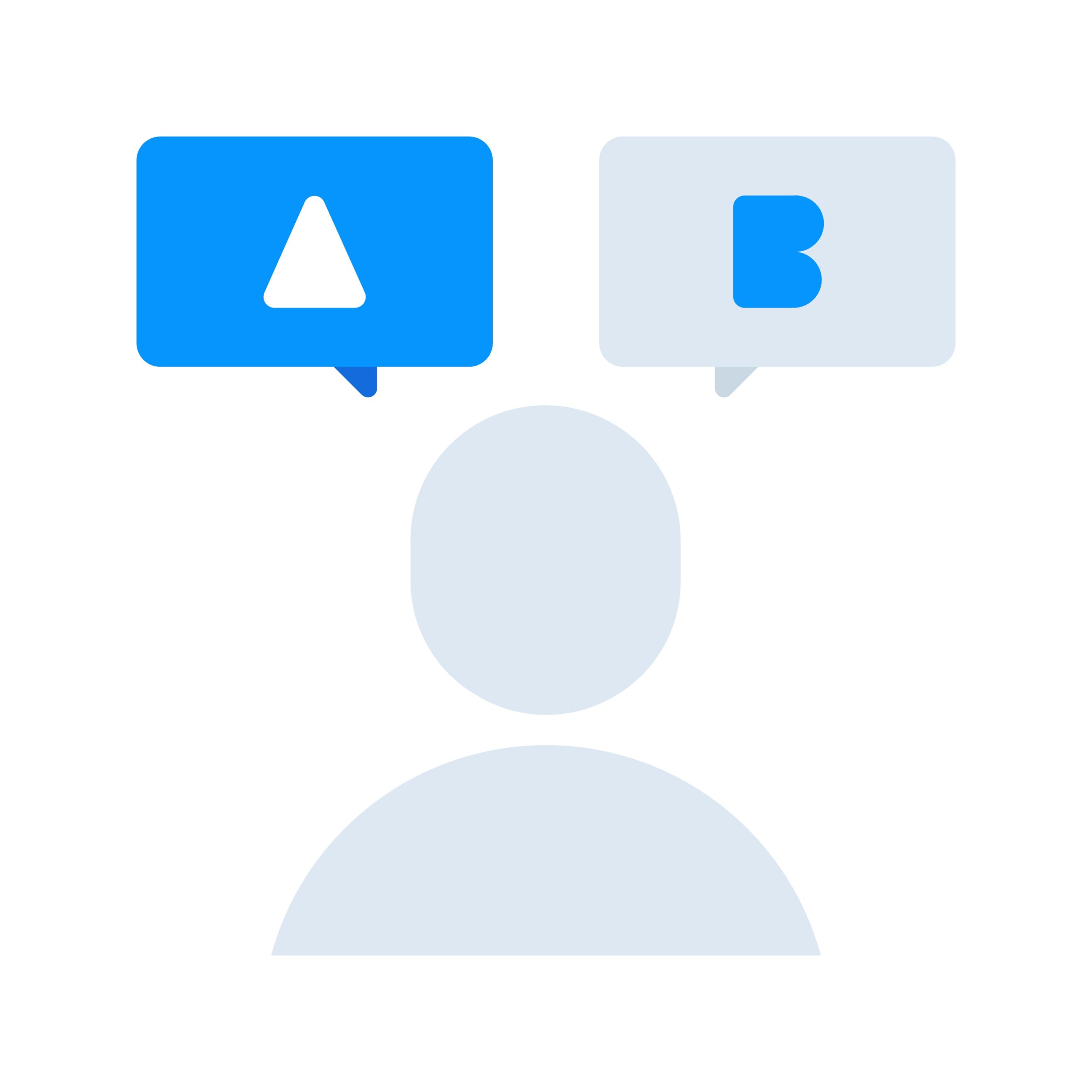
    Never, ever assume your first draft is the best you can do. A/B testing (or split testing) is your best friend here. It’s simply the process of creating two versions of a form or landing page to see which one performs better. You’d be amazed how tiny changes can lead to huge lifts in sign-ups.

    Not sure where to start? Try testing these elements:

    • Headline: Pit a question against a bold statement.
    • Button Color: Test a high-contrast color (like bright orange) against a more on-brand, subtle one.
    • Form Fields: Does asking for just an email convert better than asking for a name and email? (Hint: It almost always does).
    • Imagery: Try an image of the lead magnet itself (like a mockup of an ebook) vs. a stock photo of a happy person.

    By constantly testing, learning, and refining, you can systematically improve your website’s list-building power, turning casual visitors into a thriving community.

    Getting Eyes on Your Opt-In Forms

    Alright, you’ve done the hard work. You’ve crafted a killer lead magnet and your website has opt-in forms placed in all the right spots. But a beautiful fishing boat is useless if it’s sitting in the middle of a desert. The same goes for your forms—now you have to bring them to where the fish are actually swimming.

    This is where traffic generation comes in. It’s not just about getting more clicks; it’s about attracting the right visitors, people who are genuinely interested in what you have to offer. This is how you turn your list-building efforts from a passive hope into an active, predictable system for growth.

    Using Content Marketing for Organic Growth

    Content marketing is your long-term engine for attracting your ideal subscribers. When you create valuable, problem-solving content, you naturally draw in people who are actively searching for the solutions you provide. It’s an incredibly effective way to build an email list because the traffic is already warm—they’ve found you because they see you as a helpful resource.

    The most reliable place to start is with SEO-optimized blog posts. Use keyword research to figure out exactly what your audience is searching for, then create the best, most thorough resource on that topic you possibly can. Within that article, strategically place calls-to-action for a relevant lead magnet. For instance, a blog post about “Beginner Photography Mistakes” is the perfect place to offer a “Perfect Camera Settings Checklist.”

    But don’t just stop at blog posts. Mix it up with other formats:

    • YouTube Videos: Create a tutorial that solves a specific problem. Mention your free guide in the video and drop a link right at the top of the description.
    • Guides and Pillar Pages: Develop those massive, cornerstone content pieces that cover a broad topic from A to Z. These are magnets for high-quality backlinks and can drive organic traffic for years.
    • Podcasts: Mentioning your lead magnet on your own show or as a guest on another podcast can send a highly engaged audience straight to your sign-up page.

    Your content isn’t just there to inform; its job is to convert. Every piece you create should point to a clear next step, and most of the time, that step should be joining your email list.

    Promoting Your Lead Magnets on Social Media

    While content marketing builds a steady stream of traffic over time, social media is where you can spark immediate interest. The whole game is about meeting your audience where they already hang out and making them an offer they can’t ignore.

    Don’t just post a boring link and cross your fingers. Instead, promote the value of the lead magnet itself. Create some eye-catching graphics or a short video that highlights the #1 benefit of your free resource. Tell people exactly what problem it will solve for them, right now.

    Make it dead simple for them to sign up. Use the “link in bio” on Instagram to point followers to a dedicated landing page. On platforms like Facebook and LinkedIn, you can write posts that directly tease the content of your lead magnet, driving clicks straight to your opt-in form.

    Smart Paid Advertising Strategies

    If you’re ready to really pour some gas on the fire, paid advertising is the most direct path to rapid list growth. Running targeted campaigns on platforms like Facebook, Instagram, or Google Ads can funnel a predictable stream of qualified prospects right to your landing pages.

    The key to not wasting your money is precision targeting. With Facebook Ads, for instance, you can target users based on their interests, job titles, online behaviors, and even their past engagement with your content. A pro move is to create a lookalike audience based on your existing customers to find brand-new people who share the same traits.

    When you set up your ad, don’t just aim for “traffic.” Your campaign objective should be Lead Generation or Conversions. This tells the platform’s algorithm to find people who are most likely to actually fill out a form, not just click a link and bounce. Always send this paid traffic directly to a dedicated landing page—one with no distractions and a single call-to-action—to get the best possible conversion rate and return on your ad spend.

    Nurturing Your New Subscribers for Long-Term Value

    A person tending to a small, thriving plant in a pot, symbolizing the care and nurturing required to grow an engaged email subscriber list.

    Getting someone to hand over their email address isn’t the finish line—it’s the starting gun. A big, silent list might look impressive, but it’s really just a vanity metric. The real win comes from building a community of people who actually trust you, look forward to your emails, and eventually, support your business.

    This is where the real work begins. You’ve got to turn that initial flicker of interest into a genuine connection, and it all starts the moment they hit “subscribe.” Those first few days are absolutely crucial for setting the tone and proving their sign-up was a smart move.

    Crafting the Perfect Welcome Sequence

    Think of your welcome email sequence as your most important first impression. It has one job: to wow them. This is your prime opportunity to deliver on your promise, introduce your brand’s personality, and solidify the relationship while their interest is at its peak.

    A bland “Thanks for subscribing!” just won’t cut it anymore. A powerful welcome sequence usually involves three to five emails spread out over the first week.

    Here’s a structure I’ve seen work time and time again:

    • The Instant Payoff (Email 1): This needs to hit their inbox immediately. Its only goal is to deliver the lead magnet they signed up for. Make the subject line dead simple, like, “Here’s Your [Lead Magnet Name]!”
    • The ‘About Us’ Story (Email 2): Send this a day later. This is where you pull back the curtain and share your story. Who are you? What’s your mission? It’s how you build a human connection.
    • The Value Bomb (Email 3): Now, surprise them with more value. Link to your most popular blog post, a super helpful video tutorial, or a curated list of tools. This shows you’re invested in their success, not just their email address.
    • The Segmentation Nudge (Email 4): This is a slick move to learn more about them. Ask a simple question, like, “What’s your biggest challenge with X right now?” and provide links they can click to self-segment into different interest groups.
    • The Expectation Setter (Email 5): Finish up by being transparent. Tell them how often you’ll email and what kind of stuff you’ll be sending. This simple step builds trust and keeps your unsubscribe rates down.

    The Power of Smart List Segmentation

    Blasting the same email to your entire list is a surefire way to get ignored. Segmentation is the secret sauce—it’s simply the act of dividing your subscribers into smaller, more focused groups based on things they have in common. This lets you send messages that are incredibly relevant and personal.

    When you tailor your content, the results speak for themselves. This targeted approach is a huge reason why email marketing can generate a staggering £42 return for every £1 spent. It’s not magic; segmented campaigns regularly see 30% higher open rates and 50% more click-throughs.

    So, how do you actually start grouping your subscribers?

    Common Ways to Segment Your Audience

    You can slice and dice your audience based on all sorts of data. The more you know, the more personal you can get. I recommend starting with a few of these and expanding over time.

    • Sign-up Source: Where did they come from? A pop-up offering a 10% discount is a different user than someone who downloaded a 50-page technical ebook. One is a shopper looking for deals; the other wants deep, informative content.
    • User Behavior: Group people by what they do (or don’t do). You can create segments for your most engaged fans who opened your last five emails, people who clicked a specific link, or subscribers who have gone quiet for 90 days (perfect for a re-engagement campaign).
    • Declared Interests: Just ask them! Like we touched on in the welcome sequence, let people tell you what they care about. Use links or tags for topics like “Beginner Guides” or “Advanced Tactics” and let them build their own journey.

    Segmentation transforms your email list from a simple broadcast channel into a sophisticated communication engine. It’s the difference between shouting into a crowd and having a meaningful one-on-one conversation.

    By investing the time to properly nurture and segment your subscribers from day one, you build a powerful, long-term asset. You won’t just see better metrics; you’ll cultivate a loyal community that views you as a go-to resource. For a deeper look at this, check out our guides on target audience segmentation. This foundational work ensures your list-building efforts pay off for years to come.

    Your Top Email List-Building Questions, Answered

    Even with the best game plan, you’re bound to have questions as you start building your email list. I’ve been there. Let’s walk through some of the most common hurdles and clear them up so you can move forward with confidence.

    How Many Subscribers Do I Need Before I Start Emailing?

    You need exactly one.

    Seriously, start sending emails the moment that first person signs up. Don’t wait for some arbitrary number like 100 or 1,000 subscribers. The whole point is to build a relationship from day one, and you can’t do that if you’re silent.

    A simple welcome email or a weekly update sent to just 10 genuinely interested people is infinitely more powerful than a blast to 1,000 cold contacts. If you wait too long, those early subscribers will have no idea who you are or why you’re suddenly in their inbox.

    Is a Huge List Always Better?

    Absolutely not. Give me a small, engaged list over a massive, dormant one any day of the week.

    A large list of people who never open your emails is more than just dead weight—it’s actively harmful. It kills your open rates, signals to providers like Gmail that your content might be spam, and inflates the monthly bill from your email service provider.

    Your goal isn’t just to collect emails; it’s to attract the right people and keep them hooked. Quality beats quantity, every single time.

    What’s the Absolute Fastest Way to Grow My List?

    If you’re looking for a quick surge, the most effective combo is a high-value lead magnet that solves a real, urgent problem (think a live webinar or an indispensable template) paired with a paid traffic source.

    For example, running a targeted Facebook ad campaign that sends people to a dedicated landing page for your lead magnet can bring in a flood of quality subscribers fast.

    Just remember that for sustainable, long-term growth, you’ll want to balance these paid sprints with organic, SEO-driven content that attracts subscribers steadily over time.


    Ready to turn more of your website visitors into subscribers? LoudBar helps you create unmissable notification bars with eye-catching animations that grab attention and drive action. See how it works at https://loudbar.co.
  • 12 High-Converting Lead Magnet Template Resources for 2025

    12 High-Converting Lead Magnet Template Resources for 2025

    Generating high-quality leads is a foundational goal for nearly every business, from e-commerce brands to SaaS companies. Yet, the process of creating a compelling lead magnet from scratch can be a significant bottleneck. It demands design skills, content strategy, and a clear understanding of what converts. A well-designed lead magnet template solves this problem by providing a professional, structured starting point, allowing you to focus on the value of your content rather than the complexities of layout and design. This guide eliminates the guesswork by curating the best platforms and marketplaces for high-converting templates.

    This resource list is designed for immediate action. We dive into twelve of the best sources for lead magnet templates, including everything from PDF checklists and e-books to interactive quizzes and email course outlines. For those needing a deeper dive into the strategy behind these assets, our guide on Lead Magnets Explained From Concept To Conversion offers a comprehensive overview. Each entry in our list provides a clear breakdown of its unique strengths, ideal use cases, and potential limitations, so you can quickly identify the perfect fit for your specific marketing goals and budget.

    Whether you’re a marketing agency managing multiple clients, a startup founder needing a quick on-site CTA, or a content creator looking to grow your email list, the right template can dramatically accelerate your list-building efforts. We’ve included direct links and screenshots for each platform, ensuring you can find and implement the ideal resource efficiently. Let’s explore the templates that will help you turn website visitors into loyal subscribers.

    1. Canva

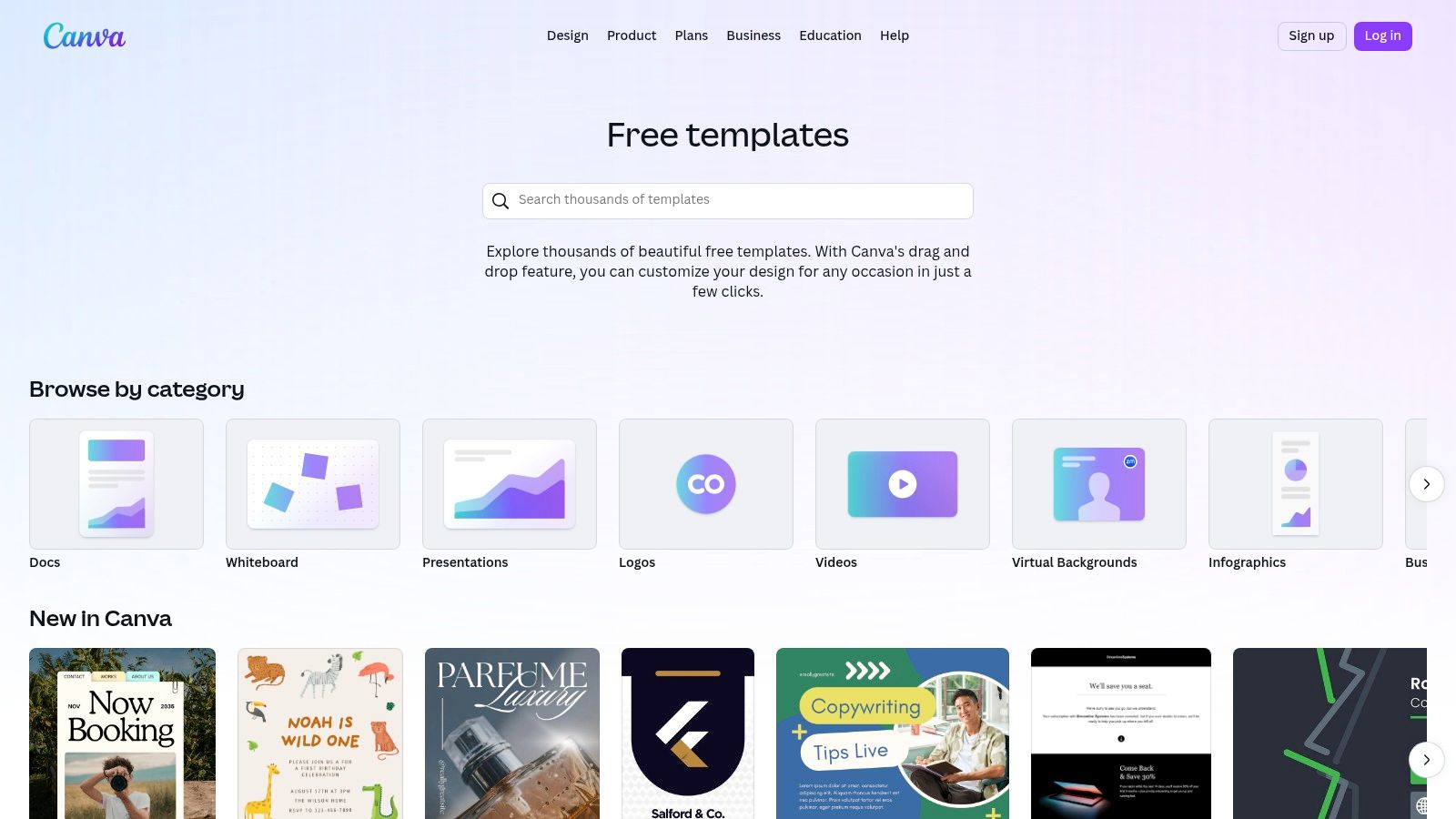
    Canva is an indispensable design platform for marketers and business owners who need to create visually appealing lead magnets without a graphic design background. Its strength lies in its vast library of professionally designed templates that can be quickly customized for various formats, including ebooks, checklists, worksheets, and infographics. This makes it an ideal starting point for anyone looking for a high-quality lead magnet template.

    Canva

    The user experience is built around a simple drag-and-drop editor, allowing for rapid customization. For brands, the “Brand Kit” feature (available on the Pro plan) is a significant time-saver, letting you apply your brand’s specific colors, fonts, and logos to any template with a single click. This ensures brand consistency across all your marketing materials, from a simple checklist to a comprehensive multi-page guide.

    Key Features & Implementation Tips

    Canva stands out by democratizing design, making it accessible for SaaS teams, e-commerce brands, and content creators alike.

    • Massive Template Library: Search for specific terms like “checklist template” or “ebook” to find dozens of relevant starting points.
    • Easy Exporting: You can download your finished design as a print-ready PDF, a standard PDF for web use, or even share it as a direct link.
    • Rich Media Integration: The platform includes a massive library of stock photos, icons, charts, and graphics, many of which are available on the free plan.

    Practical Tip: To create a cohesive lead magnet template, start by setting up your Brand Kit. Then, create a master template for one lead magnet type (e.g., a one-page checklist) and duplicate it for future offers to maintain a consistent look and feel.

    Pricing and Access

    • Canva Free: Offers robust functionality with thousands of free templates and design elements.
    • Canva Pro: Starts at $119.99/year for one person. It unlocks premium templates, the Brand Kit, Magic Resize, and a larger library of stock assets. This is highly recommended for serious marketing efforts.

    Website: https://www.canva.com/templates/

    2. Etsy

    Etsy serves as a massive marketplace not just for physical goods, but for digital products, making it a goldmine for unique and niche-specific lead magnet templates. Independent creators offer thousands of pre-made designs, often sold as editable Canva files, covering everything from detailed workbooks to simple one-page checklists. This is an excellent solution for businesses wanting a more distinct aesthetic than what standard platforms provide.

    The platform’s value lies in its sheer variety and affordability. You can find a professional, multi-page lead magnet template for a fraction of the cost of a custom design. The instant digital download model means you can purchase a template and begin customizing it within minutes. Seller ratings and customer reviews are crucial here, providing social proof to help you gauge the quality and ease of use before buying.

    Key Features & Implementation Tips

    Etsy is perfect for finding a creative spark or a ready-to-go solution that aligns with a specific industry, from wellness coaching to real estate.

    • Huge Variety of Styles: Search for terms like “boho ebook template” or “minimalist checklist” to find designs that perfectly match your brand’s visual identity.
    • Instant Digital Downloads: Once purchased, you typically receive a PDF with a direct link to the editable template in Canva.
    • Seller Ratings and Reviews: Always check feedback from previous buyers to ensure the template is high-quality and the seller is reputable.

    Practical Tip: Before purchasing, carefully read the item description. Some sellers use Canva Pro elements in their designs. If you only have a free Canva account, these elements will appear with a watermark, requiring you to either upgrade or replace them.

    Pricing and Access

    • Varies by Seller: Prices can range from just a few dollars for a simple one-page template to $30+ for comprehensive lead magnet bundles. Most are one-time purchases.

    Website: https://www.etsy.com/search?q=lead+magnet+template

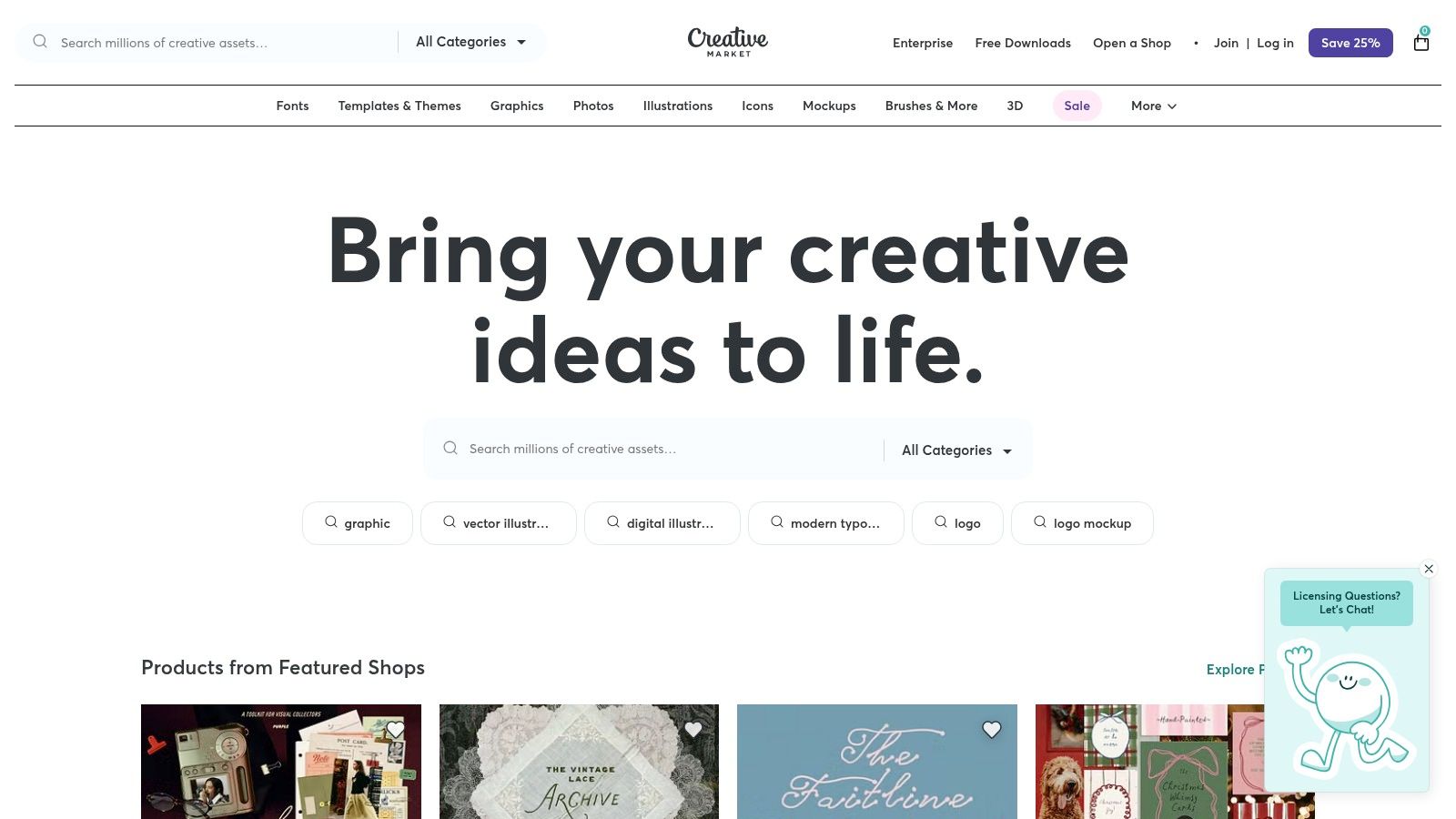
    3. Creative Market

    Creative Market is a curated design marketplace where independent creators sell premium digital assets. For businesses seeking a truly polished and professional aesthetic, it offers an exceptional selection of high-quality lead magnet template packs, often designed for easy editing in Canva or Adobe InDesign. These templates move beyond basic layouts, providing cohesive, multi-page designs for ebooks, workbooks, and webinars that are ready for a high-end brand.

    Creative Market

    Unlike platforms with user-generated freebies, every item on Creative Market is reviewed for quality, ensuring you get a professional-grade product. The detailed previews allow you to see every page of a template before purchasing, and you often get direct support from the creator. This makes it a go-to resource for brands that want to save significant design time while still achieving a custom, high-end look.

    Key Features & Implementation Tips

    Creative Market excels at providing ready-made, brand-in-a-box solutions that require minimal tweaking to look fantastic.

    • Multi-Page Ebook & Workbook Templates: Find comprehensive template packs that include everything from cover pages to chapter layouts and call-to-action pages.
    • Commercial Licensing Options: Most templates come with a commercial license, allowing you to use them for business purposes, but always check the specific terms for each product.
    • Detailed Previews and Creator Support: You can view all included pages and often contact the designer directly for questions, providing an extra layer of confidence.

    Practical Tip: Use the search filters to narrow down options by application (e.g., “Canva,” “InDesign”) and format (“US Letter,” “A4”) to find the perfect lead magnet template for your needs. Pay close attention to the included file types and required fonts.

    Pricing and Access

    • Per-Item Pricing: Templates are sold individually, with prices set by the creator. Prices typically range from $15 to $70+ for comprehensive lead magnet kits.
    • No Subscription: You pay only for the specific assets you need, with no recurring fees. Licenses vary, so review the terms before purchase.

    Website: https://creativemarket.com

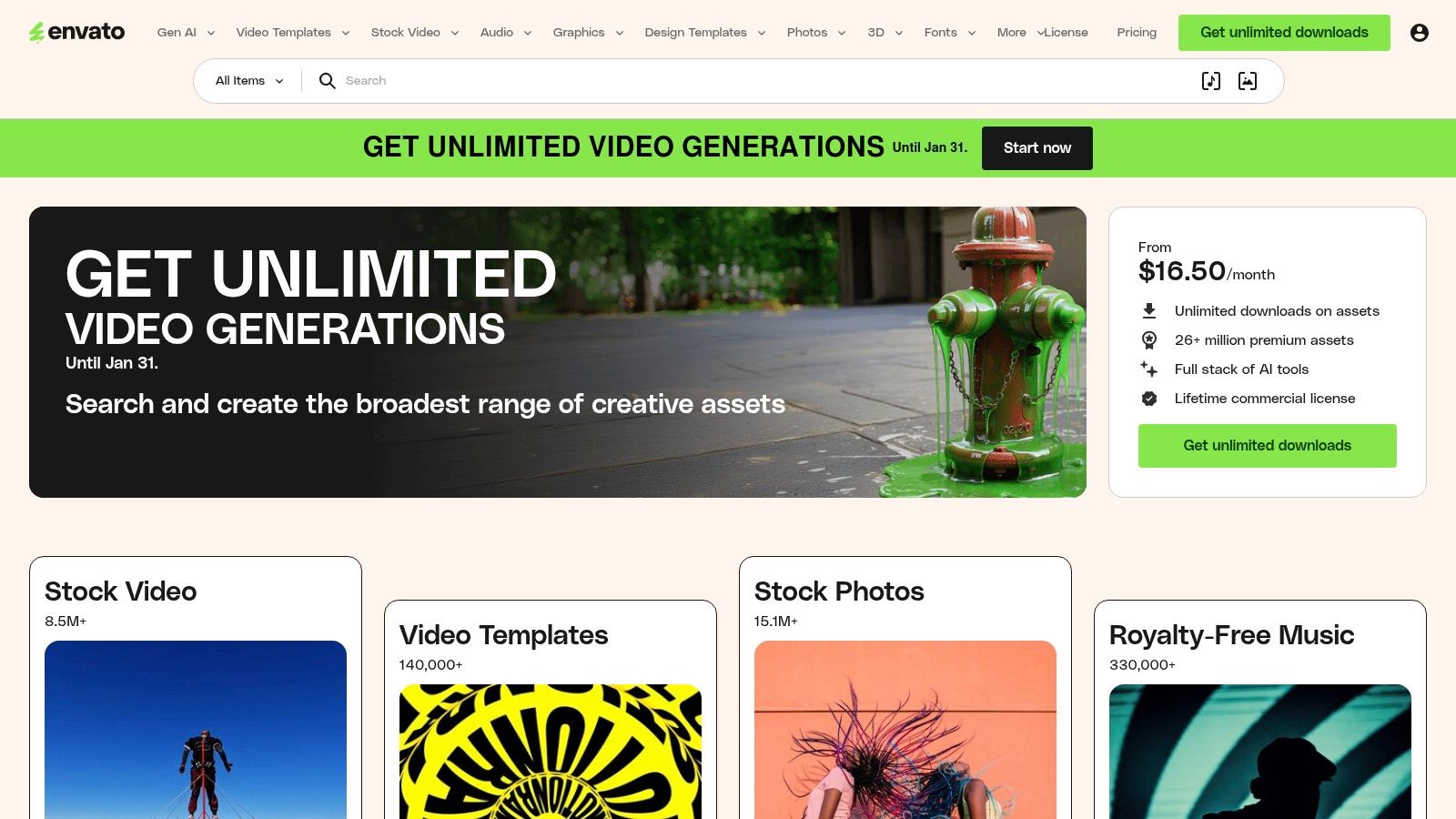
    4. Envato Elements

    For creators and marketers who require a continuous stream of diverse design assets, Envato Elements offers an exceptional value proposition. Instead of purchasing templates individually, you gain unlimited access to a massive library of high-quality files for a single subscription fee. This is ideal for agencies or businesses that frequently produce lead magnets like ebooks, detailed whitepapers, and multi-page guides and need a professional lead magnet template in formats like InDesign, Photoshop, or Illustrator.

    Envato Elements

    The platform’s key differentiator is its all-inclusive model, which covers everything from graphics and stock video to presentation templates and fonts. This allows for a high degree of creative freedom, as you can mix and match different assets to create a truly unique and polished final product. The commercial license included with the subscription simplifies the legal side, ensuring your creations are ready for business use.

    Key Features & Implementation Tips

    Envato Elements is best suited for those comfortable with professional design software who need a high volume of quality assets without per-item costs.

    • Unlimited Downloads: A single subscription provides limitless access to millions of creative assets, including thousands of lead magnet templates.
    • Professional File Formats: Templates are typically available in Adobe InDesign (INDD), Photoshop (PSD), and Illustrator (AI) files, offering maximum editability.
    • Comprehensive Licensing: The simple commercial license covers most business use cases, so you don’t have to worry about tracking individual licenses. For those looking for even more assets related to Envato Elements, you might find valuable resources among additional Envato Elements products.

    Practical Tip: Use keywords like “ebook template InDesign” or “brochure template” to narrow your search. Once you find a designer whose style you like, check their portfolio for other templates to create a consistent brand aesthetic across different marketing materials.

    Pricing and Access

    • Individual Plan: Starts at $16.50/month. This provides one user with unlimited downloads of the entire library.
    • Teams Plan: Priced per member, starting at $10.75/month per member for a team of 5. It offers team-specific features and easy license management.

    Website: https://elements.envato.com

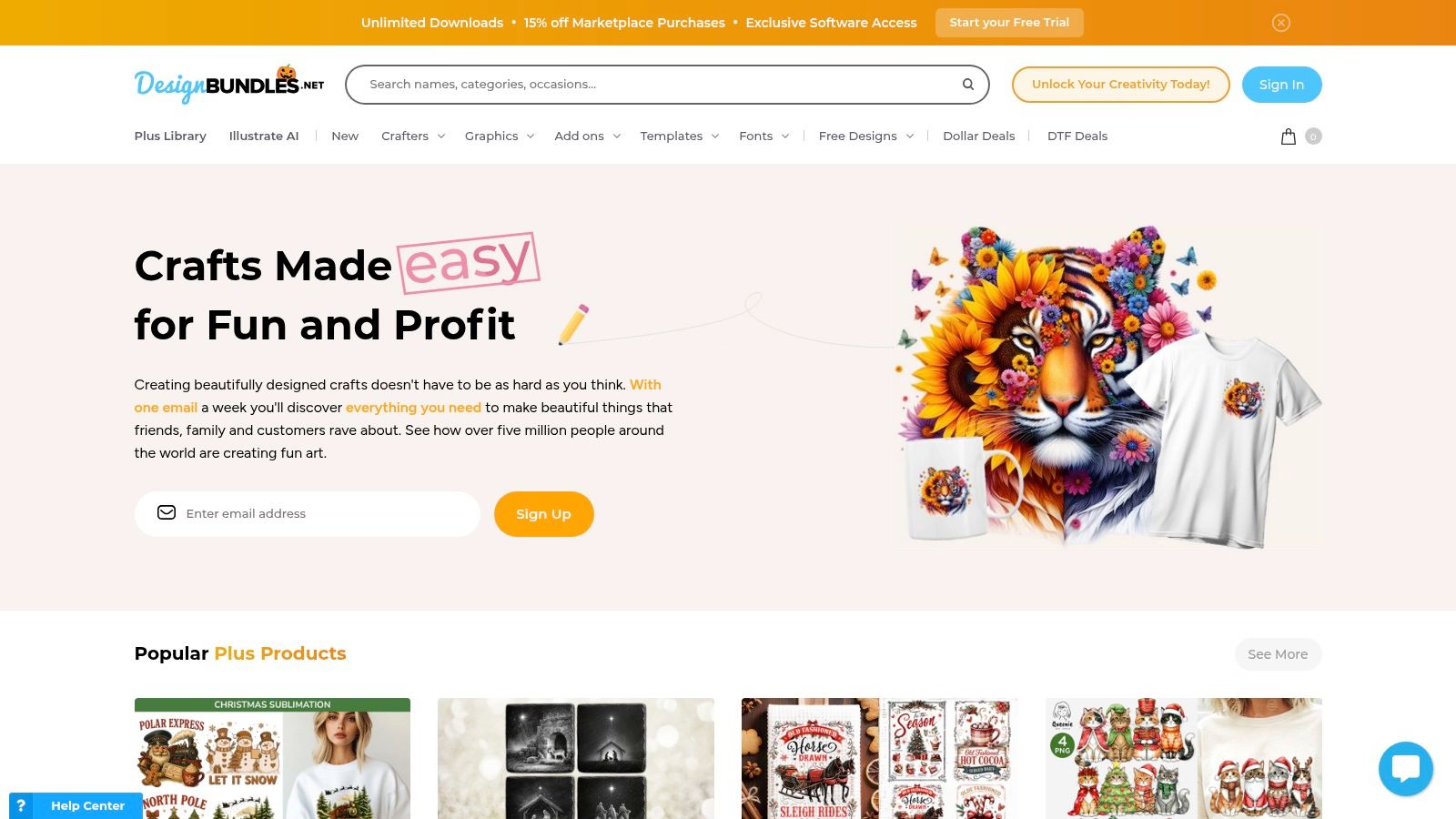
    5. Design Bundles

    Design Bundles is a design marketplace that serves as a treasure trove for marketers looking for pre-packaged, niche-specific lead magnet bundles. Unlike platforms where you build from scratch, its strength lies in offering complete, multi-page Canva and Adobe templates for ebooks, workbooks, and planners, sold by independent creators. This makes it an excellent resource for finding a fully realized lead magnet template you can purchase once and customize.

    Design Bundles

    The platform is ideal for users who want to bypass the initial design phase entirely. You can find bundles tailored to specific industries like wellness, coaching, or real estate, often including covers, chapter pages, and worksheets. Because these are sold with commercial licenses, you can adapt them for your business needs without recurring fees, offering a cost-effective alternative to subscription services.

    Key Features & Implementation Tips

    Design Bundles provides a different approach by focusing on curated, ready-to-edit packages that cater to specific business needs.

    • Niche-Specific Bundles: Search for terms like “coaching workbook Canva” or “real estate ebook” to find comprehensive packages often containing 20+ pages.
    • Commercial Licenses: Most templates are sold with a commercial use license, allowing you to use them for your business’s lead generation efforts. Always check the specific license terms.
    • One-Off Purchases: You buy what you need without a subscription. This is perfect for single campaigns or for building a library of templates over time.

    Practical Tip: Always review seller ratings and read the full item description. Descriptions typically list the exact number of pages, file formats (Canva, InDesign, etc.), and whether stock images are included. This ensures the lead magnet template you purchase meets your technical and content requirements.

    Pricing and Access

    • Per-Product Pricing: Prices vary significantly depending on the seller and the complexity of the bundle, ranging from a few dollars to $50+.
    • Plus Membership: A subscription option that provides credits for downloads and access to exclusive products, which can be cost-effective for frequent buyers.

    Website: https://designbundles.net

    6. Template.net

    Template.net is a massive resource library for those who prefer creating marketing assets within familiar office software over dedicated design platforms. Its unique value is providing lead magnet files in formats like Google Docs and Microsoft Word, alongside traditional PSD and Illustrator files. This makes it an excellent choice for teams that are more comfortable editing text and layouts in a word processor than a design canvas, allowing for the quick creation of a functional lead magnet template.

    The platform is geared toward practicality and speed for non-designers. You can find ready-to-edit layouts for ebooks, worksheets, and reports that can be customized and then exported directly to PDF for delivery. While the visual variety may not compete with design-centric sites, its strength is its accessibility for anyone who can use Google Docs, eliminating the learning curve associated with graphic design tools.

    Key Features & Implementation Tips

    Template.net serves users who prioritize content and structure over complex visual design, offering a straightforward path from template to finished PDF.

    • Multiple File Formats: Templates are available for Google Docs, Word, Apple Pages, PSD, and Illustrator, offering unparalleled flexibility for different workflows.
    • Broad Business Focus: Beyond marketing, the site includes templates for planning, reports, and other business documents, which can be repurposed as lead magnets.
    • Online Editor: For quick edits without downloading software, some templates can be customized directly on the website before being exported.

    Practical Tip: Use the Google Docs or Word version of a lead magnet template for collaborative content creation. Your writing team can finalize the copy directly in the document before a manager gives it a final review and exports it as a PDF, streamlining the entire production process.

    Pricing and Access

    • Free Templates: A selection of templates is available for free with attribution.
    • Pro Plan: Starts at $8.25/month (billed annually). This provides unlimited access to their entire library of pro templates, designs, and documents.

    Website: https://www.template.net

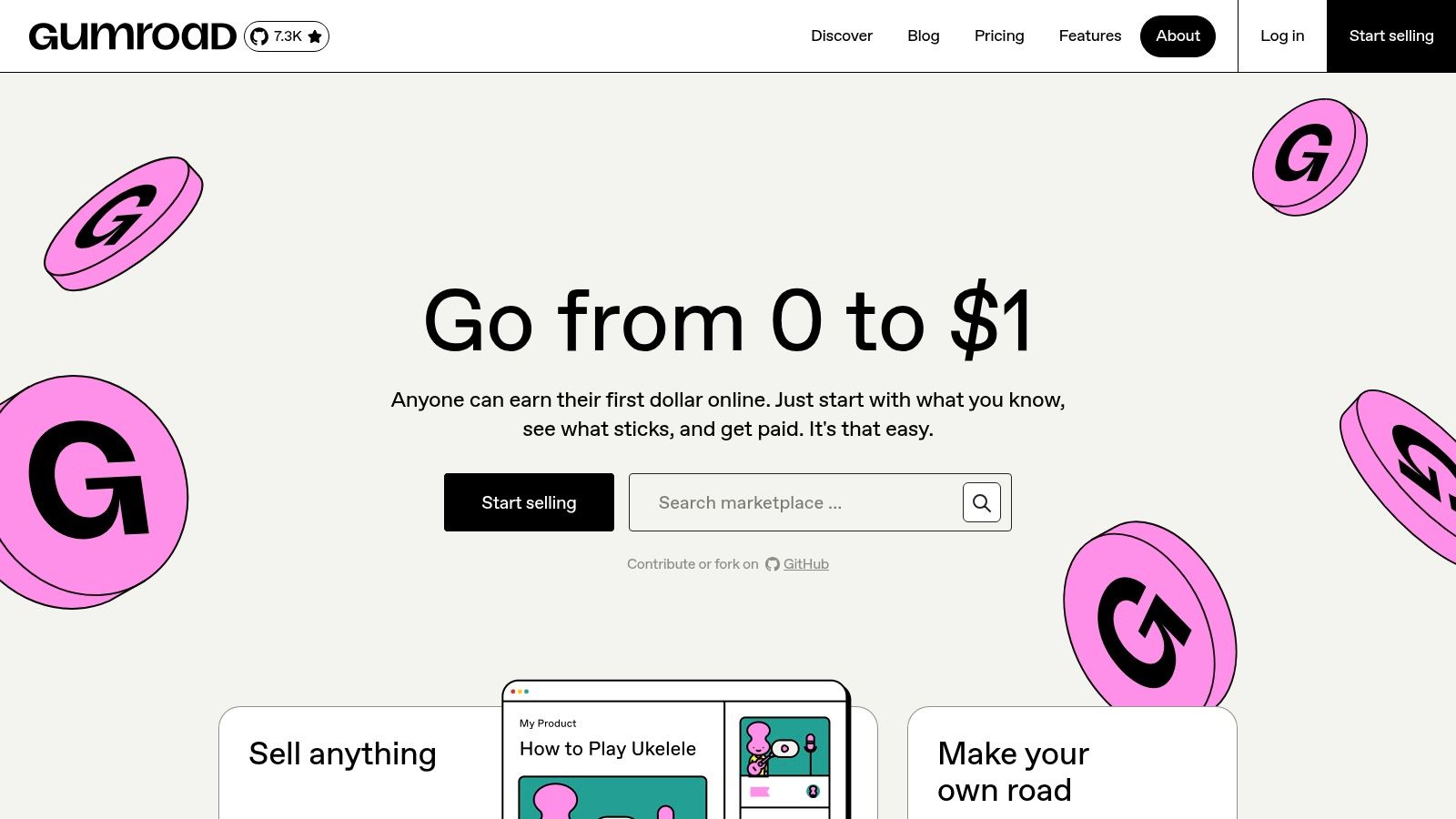
    7. Gumroad

    Gumroad is a popular marketplace for creators to sell digital products directly to consumers, making it a hidden gem for finding unique and specialized lead magnet templates. Unlike massive platforms, Gumroad hosts independent designers who often sell comprehensive template packs, which might include variations for ebooks, checklists, and social media graphics, all designed to work together cohesively. This direct-from-creator model means you can discover a lead magnet template with a distinct style you won’t find elsewhere.

    Gumroad

    The platform’s strength lies in its niche offerings and the added value provided by sellers. Many listings include not just the templates (often editable in Canva or Adobe software) but also video tutorials, usage guides, or direct support from the designer. This can be incredibly helpful for marketers who want to understand the strategic thinking behind the design and how to best adapt it for their own campaigns.

    Key Features & Implementation Tips

    Gumroad excels by offering direct access to unique, creator-driven template bundles that often cater to specific industries or aesthetics.

    • Niche-Specific Template Packs: Search for terms like “SaaS lead magnet” or “ecommerce checklist template” to uncover packs tailored to your industry.
    • Direct Creator Support: Many sellers offer support or include detailed instructions, providing more value than a simple template download.
    • Instant Delivery: Once purchased, digital files are delivered immediately to your inbox, allowing you to start customizing right away.

    Practical Tip: Before purchasing, carefully read the product description to check for software compatibility (e.g., Canva, Figma, Adobe InDesign) and licensing terms. Look at seller ratings and reviews to gauge the quality and support you can expect.

    Pricing and Access

    • Varies by Seller: Prices are set by individual creators. Templates can range from a few dollars for a simple checklist to $50+ for a comprehensive bundle with multiple assets and video tutorials. There is no subscription fee to browse or buy.

    Website: https://gumroad.com

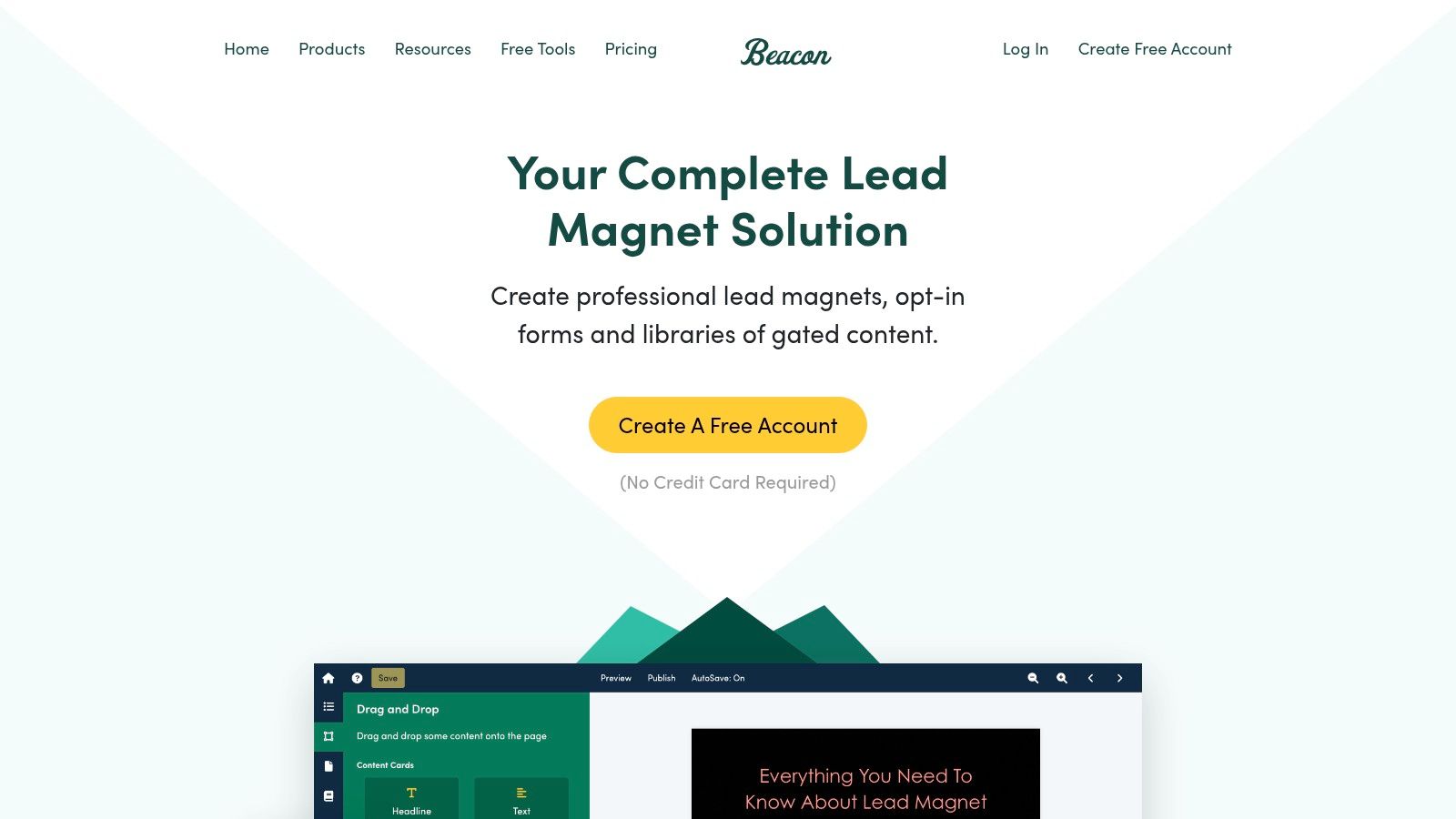
    8. Beacon

    Beacon is a specialized platform built from the ground up to create, publish, and manage lead magnets. Unlike general design tools, its entire workflow is optimized for lead generation, offering a suite of templates for ebooks, checklists, and resource guides that are designed to convert. This focus makes it an excellent choice for marketers who want an all-in-one solution for their lead magnet template needs.

    Beacon

    The platform’s standout feature is its ability to automatically convert existing blog posts into professionally designed lead magnets, saving countless hours of content repurposing. The user interface is clean, with a simple drag-and-drop editor that makes customization straightforward, even for those with no design experience. It also includes tools for creating opt-in forms and dedicated resource library pages to host your downloadable content.

    Key Features & Implementation Tips

    Beacon streamlines the entire process from content creation to lead capture, making it a powerful tool for content marketers.

    • Blog Post Recycling: Instantly turn any URL into a formatted ebook or checklist, preserving images and text structure.
    • Smart PDFs: Create lead magnets that include embedded call-to-action buttons and opt-in forms directly within the PDF.
    • Template Library: Access a collection of professionally designed templates for various formats, all fully customizable.

    Practical Tip: Use Beacon’s blog post recycling feature to identify your top-performing articles and quickly turn them into content upgrades. This is a highly effective way to offer relevant value based on a user’s interests. For deeper insights on matching your lead magnets to specific user groups, learn more about target audience segmentation.

    Pricing and Access

    • Free Forever: Create one lead magnet with Beacon branding.
    • Professional: Starts at $49/month. Includes unlimited lead magnets, custom domains, and no Beacon branding.

    Website: https://beacon.by

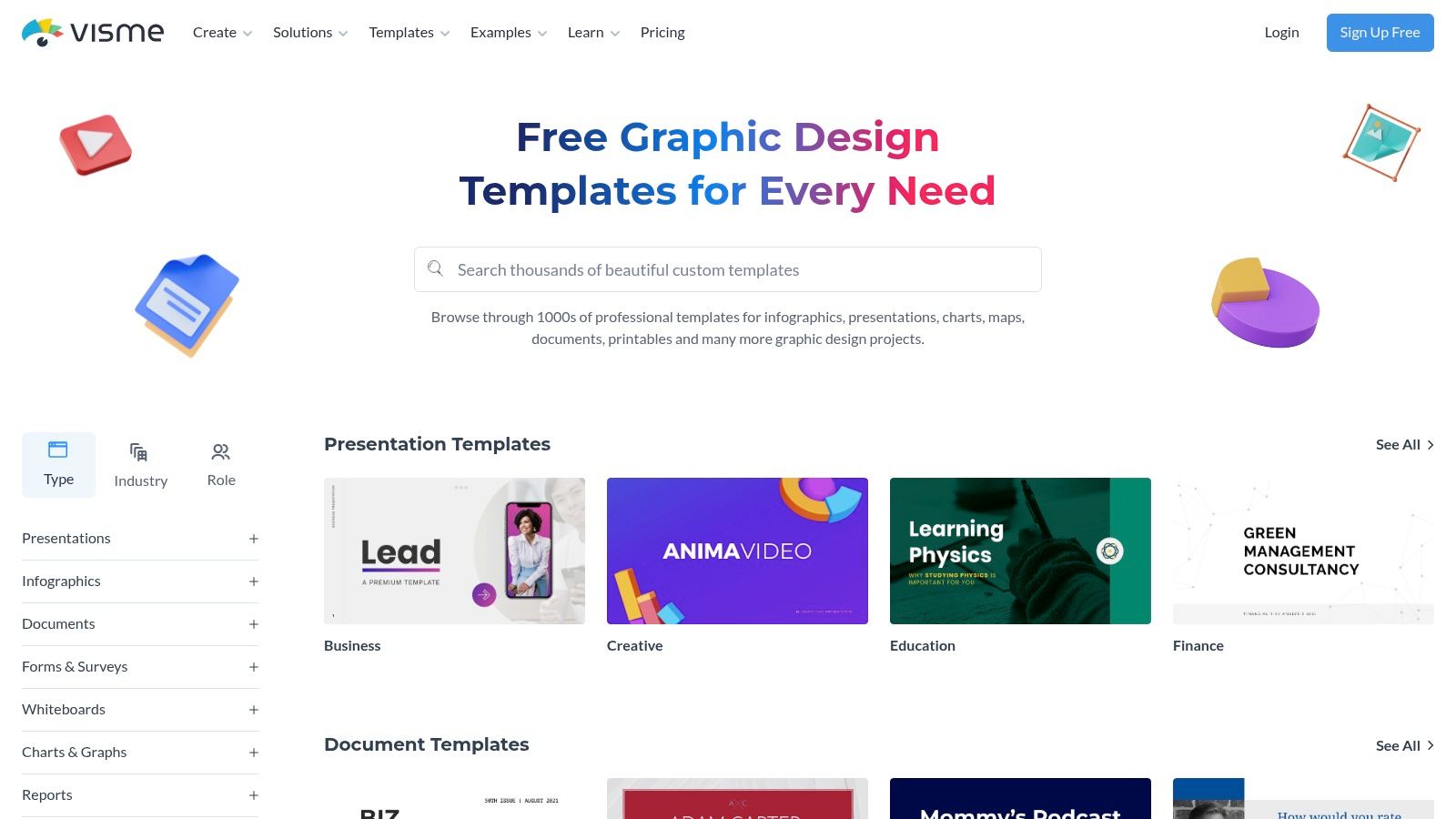
    9. Visme

    Visme is a powerful visual content platform that excels at creating interactive and animated lead magnets. While it offers standard formats like ebooks and checklists, its unique strength is in producing engaging, web-viewable content that goes beyond a static PDF. This makes it an excellent choice for brands wanting a more dynamic lead magnet template that captures attention.

    Visme

    The platform is designed for creating presentations, infographics, and reports, but these capabilities translate perfectly to lead magnets. You can embed videos, add animations, or create interactive flipbooks that provide a richer user experience directly in the browser. This approach is particularly effective for SaaS companies demonstrating features or e-commerce brands showcasing product lookbooks. The focus on interactive elements can significantly improve the perceived value and overall user experience of your lead magnet.

    Key Features & Implementation Tips

    Visme stands out by enabling marketers to build lead magnets that feel more like micro-websites than simple documents.

    • Interactive Outputs: Export your creations as HTML5 to embed them directly on a landing page or share them via a link. This allows for animations, clickable pop-ups, and embedded media.
    • Data Visualization Tools: Easily add professional charts, graphs, and maps to your lead magnets to present data in a compelling way.
    • Variety of Formats: Beyond PDFs, you can export your designs as high-resolution images (JPG/PNG) or even as animated GIFs and videos.

    Practical Tip: Use the “Flipbook” effect on your multi-page ebook template. This creates a realistic page-turning animation that is far more engaging than scrolling through a standard PDF, making your content feel more premium.

    Pricing and Access

    • Basic: The free plan offers limited templates, storage, and includes Visme branding on all projects.
    • Starter: Starts at $29/month (billed monthly) and removes branding, adds more templates, and unlocks PDF/JPG/PNG downloads.
    • Pro: Starts at $59/month (billed monthly) and includes full download options (including HTML5), brand kit features, and advanced analytics.

    Website: https://www.visme.co/templates

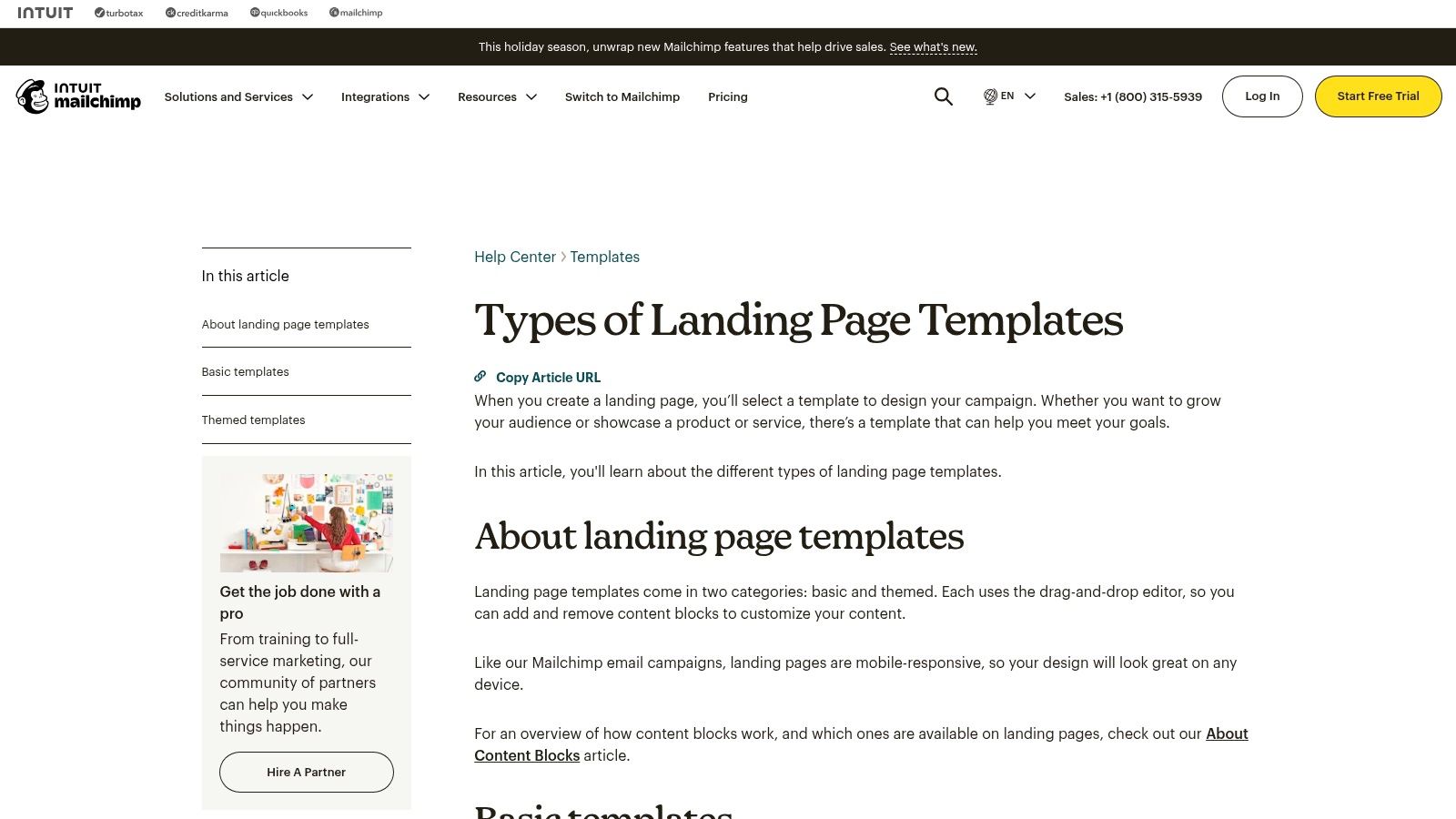
    10. Mailchimp (Landing Page Templates)

    While known primarily for email marketing, Mailchimp offers a powerful, integrated solution for deploying lead magnets through its free landing page builder. This is perfect for marketers who want a seamless system where a user signs up on a dedicated page and is immediately added to an email workflow to receive their requested resource. Instead of just a design tool, Mailchimp provides the complete capture-and-deliver mechanism.

    Mailchimp (Landing Page Templates)

    The platform’s strength is its direct integration with email automation. You can use a pre-built lead magnet template for your landing page, connect it to a specific audience, and automatically tag new subscribers based on which resource they downloaded. This functionality is crucial for segmenting your audience and sending targeted follow-up campaigns, turning a simple download into a long-term customer journey. The drag-and-drop editor is straightforward, making it quick to publish mobile-responsive opt-in pages.

    Key Features & Implementation Tips

    Mailchimp is ideal for those who need an all-in-one system for lead capture and nurturing without relying on third-party integrations.

    • Integrated Automation: Automatically trigger an email with your lead magnet attached the moment someone subscribes via your landing page.
    • Audience Tagging: Use tags to segment users who download specific lead magnets, allowing for highly relevant future marketing messages.
    • Simple Analytics: Track views and new contacts directly within your Mailchimp dashboard to measure the page’s effectiveness.

    Practical Tip: Create a dedicated “Welcome” automation for each lead magnet landing page. This allows you to deliver the promised PDF or link in the first email and then follow up with a series of related content to nurture the new lead. This is a proven strategy to boost conversions over time.

    Pricing and Access

    • Free Plan: Includes up to 500 contacts and allows you to publish landing pages, though Mailchimp branding will be present.
    • Paid Plans: Start at $13/month (Essentials) and remove branding, offer more advanced automation features, and provide larger contact and send limits.

    Website: https://mailchimp.com/help/types-landing-page-templates/

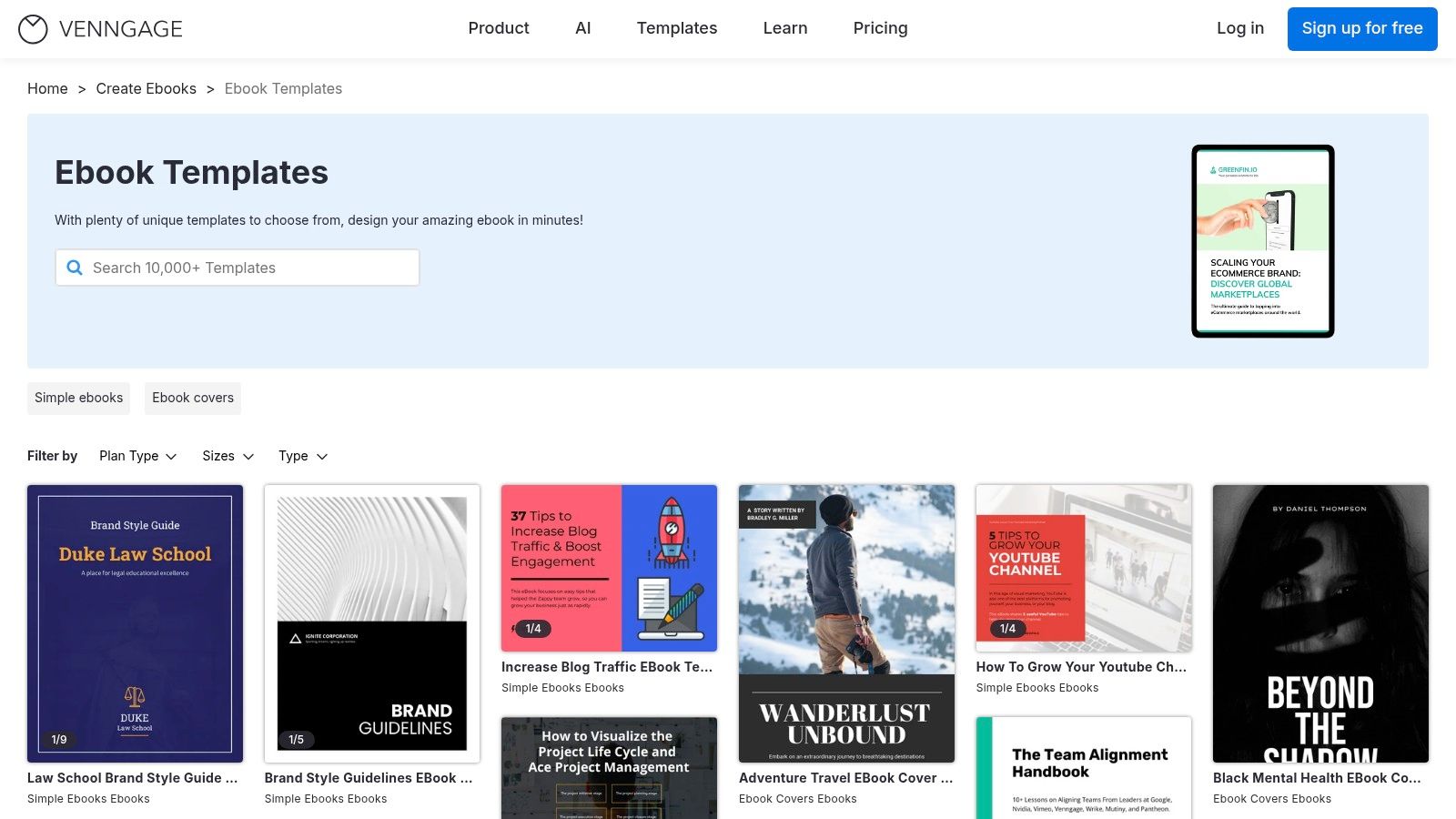
    11. Venngage

    Venngage is a powerful online design tool that specializes in data visualization and marketing-focused documents, making it a strong choice for creating professional ebooks and white papers. Its platform is particularly suited for non-designers who need to incorporate charts, graphs, and data into their content. Venngage provides a focused selection of templates designed specifically for lead generation, ensuring your final product is both informative and effective at capturing leads.

    Venngage

    The editor is intuitive and built around the needs of business communicators. Unlike more general design tools, Venngage’s templates are often structured around specific business use cases like marketing reports, project plans, and comprehensive guides. This focus makes it simpler to find a lead magnet template that aligns with B2B or data-driven content strategies, without getting lost in overly artistic options.

    Key Features & Implementation Tips

    Venngage excels at turning complex information into visually engaging and easy-to-digest lead magnets.

    • Marketing-Focused Templates: The library is curated for business needs, offering layouts for ebooks, white papers, and reports in standard US Letter/A4 sizes.
    • Built-in Charts & Graphs: Easily add and customize various charts by inputting your data directly, a standout feature for creating data-rich content.
    • AI-Assisted Editing: Use AI tools to help generate or refine text directly within your design, streamlining the content creation process.

    Practical Tip: Leverage the built-in chart tools to create a unique data-driven lead magnet. Compile industry statistics or proprietary data into a “State of the Industry” report or a data-backed white paper to offer exclusive value that competitors can’t easily replicate.

    Pricing and Access

    • Free Plan: Offers limited access to templates and features, with Venngage branding on exports.
    • Premium Plan: Starts at $19/month per user. Unlocks premium templates, high-quality exports (PNG HD, PDF), and more design elements.
    • Business Plan: Starts at $49/month per user. Adds brand kit functionality, team collaboration features, and multi-page PDF exporting.

    Website: https://venngage.com/templates/ebooks

    12. Ivory Mix

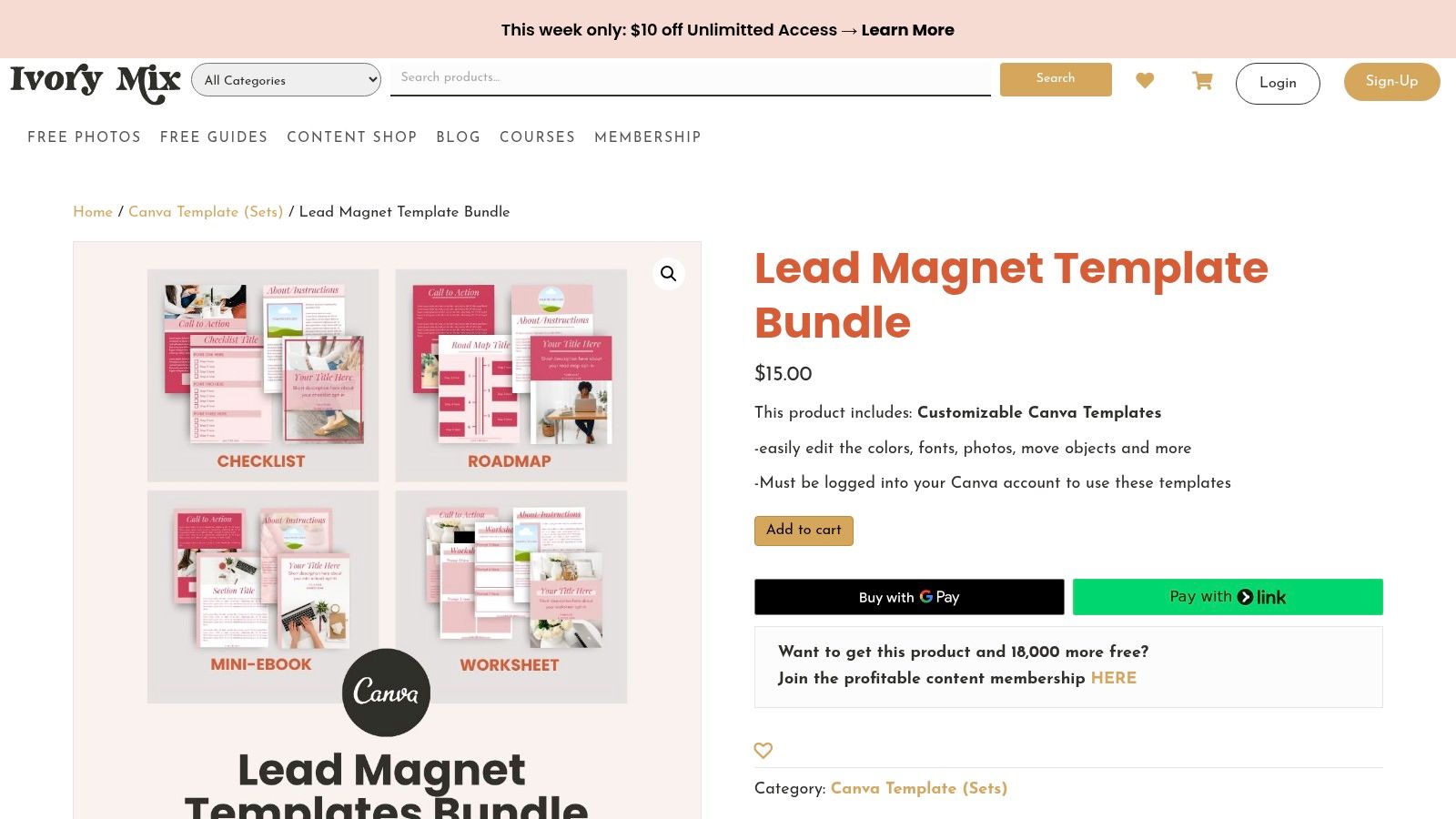
    Ivory Mix is a specialized template shop and membership site designed for small business owners and content creators who rely heavily on Canva. It provides cohesive, ready-to-use lead magnet template bundles that include not just the core asset like an ebook or worksheet, but also promotional graphics. This bundled approach makes it a strong choice for marketers looking for an all-in-one solution to launch a new opt-in offer quickly.

    Ivory Mix

    The platform’s strength lies in its focus on practical, marketer-friendly layouts. Each template is built in Canva and comes with clear instructions, making the customization process straightforward even for beginners. While the catalog is smaller than massive marketplaces, the quality and thoughtful design of each lead magnet template ensure you can produce a professional-looking resource without needing design expertise.

    Key Features & Implementation Tips

    Ivory Mix excels by providing complete, aesthetically pleasing packages tailored for non-designers who need to move fast.

    • Cohesive Bundles: Templates often include multi-page ebooks, workbooks, checklists, and corresponding social media graphics to promote them.
    • Canva-Centric: All templates are fully editable in Canva, leveraging its user-friendly drag-and-drop interface for easy customization.
    • Mix-and-Match Pages: The templates are designed with versatile page layouts (sized for US Letter), allowing you to easily add, remove, or reorder pages to create a custom document.

    Practical Tip: When using an Ivory Mix bundle, start by customizing the “master” pages like the cover, introduction, and call-to-action page. Once these core elements reflect your brand, you can quickly assemble various lead magnets by duplicating and arranging the pre-designed content pages.

    Pricing and Access

    • Individual Templates: Bundles can be purchased a la carte, typically ranging from $27 to $67.
    • Ivory Mix Membership: Provides access to the entire library of templates, photos, and training resources for a recurring fee, offering better value for prolific content creators.

    Website: https://ivorymix.com/product/lead-magnet-template-bundle/

    Top 12 Lead Magnet Template Providers — Comparison

    Tool Core features UX / Quality Price & Value Target audience Unique selling point
    Canva Massive editable template library, drag‑and‑drop, export PDF/web ★★★★★ 🏆 💰 Free → Pro (brand kit, assets) 👥 Non‑designers & marketers ✨ Huge template ecosystem, Brand Kit
    Etsy Marketplace of instant digital template downloads, niche styles ★★★★☆ 💰 Low‑cost one‑offs 👥 Small businesses & niche buyers ✨ Unique, seller‑driven styles
    Creative Market Curated premium templates, commercial licensing, previews ★★★★★ 🏆 💰 Pay‑per‑item (higher avg price) 👥 Brands & designers ✨ Professional, brand‑ready packs
    Envato Elements Unlimited downloads subscription, multi‑format assets ★★★★☆ 💰 Subscription — great value for volume 👥 Agencies & frequent creators ✨ Unlimited downloads + commercial license
    Design Bundles Niche Canva packs and design bundles, frequent promos ★★★★☆ 💰 Affordable one‑offs, frequent deals 👥 Small businesses & marketers ✨ Clear pack contents, bargains
    Template.net Templates in Docs/Word/PSD/AI, online editing option ★★★☆☆ 💰 Some free + paid plans 👥 Office users & non‑designers ✨ Office‑format templates (Docs/Word)
    Gumroad Direct‑from‑creator template packs, instant delivery & updates ★★★★☆ 💰 Pay‑per‑item, often affordable 👥 Niche creators & buyers ✨ Direct seller support, unique packs
    Beacon Lead‑magnet builder, blog→lead conversion, opt‑in forms ★★★★★ 🏆 💰 Free tier → paid for advanced features 👥 Marketers & bloggers ✨ Purpose‑built lead‑gen workflows
    Visme Editable templates + interactive/animated outputs, flipbooks ★★★★☆ 💰 Freemium; paid for exports/advanced 👥 Visual marketers, web‑view lead magnets ✨ Interactive/HTML5 & animated outputs
    Mailchimp (Landing Pages) Lead‑gen landing pages, signup forms, automations ★★★★☆ 💰 Free start; paid for advanced automations 👥 Email marketers & small businesses ✨ Integrated delivery + automations
    Venngage Ebook/checklist templates, AI editing, charts & embeds ★★★★☆ 💰 Freemium → premium plans 👥 Marketers & data‑driven creators ✨ AI‑assist + built‑in charts
    Ivory Mix Canva‑ready lead magnet bundles, marketer tutorials ★★★★☆ 💰 Affordable bundles, membership option 👥 Small‑business marketers ✨ Marketer‑focused Canva packs & guides

    How to Deploy and Promote Your New Lead Magnet for Maximum Impact

    You’ve explored the landscape of high-converting lead magnet templates, from the design-forward options on Canva and Visme to the niche-specific treasures on Etsy and Ivory Mix. We’ve dissected everything from PDF checklists and swipe files to quiz templates and one-pagers, equipping you with the foundational assets to build a powerful lead generation engine. But possessing a professionally designed lead magnet template is only the first step. The real art lies in its strategic deployment and promotion, which ultimately determines whether it becomes a growth catalyst or simply a well-designed file sitting on your hard drive.

    The core takeaway is that value and visibility are a powerful combination. A lead magnet succeeds when it solves a specific, urgent problem for your target audience, and it thrives when it’s placed in their direct line of sight at the precise moment of need. Your choice of template and platform, as discussed, sets the stage for perceived value. Your deployment strategy brings that value to life.

    Key Takeaways and Actionable Next Steps

    To transform your newfound resources into tangible results, focus on these critical actions. This is where you move from planning to execution, ensuring your lead magnet template fulfills its ultimate purpose: converting visitors into leads.

    • Audit Your Audience’s Pain Points: Before customizing any template, revisit your ideal customer profile. What is their single most pressing challenge that your lead magnet can solve quickly? The best lead magnets offer an immediate win, not a comprehensive encyclopedia. A DTC brand might find a “10-Point Product Photography Checklist” far more effective than a generic “Guide to E-commerce.”
    • Match the Template to the Funnel Stage: A top-of-funnel visitor browsing blog posts will respond better to a low-commitment checklist or swipe file. A visitor on your pricing page, however, might be more inclined to download a detailed case study or ROI calculator. Align the lead magnet’s depth and format with the user’s intent at each stage of their journey.
    • Prioritize Strategic Placement: Don’t just bury your lead magnet on a dedicated landing page. Think contextually.
      • Blog Posts: Embed relevant CTAs within the content and use an exit-intent popup offering a related resource.
      • Homepage: A non-intrusive notification bar or a “hello bar” can capture attention without disrupting the user experience.
      • Product/Service Pages: Use slide-in CTAs that offer a buying guide or comparison sheet.
    • Craft Irresistible CTAs: Your call to action is the gateway to your lead magnet. Instead of a generic “Download Now,” use benefit-driven language. For example, change “Download Your Ebook” to “Get Your Free 5-Minute Website SEO Audit Checklist.” Highlight the speed and the specific outcome.

    Choosing Your Path Forward

    Selecting the right tool or platform from our list depends entirely on your team’s resources and goals.

    • For maximum creative control and brand alignment, platforms like Canva and Visme are unparalleled. They are ideal for in-house marketing teams that want to produce a high volume of unique, visually consistent assets.
    • For speed and variety, marketplaces such as Etsy, Creative Market, and Envato Elements provide a wealth of professionally designed, ready-to-go templates. These are perfect for startups, solo entrepreneurs, and agencies needing to launch campaigns quickly for multiple clients.
    • For an all-in-one solution that combines creation, hosting, and delivery, specialized tools like Beacon are a game-changer. This is the best route for teams who want to streamline their entire lead magnet workflow and minimize technical hurdles.

    Ultimately, the most effective strategy is to start small, deploy your chosen lead magnet template in one or two high-traffic locations, and meticulously track its performance. Measure your conversion rates, analyze the quality of leads generated, and don’t be afraid to iterate. The insights you gain from your first launch will be invaluable for optimizing future lead generation campaigns. Your journey from a simple template to a robust lead-generating machine begins now.


    Now that you have the perfect lead magnet, it’s time to put it in front of every visitor. LoudBar lets you deploy stunning, non-intrusive notification bars in seconds to promote your new checklist, guide, or quiz. Drive more downloads and capture more leads directly from your highest-traffic pages by visiting LoudBar.

  • Build a High-Converting Website Squeeze Page

    Build a High-Converting Website Squeeze Page

    Think of a website squeeze page as a landing page that’s been stripped down to its absolute essential purpose: to capture a visitor’s email address. It’s not a jack-of-all-trades page; it’s a specialist. The whole idea is to offer something so valuable in return—a free guide, a checklist, a discount—that visitors are more than happy to trade their email for it.

    Why a Squeeze Page Is Your Secret Weapon

    A person's hands holding a tablet displaying a lead capture form, symbolizing a website squeeze page.

    Let’s use an analogy. Your homepage is like a busy department store. There are dozens of aisles, countless products, and signs everywhere pulling for attention. Visitors can easily wander, get distracted, and walk out without a second thought.

    A squeeze page, in contrast, is like a pop-up shop with one amazing item in the window and a single door. Its job isn’t to show off everything you do; it’s to start one specific, valuable conversation.

    This intense focus is precisely what makes it so effective. By stripping away navigation menus, sidebars, and other competing calls-to-action, you create a clear, unobstructed path to one single action: signing up. This direct approach is a powerhouse for generating leads.

    The Power of a Singular Goal

    The core mission of a squeeze page is capturing a visitor’s contact information, which is why it’s a cornerstone of any good strategies for building an email list. You stop hoping visitors will stumble upon your newsletter signup form in the footer and instead present them with a clear, compelling value exchange right upfront.

    A squeeze page trades a valuable asset (like an ebook or a webinar seat) for the visitor’s email address. It’s a direct, transparent transaction that forms the foundation of a strong lead-nurturing relationship.

    This whole strategy is built on one simple truth: your email list is one of the most powerful assets your business can own. It’s a direct line to people who have already shown interest, allowing you to build trust and guide them toward a sale when the time is right.

    While a general landing page might have different goals, their average conversion rate hovers around 6.6%. A well-executed squeeze page, however, often blows past that number simply because it’s so hyper-focused.

    Squeeze Page vs Homepage vs Landing Page At a Glance

    To really get it, let’s quickly compare these three common page types. They all have different jobs to do.

    Page Type Primary Goal Number of Links Main Focus
    Squeeze Page Capture an email address One (the sign-up button) Lead Generation
    Landing Page Drive a specific action (sale, demo, etc.) One or a few, all for the same goal Conversion
    Homepage Introduce the brand & guide visitors Many Navigation & Exploration

    See the difference? The squeeze page is the most specialized of the three, designed with ruthless efficiency to do one thing and one thing only.

    The Anatomy of a Squeeze Page That Actually Converts

    A great squeeze page isn’t just a random assortment of text and buttons. It’s a finely tuned machine, with every single piece working toward one goal: getting that sign-up. When all the parts click into place, the experience for the visitor is seamless. It feels less like a hard sell and more like a generous offer they can’t refuse.

    Think of it as a puzzle. Each component has to fit perfectly to create the full, persuasive picture.

    An illustrated breakdown of a website squeeze page's core components: headline, copy, lead magnet, opt-in form, and CTA.

    Let’s break down the non-negotiable building blocks you’ll need to turn visitors into valuable leads.

    1. A Magnetic Headline

    You’ve got about three seconds. That’s it. Your headline is the first thing people see, and in that tiny window, it has to grab their attention and answer their unspoken question: “What’s in it for me?”

    A powerful headline is never vague. It’s crystal clear, focused on a benefit, and speaks directly to a problem your visitor is desperate to solve. For instance, “Sign Up for Our Newsletter” is weak. It does nothing.

    But “Unlock the 5 Secrets to Doubling Your Website Traffic in 30 Days“—now that gets a click. It promises a specific, highly desirable result, making it infinitely more compelling.

    2. An Irresistible Lead Magnet

    This is the core of the deal. The lead magnet is the valuable thing you’re offering in exchange for their contact info. This isn’t just a gimmick; it’s your first chance to prove your worth and show them a sample of the value you bring to the table. A truly effective lead magnet solves a real, nagging problem for your ideal customer.

    Some of the best-performing lead magnets are:

    • Checklists or Cheatsheets: Simple, actionable guides that make a complicated process feel easy.
    • Ebooks or Guides: Deeper dives that position you as an expert and offer comprehensive answers.
    • Webinar Access: An exclusive chance to learn from you or another expert live, which creates urgency.
    • Discount Codes: A straight-up monetary incentive that works like a charm for e-commerce brands.

    The trick is to offer something so genuinely useful that your visitors feel like they’re getting the better end of the bargain.

    3. Benefit-Driven Copy

    Keep your copy short, sweet, and powerful. This is not the place for your company’s life story. You need to relentlessly focus on the benefits for the user. What transformation will they experience after they get your lead magnet?

    Use short paragraphs and bullet points to make the value pop off the page. People scan, they don’t read.

    Your goal is to get visitors to enter their contact info, not show off your entire résumé. The text and visual elements on your squeeze page should serve the single purpose of convincing visitors to fill out your form.

    Talk like your audience talks. It builds an instant connection and shows them you truly get their struggles.

    4. A Simple and Obvious Opt-In Form

    Don’t make people jump through hoops. Your form should be dead simple and create as little friction as possible. In most cases, all you need is an email address. Seriously. Every extra field you add is another reason for someone to give up and leave.

    And please, make the form easy to find. Place it front and center so they can’t possibly miss it.

    5. A Strong Call to Action (CTA)

    Finally, the CTA button. This is your closer. It needs to tell the visitor exactly what to do next using clear, action-oriented language. “Submit” is boring and uninspired.

    Instead, try something that reinforces the value they’re about to receive, like “Get My Free Guide Now!” or “Send Me the Discount!” Make that button stand out with a bold, contrasting color that draws the eye and begs to be clicked.

    Design and Copywriting for Maximum Impact

    Just throwing the right elements onto a page isn’t enough. The real secret to a high-converting website squeeze page is the seamless dance between design and copy. It’s about creating an experience so persuasive and intuitive that saying “yes” feels like the most natural thing in the world.

    Think of it as a focused conversation. Your design sets the stage, making the visitor feel at ease and directing their attention. Your copy is the voice in that conversation, building rapport and making a compelling case. When they work together perfectly, conversions just happen.

    A split-screen image showing a well-designed website squeeze page on one side and compelling copywriting on the other, symbolizing their harmony.

    Guiding the Eye with Smart Design

    A great squeeze page design is so effective it’s almost invisible. It doesn’t shout for attention; it subtly steers a visitor’s gaze right where you want it to go—the form and the call-to-action button. This isn’t luck; it’s smart, strategic thinking.

    Here’s how you can make your design work for you:

    • Embrace Whitespace: Don’t be afraid of empty space. Crowding your page with text and images just creates noise. Generous whitespace makes your page feel clean and professional, allowing your headline and CTA to truly stand out. It gives your message room to breathe.
    • Create a Clear Visual Hierarchy: Use size, color, and placement to tell visitors what’s most important. Your headline should be the biggest, boldest thing on the page. Your CTA button needs a contrasting color that practically begs to be clicked.
    • Kill All Distractions: This is the cardinal rule. A true squeeze page has zero navigation links, no footer, and no social media buttons. Every single link that isn’t your submit button is a potential leak, draining away your hard-earned traffic.

    Writing Copy That Connects and Converts

    Your copy isn’t just there to describe your lead magnet. It’s there to sell a solution—a transformation. You need to speak directly to your visitor’s biggest headaches and deepest desires, using words they would use themselves. The goal is an instant “Aha!” moment where they think, “Finally, someone gets it.”

    A squeeze page trades a valuable asset for a visitor’s email address. Your design and copy must work in perfect harmony to make that trade feel like an incredible deal for the user, removing any hesitation.

    When it comes to copy, less is almost always more. Research actually shows that shorter landing pages can outperform longer ones by 13.5%. Every word has a job to do, so be ruthless in your editing. If you’re curious about the data, you can dig into the full research on landing page statistics.

    Using Psychological Triggers

    To really crank up your conversion rate, you can tap into some powerful, time-tested psychological principles. These aren’t sneaky tricks; they’re just ways of framing your offer that align with how people naturally make decisions.

    • Urgency: Phrases like “Offer ends Friday!” or “Limited spots available” create a sense of FOMO (fear of missing out). It nudges people to act now instead of putting it off for later.
    • Scarcity: “Only 50 free guides left” makes your offer feel more exclusive and valuable. When something is in short supply, we instinctively want it more.
    • Social Proof: Nothing builds trust faster than seeing that other people are already on board. Adding a couple of short testimonials or logos from recognizable clients can dramatically reduce a visitor’s hesitation.

    By blending these design and copywriting tactics, you’re not just building a webpage; you’re building a finely-tuned conversion machine. Of course, there are always more advanced techniques to explore, and you can learn more by checking out our other guides on website engagement.

    Let’s See Some Squeeze Pages in the Wild

    Reading about the theory is one thing, but seeing it in action is where the lightbulbs really go off. To get a feel for what a great website squeeze page looks like, we need to look at real-world examples that are actively turning browsers into leads.

    By breaking down what successful brands are doing, you can borrow ideas and get inspired for your own pages. Let’s look at a few common scenarios.

    The SaaS Sign-Up

    Software-as-a-Service (SaaS) companies live and die by the squeeze page. It’s often the front door for their free trials and product demos. Their whole game is about being crystal clear, showing off who trusts them, and getting the value proposition across in seconds. They know their audience is short on time and needs to see the “what’s in it for me” right away.

    • The Offer: Usually a free trial or a live demo.
    • The Headline: Always focused on the benefit, like “Start Building Better Reports in Minutes.”
    • Key Elements: You’ll almost always see very few form fields (sometimes just an email), logos from well-known customers to build instant trust, and one big, can’t-miss call-to-action button.

    This collection of landing pages shows just how focused these designs are.

    Notice how different they all look, yet they share that same laser focus. Everything on the page points you toward one single action, with zero clutter to get in the way.

    The E-commerce Discount Capture

    For an online store, a squeeze page is often the very first “hello.” The goal is straightforward: get an email address to grow their marketing list and, ideally, trigger a sale right then and there with a tempting offer. You’ll see these most often as pop-ups or full-screen entry pages.

    A squeeze page in e-commerce is a direct value exchange. The brand gets a valuable lead for future marketing, and the customer gets an instant discount. It’s a win-win that builds the foundation for a long-term relationship.

    This is such a powerful move because it catches people when their interest is at its peak—while they’re actively looking at products. The most common plays you’ll see are:

    1. Welcome Discount: Offering 10-15% off the first order is a time-tested classic. It gives people a little nudge to buy now and makes that first purchase feel like a no-brainer.
    2. Exclusive Access: “Be the first to know about new arrivals and sales.” This works because it makes shoppers feel like insiders and keeps them connected to the brand.
    3. Free Shipping Offer: Don’t underestimate the power of free shipping. For many shoppers, seeing that you’ll cover the shipping cost is an even bigger motivator than a percentage discount.

    The Content Upgrade

    Bloggers, coaches, and anyone in the business of information rely on squeeze pages to offer “content upgrades.” This is all about giving away a juicy piece of exclusive content—think an ebook, a handy checklist, or a spot in a webinar—in return for an email.

    This strategy does more than just build a list; it positions the brand as an expert. The copy on these pages isn’t just about the download itself, but about the transformation it provides. For instance, a page offering a free guide on financial planning won’t just say “Download our guide.” It’ll say something like, “Take Control of Your Financial Future Today.” That kind of aspirational language makes the offer feel incredibly valuable.

    Choosing Your Tools to Build a Squeeze Page

    Alright, you know what a squeeze page needs to do. Now comes the fun part: actually building it. The great news is you don’t need to be a coding guru to make this happen. There are plenty of tools out there that let you launch a professional-looking page fast, no matter your budget or tech skills.

    The right tool for you really boils down to what you’re already using for your website, how much control you want over the design, and where you’ll be sending all those new email subscribers. Let’s walk through the best options.

    Dedicated Landing Page Builders

    If you want the most straightforward, powerful path, dedicated landing page builders are your best bet. These platforms are purpose-built for one thing: creating pages that convert. They’re packed with features to make it as simple as possible.

    • Leadpages & Unbounce: These are the big names in the space. Think drag-and-drop simplicity, huge libraries of templates that are already proven to work, and built-in A/B testing. They connect with just about any email marketing service you can imagine.
    • Instapage: This one is a powerhouse, especially for teams. If you need deep analytics and tools for collaborating on page design, Instapage is worth a look.

    These are standalone services, so you’ll be paying a monthly fee. But honestly, the time you save and the lift in conversions usually make it a worthwhile investment.

    WordPress Plugins and Themes

    Running your site on WordPress? You’re in luck. There are tons of fantastic and affordable options available right inside your dashboard, making it incredibly convenient.

    A page builder plugin is usually the most flexible way to go.

    Elementor and Divi: These aren’t just simple page builders; they’re full-blown design frameworks for WordPress. You can build a squeeze page completely from scratch or grab one of their templates, all without writing a single line of code.

    You’ll also find that most email marketing services like Mailchimp or ConvertKit have their own WordPress plugins. These often let you create and pop simple landing pages and forms right into your existing site.

    All-in-One Marketing Platforms

    Many modern marketing platforms have realized it’s easier to bundle everything together. They often include a landing page builder alongside their email marketing, CRM, and automation tools, which keeps your whole operation in one place.

    Platforms like HubSpot and Kajabi are perfect examples. They might not have as many flashy templates as a dedicated builder like Leadpages, but their strength is how everything works together. When someone signs up on your squeeze page, their info automatically lands in your email list and kicks off your marketing funnels—no messy integrations required.

    This all-in-one approach is ideal for anyone looking to automate their lead nurturing from day one. And once your page is up and running, you need to make sure people see your offer. Understanding the benefits of attention-grabbing tools like LoudBar can give your most important messages the extra boost they need to get noticed.

    How to Test and Optimize Your Squeeze Page

    Getting your squeeze page live is a great start, but it’s just that—a start. The real gains come from what you do next: testing and refining. Think of yourself as a conversion detective, looking for clues and running experiments to uncover what truly motivates your visitors to act.

    A split-screen showing two versions of a squeeze page, with analytics data overlaid, illustrating A/B testing for optimization.

    This isn’t about throwing ideas at the wall and hoping something sticks. It’s about making smart, data-driven decisions that turn a decent page into an unstoppable lead-generation engine.

    Mastering the Art of A/B Testing

    Your most reliable tool for optimization is A/B testing (also called split testing). The idea is straightforward: you create two versions of your page, Version A and Version B, but you only change one single thing between them. Then, you show each version to different groups of visitors and see which one gets better results.

    The golden rule of A/B testing is to only change one variable at a time. If you swap out the headline and the button color, you’ll have no idea which change actually made the difference.

    Start by testing the elements that pack the biggest punch.

    • Your Headline: Does a direct, benefit-driven headline work better than one that piques curiosity?
    • Call-to-Action (CTA) Button: Try changing the text (“Get My Free Guide” vs. “Download Now”) or even just the color. You’d be surprised what a difference a color can make.
    • Images or Visuals: Does a photo of a person using your product outperform a clean graphic of your ebook cover?
    • Form Length: See what happens when you ask for just an email address compared to asking for a name and email. Does the conversion rate change?

    For a deeper dive into effective experimentation, there are some great guides on A/B testing for landing pages that can help.

    Key Metrics You Must Track

    You can’t fix what you don’t measure. Get comfortable in your analytics dashboard and keep a laser focus on the numbers that tell you the true story. The most important metric, hands down, is your conversion rate—the percentage of visitors who actually complete the form and sign up.

    Don’t forget about page speed, either. Every second matters. We’ve seen pages that load in just one second convert three times higher than pages that take five seconds to appear. In fact, every single second of delay can cause a staggering 7% reduction in conversions. That adds up fast.

    Keep a close watch on these numbers. They’re your roadmap to improvement. For more practical advice, check out our other posts on how to boost conversions.

    Got Questions About Squeeze Pages? We’ve Got Answers.

    Even after you’ve mapped out the perfect strategy, a few nagging questions can pop up when it’s time to actually build your squeeze page. Let’s tackle some of the most common ones head-on.

    How Long Should a Squeeze Page Be?

    Short. Really short.

    Think of it this way: your only job is to present a fantastic offer and make it incredibly easy for someone to say “yes.” Cut out everything else. Ideally, your visitor should see your killer headline, a quick list of benefits, and the sign-up form all in one glance—no scrolling required.

    Do I Really Need a Thank You Page?

    Yes, you absolutely do. A thank you page is more than just good manners; it’s a critical part of the user experience.

    It confirms that their submission went through, tells them what to expect next (like, “go check your inbox!”), and it’s a golden opportunity to deepen the relationship. You can use it to point them to your social media, offer a small upsell, or just share a bit more about your brand.

    Should My Squeeze Page Be Mobile-Friendly?

    That’s not even a question anymore—it’s a requirement. With so much traffic coming from phones, a clunky mobile experience is a conversion killer.

    In fact, mobile-optimized sites can see conversion rates 100% higher than pages that aren’t built for small screens. And considering that most mobile users will bounce if a page takes more than three seconds to load, you can’t afford to get this wrong. Check out some of the latest landing page performance data if you want to see just how much this matters.


    Ready to make sure your most important messages get seen? LoudBar helps you create unmissable, attention-grabbing notification bars that break through the noise and drive action.

    Start for free on LoudBar