Tag: lead generation

  • 7 High-Converting Contact Form Examples for 2025

    7 High-Converting Contact Form Examples for 2025

    Your website’s contact form is more than just a few fields and a submit button; it’s the final, crucial handshake between a potential customer and your business. It’s the digital equivalent of an open door, inviting questions, inquiries, and sales. Yet, this critical conversion point is often treated as an afterthought, leading to abandoned submissions and lost revenue. A confusing layout, too many fields, or a lack of trust signals can stop a high-intent visitor dead in their tracks.

    This article moves beyond generic advice to provide a strategic breakdown of high-performing contact form examples. We will deconstruct what makes a form truly effective, analyzing the psychology behind its design, the precision of its microcopy, and the seamlessness of its user experience. We aren’t just showing you pretty designs; we are dissecting the conversion-focused thinking that powers them.

    Inside, you’ll find a curated list of powerful examples and platforms, complete with screenshots and direct links. For each example, we will analyze:

    • Strategic Design: Why the layout and field choices work.
    • Conversion Tactics: The specific elements that encourage completion.
    • Actionable Takeaways: Replicable ideas you can implement immediately.

    While a well-designed contact form is vital for capturing leads, sometimes customers require instant assistance. Exploring immediate communication channels like the best live chat software can prevent lead loss when a user has an urgent question. However, for structured inquiries and detailed requests, the contact form remains indispensable. Let’s dive into the examples that get it right.

    1. Jotform

    While many resources offer static images of great contact forms, Jotform provides a massive, interactive gallery of fully functional and clonable contact form examples. Instead of just showing you a design, it gives you a working template you can immediately customize and embed on your site, making it an excellent starting point for businesses that need to deploy a form quickly.

    The platform is built around a powerful, no-code, drag-and-drop editor. This means you can select a template that closely matches your needs and then tailor it by adding or removing fields, changing colors, and connecting it to your existing tools without writing a single line of code.

    Strategic Analysis: Why Jotform Stands Out

    Jotform’s primary advantage is its focus on speed to implementation. For marketing agencies managing multiple clients or startups needing a quick lead capture solution, the ability to go from template to a live, embedded form in minutes is invaluable.

    The platform’s strength lies in its extensive integration ecosystem. With over 130 native integrations, you can automatically send submission data to your CRM (like HubSpot or Salesforce), notify your team on Slack, or add new subscribers to your Mailchimp list. This automates workflows that would otherwise require manual data entry or complex API connections.

    Key Features & Offerings

    Feature Description
    Template Gallery Hundreds of pre-built, responsive contact form templates.
    No-Code Editor Drag-and-drop interface for easy customization.
    Integrations 130+ native connections to CRMs, payment gateways, and marketing tools.
    Security & Compliance Options for CAPTCHA, GDPR, and HIPAA compliance (on paid plans).
    Embed Options Easily embed forms on any website with a simple code snippet.

    Practical Takeaways & Pricing

    • Pros: Extremely fast to publish a functional form, a wide range of integrations for automation, and robust compliance features for regulated industries.
    • Cons: The free plan is limited to 5 forms and 100 monthly submissions. Removing Jotform branding and accessing higher quotas requires a paid subscription.
    • Pricing: Jotform offers a free starter plan. Paid plans start at $34/month (billed annually) for increased limits and features. They also provide discounts for nonprofit organizations and educational institutions.

    Actionable Tip: Use Jotform’s template gallery not just for ready-made solutions but also as a source of inspiration. Filter by industry to see common field patterns and microcopy used by others in your niche, then adapt those ideas for your own custom-built forms.

    Jotform is the ideal tool for anyone who wants to move beyond design mockups and implement a high-performing contact form with advanced features like conditional logic, payment processing, and automated data routing.

    Website: Jotform Contact Form Templates

    2. Typeform

    Where many form builders focus on traditional, top-down field layouts, Typeform offers a library of conversational, multi-step contact form examples designed for a more human-like interaction. Instead of presenting users with a long list of fields, Typeform engages them one question at a time, creating a dialogue that can significantly boost completion rates and improve the user experience.

    The platform is known for its elegant design and fluid interface. Its templates provide a strong foundation for creating on-brand experiences, allowing for extensive customization of colors, fonts, and background media. This focus on aesthetic and interactive design makes it a favorite among marketing and growth teams aiming to capture leads without sacrificing brand identity.

    Strategic Analysis: Why Typeform Stands Out

    Typeform’s core advantage is its ability to transform data collection into a conversational experience. This one-question-at-a-time approach reduces the cognitive load on the user, making the form feel less like a chore and more like a guided conversation. For businesses focused on customer experience, this is a powerful way to make a strong first impression.

    The platform excels at using conditional logic, or “Logic Jumps,” to create dynamic paths for users. This means you can ask more relevant questions based on previous answers, personalizing the journey and ensuring you only collect necessary information. For example, a user selecting “Sales Inquiry” can be routed to a different set of questions than someone selecting “Customer Support,” streamlining data segmentation from the point of capture.

    Key Features & Offerings

    Feature Description
    Conversational Interface One-question-at-a-time format designed to increase engagement.
    Logic Jumps Create custom paths and show relevant questions based on user answers.
    Template Library A wide range of stylish, mobile-first templates for various use cases.
    Brand Customization Extensive options for fonts, colors, and background images/videos.
    300+ Integrations Connect seamlessly with tools like HubSpot, Slack, Zapier, and Salesforce.

    Practical Takeaways & Pricing

    • Pros: Exceptional user experience that often leads to higher completion rates. Strong brand customization and easy embedding options. Great for creating interactive and personalized forms.
    • Cons: Pricing is based on response volume, which can become costly for high-traffic sites. Removing Typeform branding and accessing advanced features requires higher-tier plans.
    • Pricing: Typeform offers a limited free plan. Paid plans begin at $25/month (billed annually) for more responses, logic jumps, and features.

    Actionable Tip: Use Typeform’s Logic Jumps to pre-qualify leads directly within your contact form. Ask a qualifying question early on (e.g., “What is your monthly budget?”) and route high-value prospects to a calendar booking link while sending others to a general inbox. Learn more about how this can improve website engagement on blog.loudbar.co.
    Typeform is the ideal choice for businesses that prioritize user experience and want to create beautiful, interactive contact forms that feel more like a conversation and less like a static document.

    Website: Typeform Contact Form Templates

    3. Webflow

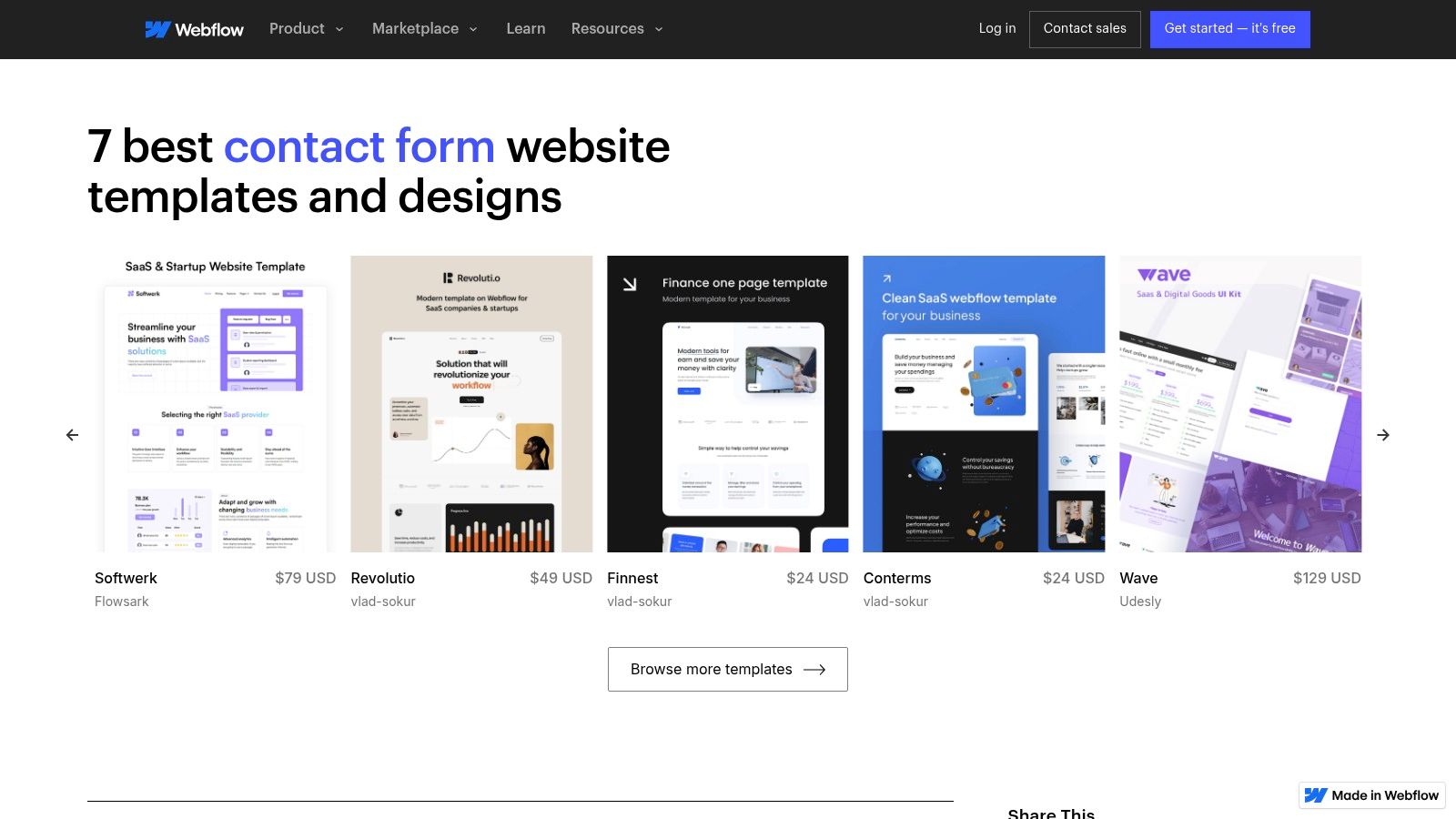
    For designers and teams who prioritize pixel-perfect control and seamless integration into their website’s design system, Webflow offers a unique approach. Instead of a separate form builder, it provides native form components and a vast library of “cloneable” contact form examples created by its community. This allows you to copy fully styled, production-ready form sections directly into your project.

    Webflow

    Webflow is a visual web development platform that lets you build professional websites without code. Its form element is a native component, meaning you have complete visual control over its layout, styling, and interactions using the same tools you use to build the rest of your site. This ensures your contact form perfectly matches your brand’s aesthetic.

    Strategic Analysis: Why Webflow Stands Out

    Webflow’s key advantage is its design-first integration. Unlike third-party tools that are embedded via code snippets, Webflow forms are built directly into the site structure. This eliminates issues with clashing styles or slow-loading scripts and gives designers unparalleled control over every element, from input field padding to custom success and error state animations.

    The power of its cloneable library cannot be overstated. Designers can find inspiration and functional components for nearly any use case, copy them into their project with a click, and then customize them. This model is perfect for agencies and freelancers who need to deliver unique, high-quality designs quickly without starting from scratch. Webflow’s approach to form creation is a great case study in improving user experience by integrating essential tools natively.

    Key Features & Offerings

    Feature Description
    Native Form Builder Build forms directly within the Webflow Designer for full styling control.
    Cloneable Library Access hundreds of free, community-built forms and sections to copy/paste.
    Custom Interactions Animate success/error messages, field focus states, and submission buttons.
    Built-in Submissions Manage form submissions directly in the Webflow dashboard or forward to email.
    Logic & Integrations Connect to tools like Zapier and Make to route data to CRMs and other apps.

    Practical Takeaways & Pricing

    • Pros: Complete design freedom to match brand identity, a rich library of free cloneable assets, and seamless integration with the host website.
    • Cons: Has a steeper learning curve than simple drag-and-drop builders. Form submission quotas are tied to site hosting plans, which can be limiting on lower tiers.
    • Pricing: You can build and use cloneables for free. To publish a site and accept form submissions on a custom domain, you need a paid Site Plan, starting at $14/month (billed annually).

    Actionable Tip: Use Webflow’s “Made in Webflow” showcase and filter by “cloneable” to find advanced contact form examples with complex layouts and interactions. Clone one that fits your needs to deconstruct how it was built and learn new styling techniques you can apply to your own projects.

    Webflow is the ideal solution for designers, agencies, and businesses that refuse to compromise on design and want their contact form to be a seamless, branded extension of their website experience.

    Website: Webflow Contact Form Showcase

    4. TemplateMonster

    While other resources focus on standalone forms, TemplateMonster offers a marketplace approach where you can find contact form examples integrated within complete website themes. This is ideal for businesses that need not just a form, but a fully designed, cohesive website that includes a polished contact page from day one. Instead of building from scratch, you can preview and purchase a professional theme with a built-in contact section.

    The platform functions as a vast digital store for website templates across various technologies like WordPress, HTML, and Elementor. You can filter thousands of designs to find one that aligns with your brand, see live demos of the contact pages, and purchase the entire package for immediate use. This approach is perfect for launching a new site or overhauling an existing one with minimal design work.

    Strategic Analysis: Why TemplateMonster Stands Out

    TemplateMonster’s unique advantage is its focus on holistic design integration. For entrepreneurs or agencies launching a new website, this model saves significant time by providing a professional, ready-to-deploy contact page that perfectly matches the rest of the site’s aesthetic. You are not just getting a form; you are getting the entire user journey context.

    The platform’s strength lies in its sheer volume and variety. With thousands of templates from countless vendors, you can find niche-specific designs that already incorporate relevant fields and layouts for your industry. For example, a restaurant theme will likely have a contact form with a reservation field, while a consulting theme might include an appointment scheduler.

    Key Features & Offerings

    Feature Description
    Integrated Designs Contact forms are part of complete website themes for a cohesive look.
    Vast Marketplace Thousands of templates for WordPress, HTML, Shopify, and more.
    Live Demos Preview a template’s contact page and overall functionality before buying.
    Vendor Ratings Customer reviews and ratings help you choose reliable template authors.
    One-Time Purchase Buy a theme with a lifetime license, avoiding recurring subscription fees.

    Practical Takeaways & Pricing

    • Pros: One purchase provides an entire website design, including a professional contact form. A wide price range and frequent sales make it accessible for various budgets.
    • Cons: Quality and post-purchase support can vary significantly between different template vendors. You are responsible for your own hosting and configuring the form’s backend processing (e.g., email scripts or plugins).
    • Pricing: Template prices vary widely, from as low as $5 for simple HTML templates to over $100 for feature-rich WordPress themes. Purchases are typically a one-time fee.

    Actionable Tip: Use TemplateMonster’s live demos as an advanced research tool. Analyze how different high-selling themes structure their contact pages, what fields they include for specific industries, and what microcopy they use to encourage submissions. This provides real-world design intelligence you can apply to your project, even if you don’t purchase the theme.

    TemplateMonster is the go-to solution for anyone who needs to see contact forms in the context of a full-site design, offering an efficient path to a professional and consistent online presence.

    Website: TemplateMonster Contact Form Themes

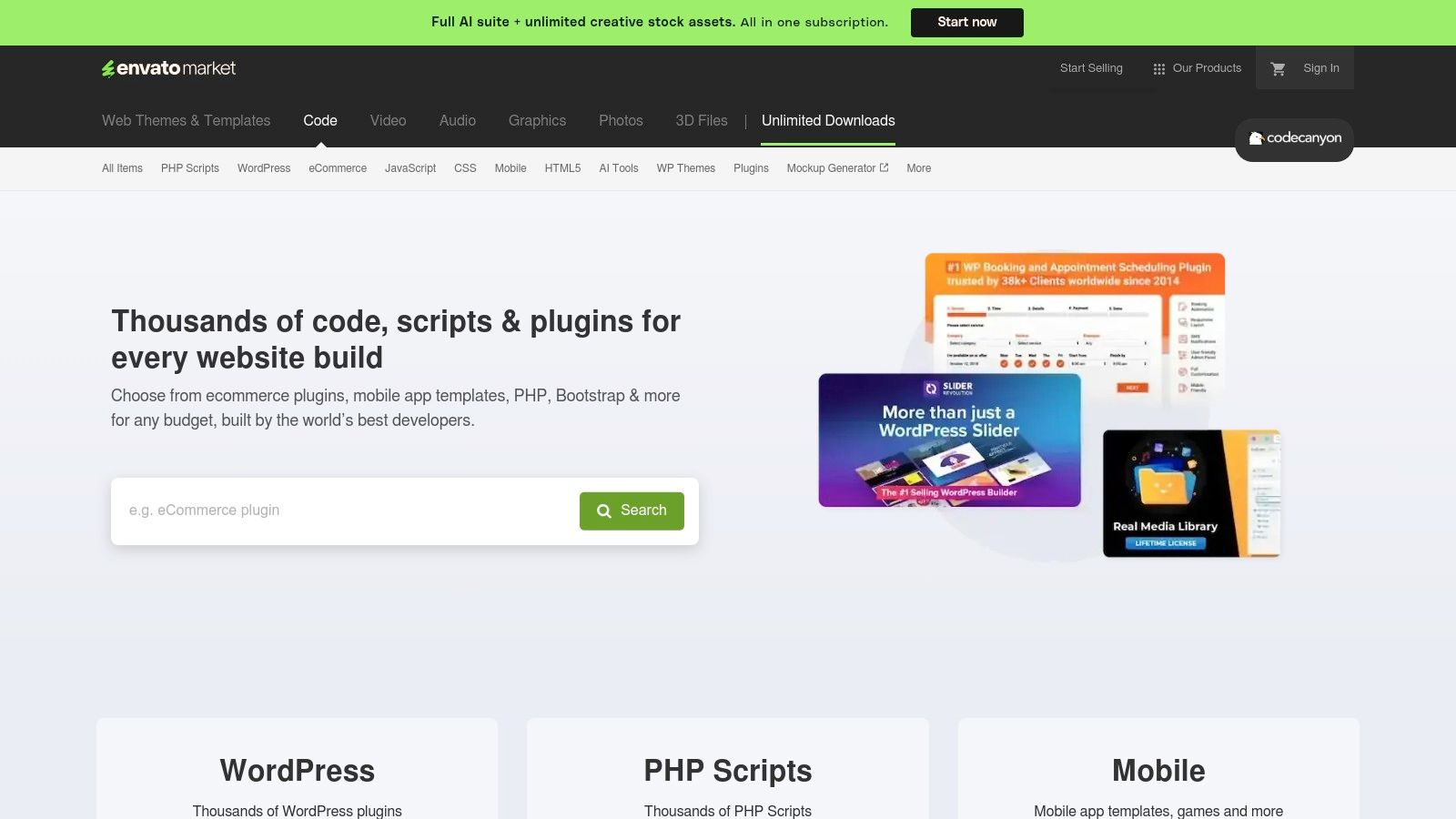
    5. CodeCanyon (Envato Market)

    For developers or businesses that prefer to own their tools, CodeCanyon offers a different approach to contact forms. It’s a massive marketplace for downloadable scripts and plugins, providing the raw code for self-hosted contact form examples instead of a subscription-based service. This is ideal for those who want complete control over their data, functionality, and hosting environment without being tied to a third-party platform.

    CodeCanyon (Envato Market)

    Unlike SaaS builders, you purchase a script or WordPress plugin once and can deploy it on your own server. The offerings range from simple PHP AJAX forms to complex, multi-step form builders with conditional logic and payment integrations. This model empowers users to customize the code directly, ensuring maximum flexibility for unique project requirements.

    Strategic Analysis: Why CodeCanyon Stands Out

    CodeCanyon’s key advantage is ownership and control. In an era where data privacy is paramount, hosting your own form logic means submission data never has to pass through a third-party service. This can be a critical requirement for organizations in regulated industries or for companies with strict internal data governance policies.

    The platform’s strength lies in its diversity. You can find highly specialized scripts tailored for specific needs, such as forms with advanced file uploaders, integrated cost calculators, or unique spam prevention techniques. This one-time purchase model is also highly cost-effective for agencies and developers who can reuse a licensed script across multiple projects (depending on the license terms), avoiding recurring monthly fees.

    Key Features & Offerings

    Feature Description
    Downloadable Scripts Purchase and download PHP, JavaScript, and AJAX-powered form scripts.
    WordPress Plugins A large selection of form builder plugins for the WordPress ecosystem.
    One-Time Licensing Pay once for the script and receive future updates, often for a limited time.
    Full Code Access Users get the source code, allowing for deep customization and integration.
    Community & Reviews Each product has ratings, comments, and author support to help gauge quality.

    Practical Takeaways & Pricing

    • Pros: Complete control over data and hosting, cost-effective one-time purchase model, and a wide variety of niche and powerful solutions.
    • Cons: Quality and support vary significantly between authors. You are responsible for installation, server configuration, security, and maintenance.
    • Pricing: Scripts are sold with a one-time license fee, typically ranging from $7 to $49. Extended support is often available for an additional fee.

    Actionable Tip: Before purchasing, meticulously check an item’s “Last Update” date, version compatibility (e.g., PHP version), buyer ratings, and the author’s comment response history. This due diligence is crucial for avoiding abandoned or poorly supported scripts that could become a security risk.

    CodeCanyon is the go-to resource for tech-savvy users, developers, and agencies who prioritize customization, data privacy, and long-term cost savings over the convenience of a managed, all-in-one platform.

    Website: CodeCanyon Contact Form Scripts

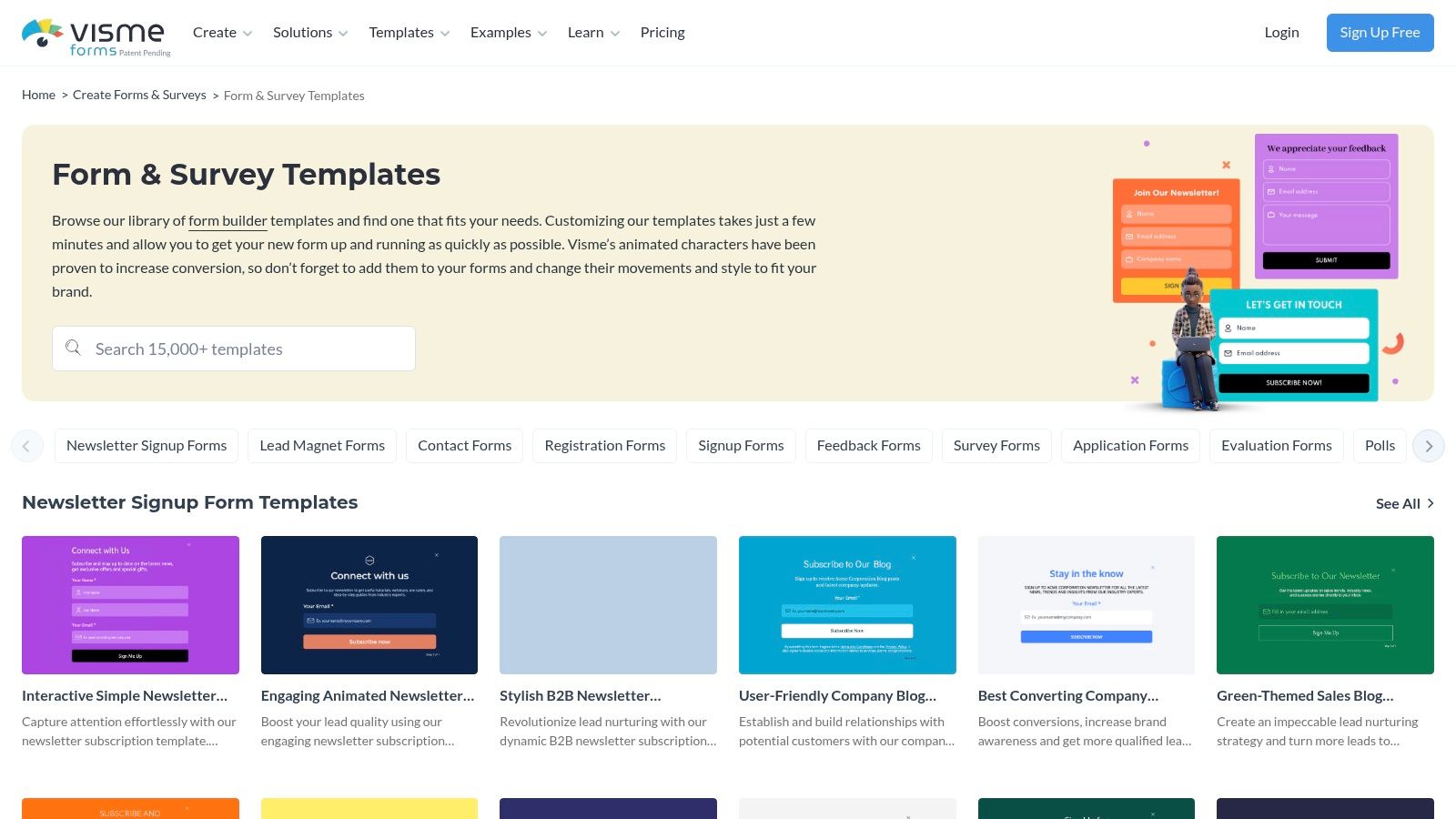
    6. Visme

    While many form builders focus purely on data collection, Visme positions its contact forms as an integrated part of a larger visual design ecosystem. Known for its presentation and infographic tools, Visme offers a library of polished, design-forward contact form examples that prioritize brand consistency and visual appeal. It’s an ideal choice for marketers who want their forms to look like a seamless, professionally designed extension of their website or landing page.

    Instead of a utilitarian form builder, Visme provides stylized templates that can include animated elements and interactive components. The platform allows users to create a form within a broader design project, such as a sales proposal or an interactive infographic, and then embed it anywhere online.

    Visme

    Strategic Analysis: Why Visme Stands Out

    Visme’s core advantage is its focus on visual cohesion and branding. For companies where design is paramount, a generic-looking embedded form can disrupt the user experience. Visme solves this by treating the contact form as a design asset, allowing for deep customization of fonts, colors, backgrounds, and layouts to perfectly match a brand’s aesthetic.

    The platform’s strength is further amplified by its built-in analytics. When you embed a Visme form, you can track views, completions, and average completion time directly within the Visme dashboard. This provides immediate, accessible data for optimizing form performance without needing to configure complex third-party analytics tools, making it perfect for marketing campaigns where quick feedback is essential.

    Key Features & Offerings

    Feature Description
    Stylized Templates A curated gallery of visually-focused templates with interactive and animated options.
    Design Integration Forms are part of a unified design suite, working alongside presentations, charts, and graphics.
    Embed Options Generate a simple embed code to publish forms on any website, landing page, or project.
    In-Platform Analytics Track form views, submissions, and completion rates directly within the Visme dashboard.
    Brand Kit Apply your company’s official fonts, colors, and logos to forms for perfect brand alignment.

    Practical Takeaways & Pricing

    • Pros: Exceptional visual customization for creating beautiful, on-brand forms. Integrated analytics provide easy-to-understand performance metrics. Part of a comprehensive design toolkit.
    • Cons: Fewer advanced automation and integration options compared to dedicated form builders like Jotform. Submission limits and features are tied to subscription tiers.
    • Pricing: Visme offers a free Basic plan with limited templates and a cap on projects. Paid plans start at $12.25/month (billed annually) for more features, storage, and premium assets.

    Actionable Tip: Leverage Visme’s analytics to A/B test your form designs. Create two visually distinct versions of your contact form for the same landing page, run them for a set period, and use Visme’s built-in data to see which design achieves a higher completion rate.

    Visme is the best fit for marketing teams and designers who need their contact forms to be as visually compelling as the rest of their brand assets and want straightforward analytics to measure engagement.

    Website: Visme Form & Survey Templates

    7. Instapage

    Instapage is a premium landing page platform that treats the contact form not as a standalone component, but as an integral part of a high-performance conversion funnel. It provides hundreds of professionally designed, mobile-responsive page templates where the contact form is strategically placed and optimized for users arriving from paid ad campaigns.

    The platform is engineered for marketers who need to maximize their return on ad spend. Its powerful drag-and-drop builder allows for precise customization of every element on the page, including multi-step forms that break down information requests into smaller, less intimidating steps. This approach is proven to reduce friction and increase submission rates.

    Strategic Analysis: Why Instapage Stands Out

    Instapage’s core advantage is its relentless focus on conversion rate optimization (CRO) for paid traffic. Unlike general-purpose form builders, every feature is designed to turn clicks into leads. Its server-side A/B testing capabilities let you experiment with different form layouts, field labels, or button copy to scientifically determine what works best for your audience.

    The platform’s strength is amplified by its enterprise-grade performance features, like its proprietary Thor Render Engine for lightning-fast page loads. For marketers running campaigns where every second counts, this speed can significantly reduce bounce rates and improve lead quality. Heatmaps and collaboration tools further empower teams to analyze user behavior and iterate on their contact form examples with data-driven insights.

    Key Features & Offerings

    Feature Description
    Landing Page Templates Over 500 conversion-focused layouts with integrated forms.
    Multi-Step Forms Break down long forms into digestible steps to reduce user friction.
    A/B Testing Server-side split testing to optimize form performance and layout.
    Performance Engine Fast-loading pages with AMP support to maximize ad spend effectiveness.
    Team Collaboration Real-time visual feedback and heatmaps to analyze user interactions on higher-tier plans.

    Practical Takeaways & Pricing

    • Pros: Elite performance and optimization tools specifically for paid campaigns, reusable Global Blocks to scale form deployment across multiple pages, and robust analytics.
    • Cons: Premium pricing makes it less suitable for businesses not actively running paid traffic. It’s more of a landing page platform than a simple form builder.
    • Pricing: Instapage’s pricing is geared toward professional teams. The “Build” plan starts at $199/month (billed annually), with custom pricing for advanced “Convert” plans.

    Actionable Tip: Use Instapage’s multi-step form feature to ask for sensitive information like a phone number or budget in the second or third step. Once a user completes the first step (e.g., name and email), they are more psychologically committed to finishing the process, a principle known as the “foot-in-the-door” technique. For a deeper dive into CRO, you can learn more about how to boost conversions.

    Instapage is the ideal solution for performance marketers and agencies who need to build, test, and scale high-converting contact funnels tied directly to their advertising efforts.

    Website: Instapage Contact Us Page Templates

    Contact Form Examples — 7-Tool Comparison

    Solution Implementation complexity (🔄) Resource requirements (⚡) Expected outcomes   (⭐ / 📊) Ideal use cases (💡) Key advantages
    Jotform Low 🔄 — no-code drag & drop; fast publish Low ⚡ — minimal dev; paid tiers for higher quotas ⭐⭐⭐⭐ — production-ready forms; strong automation 📊 💡 Quick embeddable forms with integrations; enterprises/nonprofits Fast to launch; wide integrations; compliance options
    Typeform Medium 🔄🔄 — logic flows & multi-step setup Medium ⚡ — subscription scales with responses ⭐⭐⭐⭐ — high completion UX; conversational flows 📊 💡 Marketing/growth teams wanting engaging forms Excellent UX; brand customization; conditional logic
    Webflow Medium-High 🔄🔄🔄 — visual builder learning curve Medium ⚡⚡ — designer time; hosting costs when publishing ⭐⭐⭐ — designer-controlled, production-ready layouts 📊 💡 Designers building branded sites with inline forms Visual control; cloneable sections; strong docs
    TemplateMonster Low-Medium 🔄🔄 — purchase + theme setup Medium-High ⚡ — hosting & form processing self-managed ⭐⭐⭐ — full-site themes with contact pages; quality varies 📊 💡 Buy complete themes that include polished contact layouts Large selection; instant downloads; price variety
    CodeCanyon (Envato) High 🔄🔄🔄 — dev installation & customization High ⚡ — developer effort for hosting/security ⭐⭐⭐⭐ — full control/ownership; flexible backend 📊 💡 Developers wanting self-hosted, privacy-focused forms Own the code; one-time licenses; wide script variety
    Visme Low-Medium 🔄🔄 — design-focused editor Low ⚡⚡ — easy styling; quotas on free plan ⭐⭐⭐ — visually polished forms; basic analytics 📊 💡 Brand-forward forms integrated with design assets Strong visual customization; built-in metrics
    Instapage Medium-High 🔄🔄🔄 — campaign & testing setup High ⚡⚡⚡ — premium pricing; team collaboration costs ⭐⭐⭐⭐⭐ — optimized for conversions; A/B and speed-first 📊 💡 Paid-traffic landing pages and conversion experiments Enterprise optimization; fast rendering; testing tools

    From Examples to Execution: Build Your Conversion Engine

    We’ve explored a wide range of powerful contact form examples, from the conversational flows of Typeform to the highly customizable builds from Webflow and the ready-to-deploy templates on TemplateMonster. Across every successful example, a few core principles emerge, transforming a simple web form from a passive data collector into a proactive conversion engine.

    The most effective forms are not just a series of questions; they are the start of a meaningful conversation with your audience. They demonstrate that you respect the user’s time, understand their intent, and are genuinely committed to helping them. This is achieved by meticulously aligning every element with the user’s goal, whether they’re requesting a demo, seeking support, or providing feedback.

    The key is to move beyond thinking of a contact form as a mere utility. Instead, view it as a critical touchpoint in the customer journey. It’s an opportunity to build trust, reinforce your brand’s personality, and make a stellar first impression. The difference between a form that gets ignored and one that generates a steady stream of qualified leads lies in the strategic details we’ve analyzed.

    Your Final Checklist for a High-Converting Form

    As you begin to implement these ideas, keep this consolidated checklist handy. These are the non-negotiable principles that underpinned all the best contact form examples we reviewed.

    1. Ruthless Simplicity is Key: Every single field creates friction. Before adding a field, ask yourself: “Is this information absolutely essential for the very next step of the conversation?” If not, remove it. You can always gather more details later.
    2. Make the Call-to-Action Unmistakable: Your CTA button should be a beacon. Use a contrasting color, action-oriented language (e.g., “Get My Free Quote” instead of “Submit”), and ensure it’s the most prominent element on the form.
    3. Surround the Form with Trust: Users are hesitant to share personal information. Mitigate this by adding trust signals directly beside your form. This includes privacy policy links, security badges (like SSL), customer testimonials, or a simple sentence explaining what you’ll do with their data.
    4. Prioritize the Mobile Experience: Assume over half of your users will find your form on a mobile device. Test it rigorously. Are the fields large enough to tap? Does the keyboard pop up correctly? Is there any horizontal scrolling required? A poor mobile experience is a guaranteed conversion killer.
    5. Provide Instant, Clear Feedback: Use inline validation to tell users immediately if there’s an error in a field, rather than waiting until they hit submit. Clear success messages after submission are equally important, letting the user know their entry was received and what to expect next.

    Choosing the Right Tool for the Job

    The tools we’ve covered, from Jotform to Instapage, each offer unique strengths. Your choice should depend on your technical resources, design needs, and integration requirements.

    • For Speed and Simplicity: Tools like Typeform and Jotform are excellent for creating beautiful, functional forms in minutes without any code.
    • For Total Design Control: Webflow is the champion if you need to build a form that is perfectly integrated into a custom website design.
    • For Pre-Built Solutions: Marketplaces like TemplateMonster and CodeCanyon provide a massive library of templates if you’re looking for a quick, affordable, and often feature-rich starting point.

    Ultimately, building the perfect form is an ongoing process of testing, learning, and refining. These contact form examples provide the blueprint, but your unique audience will dictate the final design. Pay attention to your analytics, gather user feedback, and never stop optimizing. The insights you gather from other high-performing designs, even outside your direct industry, can be incredibly valuable. If you want to expand your inspiration, you can explore various examples to see how different layouts and strategies are used across the web.


    Ready to capture your visitors’ attention before they even reach your contact page? Add an unmissable call to action with a top notification bar from LoudBar. It’s the perfect way to guide users to your newly optimized forms and promotions. Create your free, eye-catching notification bar in seconds with LoudBar.

  • 12 High-Converting Lead Magnet Template Resources for 2025

    12 High-Converting Lead Magnet Template Resources for 2025

    Generating high-quality leads is a foundational goal for nearly every business, from e-commerce brands to SaaS companies. Yet, the process of creating a compelling lead magnet from scratch can be a significant bottleneck. It demands design skills, content strategy, and a clear understanding of what converts. A well-designed lead magnet template solves this problem by providing a professional, structured starting point, allowing you to focus on the value of your content rather than the complexities of layout and design. This guide eliminates the guesswork by curating the best platforms and marketplaces for high-converting templates.

    This resource list is designed for immediate action. We dive into twelve of the best sources for lead magnet templates, including everything from PDF checklists and e-books to interactive quizzes and email course outlines. For those needing a deeper dive into the strategy behind these assets, our guide on Lead Magnets Explained From Concept To Conversion offers a comprehensive overview. Each entry in our list provides a clear breakdown of its unique strengths, ideal use cases, and potential limitations, so you can quickly identify the perfect fit for your specific marketing goals and budget.

    Whether you’re a marketing agency managing multiple clients, a startup founder needing a quick on-site CTA, or a content creator looking to grow your email list, the right template can dramatically accelerate your list-building efforts. We’ve included direct links and screenshots for each platform, ensuring you can find and implement the ideal resource efficiently. Let’s explore the templates that will help you turn website visitors into loyal subscribers.

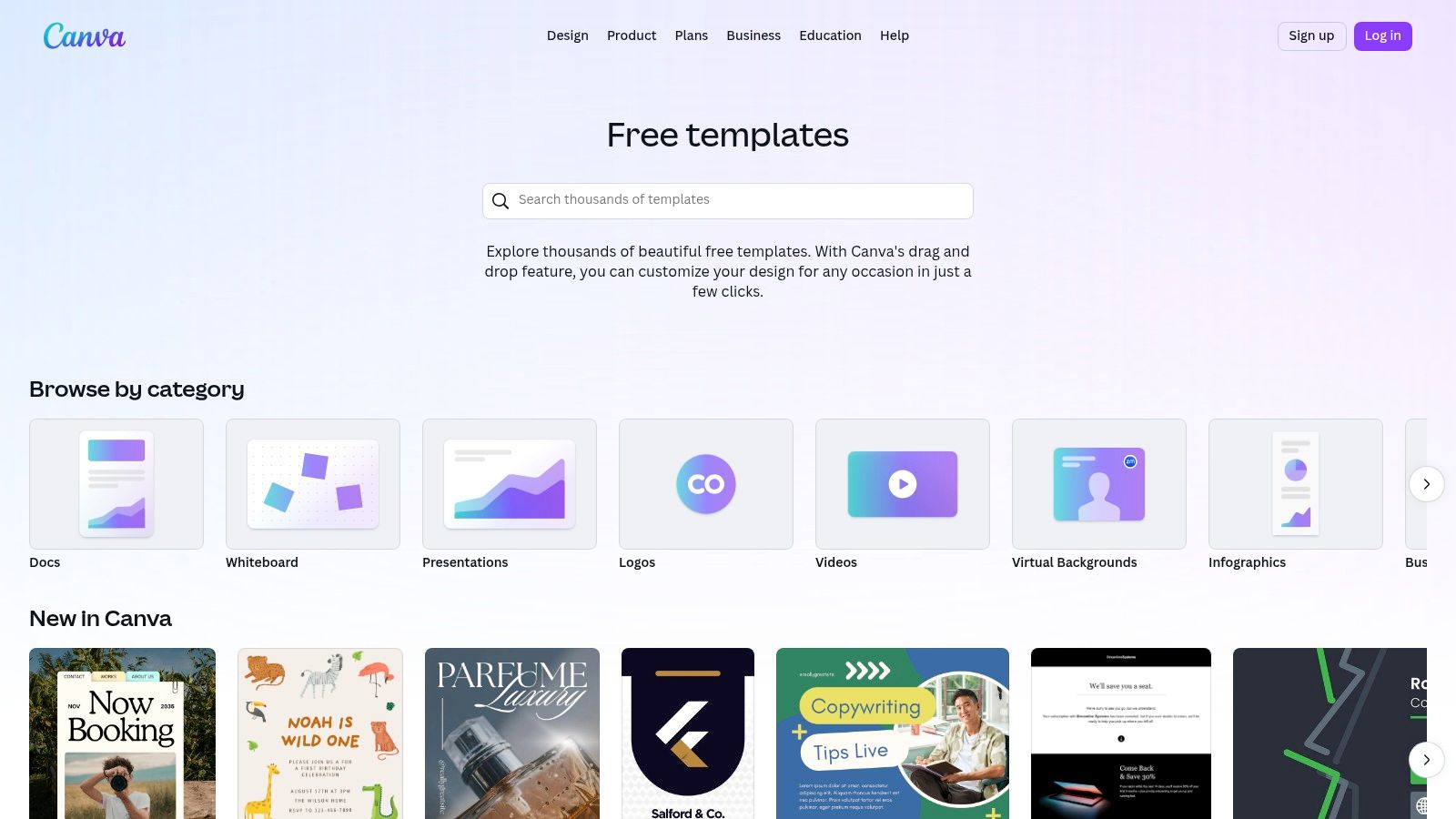
    1. Canva

    Canva is an indispensable design platform for marketers and business owners who need to create visually appealing lead magnets without a graphic design background. Its strength lies in its vast library of professionally designed templates that can be quickly customized for various formats, including ebooks, checklists, worksheets, and infographics. This makes it an ideal starting point for anyone looking for a high-quality lead magnet template.

    Canva

    The user experience is built around a simple drag-and-drop editor, allowing for rapid customization. For brands, the “Brand Kit” feature (available on the Pro plan) is a significant time-saver, letting you apply your brand’s specific colors, fonts, and logos to any template with a single click. This ensures brand consistency across all your marketing materials, from a simple checklist to a comprehensive multi-page guide.

    Key Features & Implementation Tips

    Canva stands out by democratizing design, making it accessible for SaaS teams, e-commerce brands, and content creators alike.

    • Massive Template Library: Search for specific terms like “checklist template” or “ebook” to find dozens of relevant starting points.
    • Easy Exporting: You can download your finished design as a print-ready PDF, a standard PDF for web use, or even share it as a direct link.
    • Rich Media Integration: The platform includes a massive library of stock photos, icons, charts, and graphics, many of which are available on the free plan.

    Practical Tip: To create a cohesive lead magnet template, start by setting up your Brand Kit. Then, create a master template for one lead magnet type (e.g., a one-page checklist) and duplicate it for future offers to maintain a consistent look and feel.

    Pricing and Access

    • Canva Free: Offers robust functionality with thousands of free templates and design elements.
    • Canva Pro: Starts at $119.99/year for one person. It unlocks premium templates, the Brand Kit, Magic Resize, and a larger library of stock assets. This is highly recommended for serious marketing efforts.

    Website: https://www.canva.com/templates/

    2. Etsy

    Etsy serves as a massive marketplace not just for physical goods, but for digital products, making it a goldmine for unique and niche-specific lead magnet templates. Independent creators offer thousands of pre-made designs, often sold as editable Canva files, covering everything from detailed workbooks to simple one-page checklists. This is an excellent solution for businesses wanting a more distinct aesthetic than what standard platforms provide.

    The platform’s value lies in its sheer variety and affordability. You can find a professional, multi-page lead magnet template for a fraction of the cost of a custom design. The instant digital download model means you can purchase a template and begin customizing it within minutes. Seller ratings and customer reviews are crucial here, providing social proof to help you gauge the quality and ease of use before buying.

    Key Features & Implementation Tips

    Etsy is perfect for finding a creative spark or a ready-to-go solution that aligns with a specific industry, from wellness coaching to real estate.

    • Huge Variety of Styles: Search for terms like “boho ebook template” or “minimalist checklist” to find designs that perfectly match your brand’s visual identity.
    • Instant Digital Downloads: Once purchased, you typically receive a PDF with a direct link to the editable template in Canva.
    • Seller Ratings and Reviews: Always check feedback from previous buyers to ensure the template is high-quality and the seller is reputable.

    Practical Tip: Before purchasing, carefully read the item description. Some sellers use Canva Pro elements in their designs. If you only have a free Canva account, these elements will appear with a watermark, requiring you to either upgrade or replace them.

    Pricing and Access

    • Varies by Seller: Prices can range from just a few dollars for a simple one-page template to $30+ for comprehensive lead magnet bundles. Most are one-time purchases.

    Website: https://www.etsy.com/search?q=lead+magnet+template

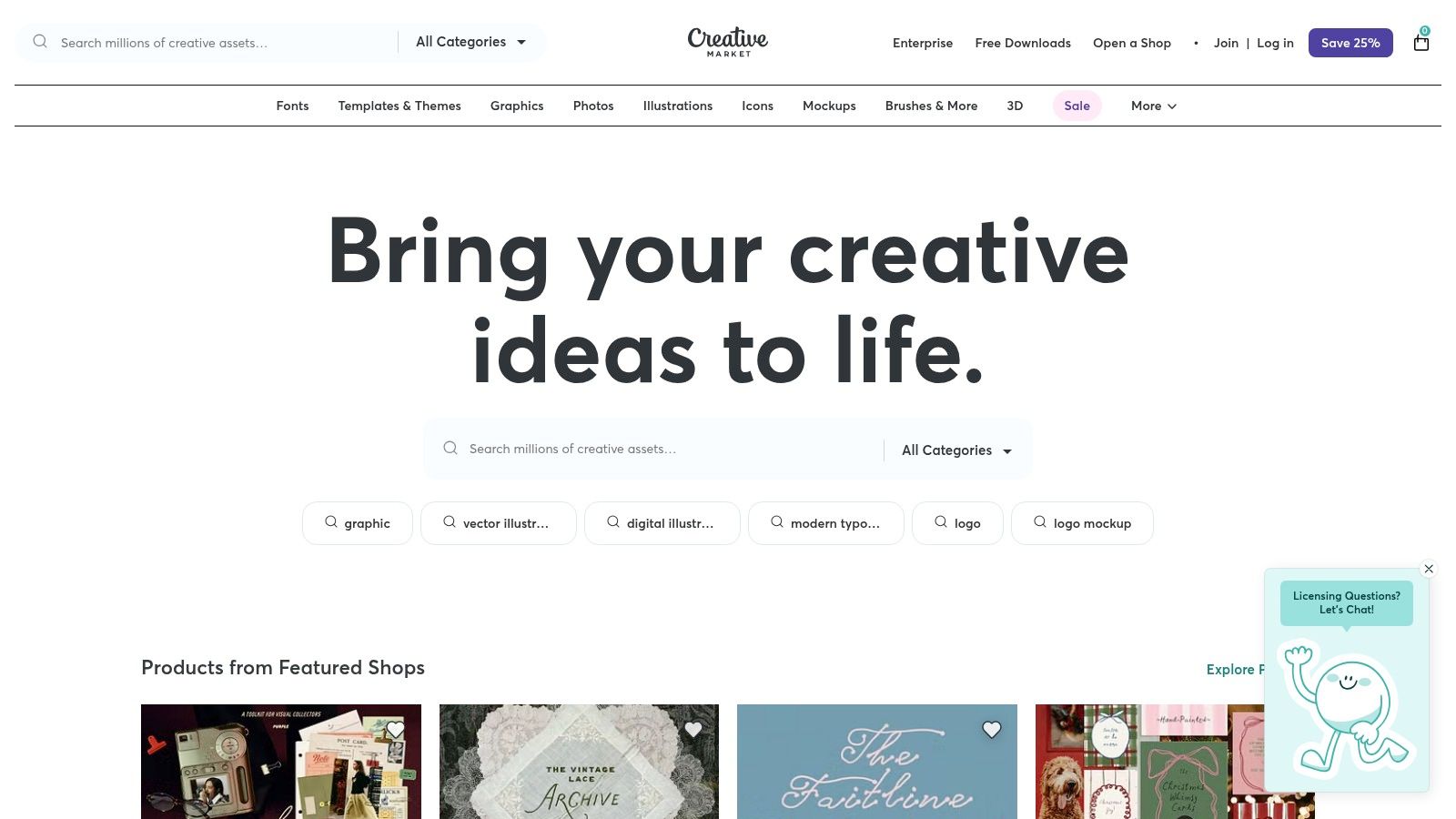
    3. Creative Market

    Creative Market is a curated design marketplace where independent creators sell premium digital assets. For businesses seeking a truly polished and professional aesthetic, it offers an exceptional selection of high-quality lead magnet template packs, often designed for easy editing in Canva or Adobe InDesign. These templates move beyond basic layouts, providing cohesive, multi-page designs for ebooks, workbooks, and webinars that are ready for a high-end brand.

    Creative Market

    Unlike platforms with user-generated freebies, every item on Creative Market is reviewed for quality, ensuring you get a professional-grade product. The detailed previews allow you to see every page of a template before purchasing, and you often get direct support from the creator. This makes it a go-to resource for brands that want to save significant design time while still achieving a custom, high-end look.

    Key Features & Implementation Tips

    Creative Market excels at providing ready-made, brand-in-a-box solutions that require minimal tweaking to look fantastic.

    • Multi-Page Ebook & Workbook Templates: Find comprehensive template packs that include everything from cover pages to chapter layouts and call-to-action pages.
    • Commercial Licensing Options: Most templates come with a commercial license, allowing you to use them for business purposes, but always check the specific terms for each product.
    • Detailed Previews and Creator Support: You can view all included pages and often contact the designer directly for questions, providing an extra layer of confidence.

    Practical Tip: Use the search filters to narrow down options by application (e.g., “Canva,” “InDesign”) and format (“US Letter,” “A4”) to find the perfect lead magnet template for your needs. Pay close attention to the included file types and required fonts.

    Pricing and Access

    • Per-Item Pricing: Templates are sold individually, with prices set by the creator. Prices typically range from $15 to $70+ for comprehensive lead magnet kits.
    • No Subscription: You pay only for the specific assets you need, with no recurring fees. Licenses vary, so review the terms before purchase.

    Website: https://creativemarket.com

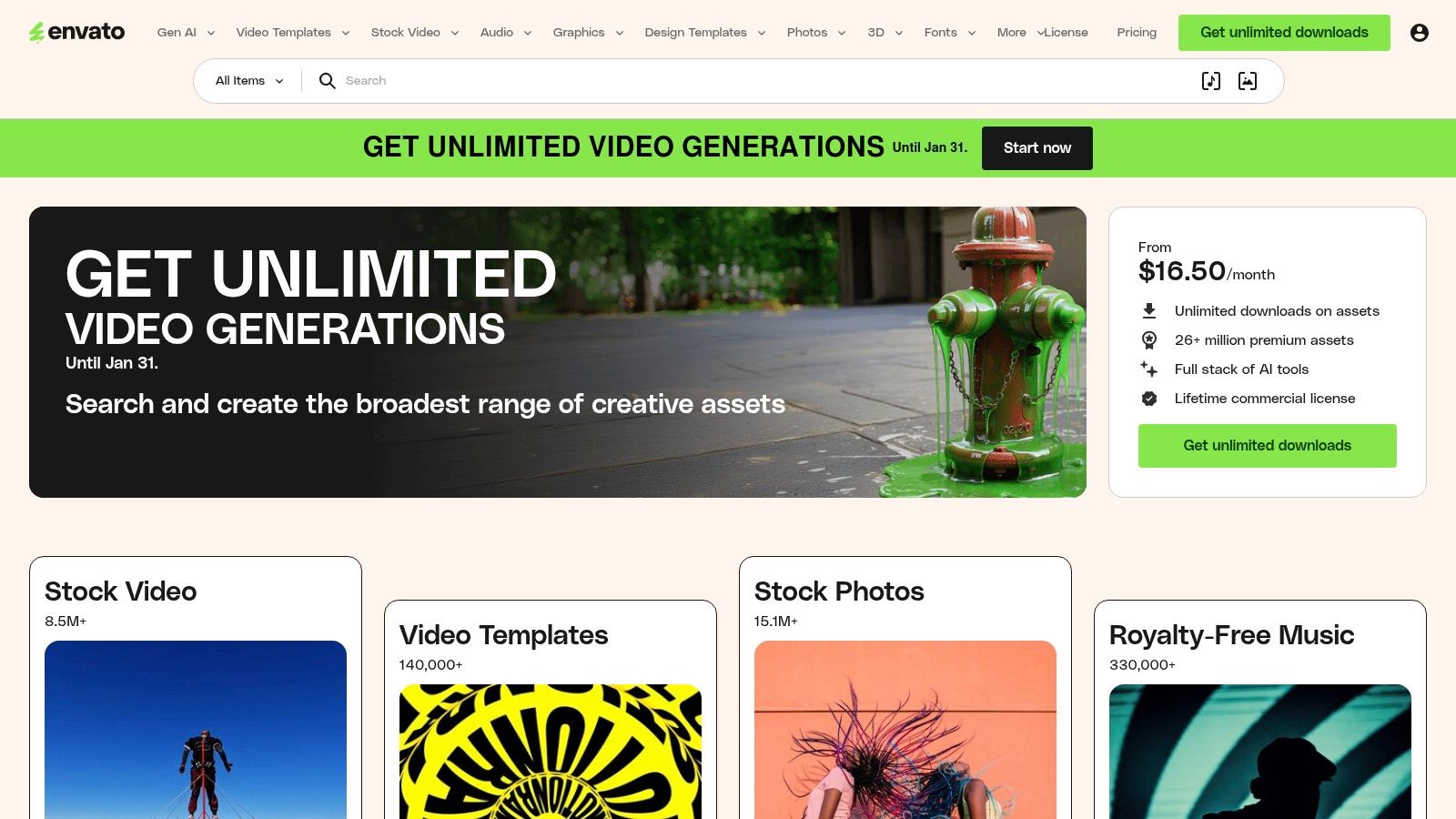
    4. Envato Elements

    For creators and marketers who require a continuous stream of diverse design assets, Envato Elements offers an exceptional value proposition. Instead of purchasing templates individually, you gain unlimited access to a massive library of high-quality files for a single subscription fee. This is ideal for agencies or businesses that frequently produce lead magnets like ebooks, detailed whitepapers, and multi-page guides and need a professional lead magnet template in formats like InDesign, Photoshop, or Illustrator.

    Envato Elements

    The platform’s key differentiator is its all-inclusive model, which covers everything from graphics and stock video to presentation templates and fonts. This allows for a high degree of creative freedom, as you can mix and match different assets to create a truly unique and polished final product. The commercial license included with the subscription simplifies the legal side, ensuring your creations are ready for business use.

    Key Features & Implementation Tips

    Envato Elements is best suited for those comfortable with professional design software who need a high volume of quality assets without per-item costs.

    • Unlimited Downloads: A single subscription provides limitless access to millions of creative assets, including thousands of lead magnet templates.
    • Professional File Formats: Templates are typically available in Adobe InDesign (INDD), Photoshop (PSD), and Illustrator (AI) files, offering maximum editability.
    • Comprehensive Licensing: The simple commercial license covers most business use cases, so you don’t have to worry about tracking individual licenses. For those looking for even more assets related to Envato Elements, you might find valuable resources among additional Envato Elements products.

    Practical Tip: Use keywords like “ebook template InDesign” or “brochure template” to narrow your search. Once you find a designer whose style you like, check their portfolio for other templates to create a consistent brand aesthetic across different marketing materials.

    Pricing and Access

    • Individual Plan: Starts at $16.50/month. This provides one user with unlimited downloads of the entire library.
    • Teams Plan: Priced per member, starting at $10.75/month per member for a team of 5. It offers team-specific features and easy license management.

    Website: https://elements.envato.com

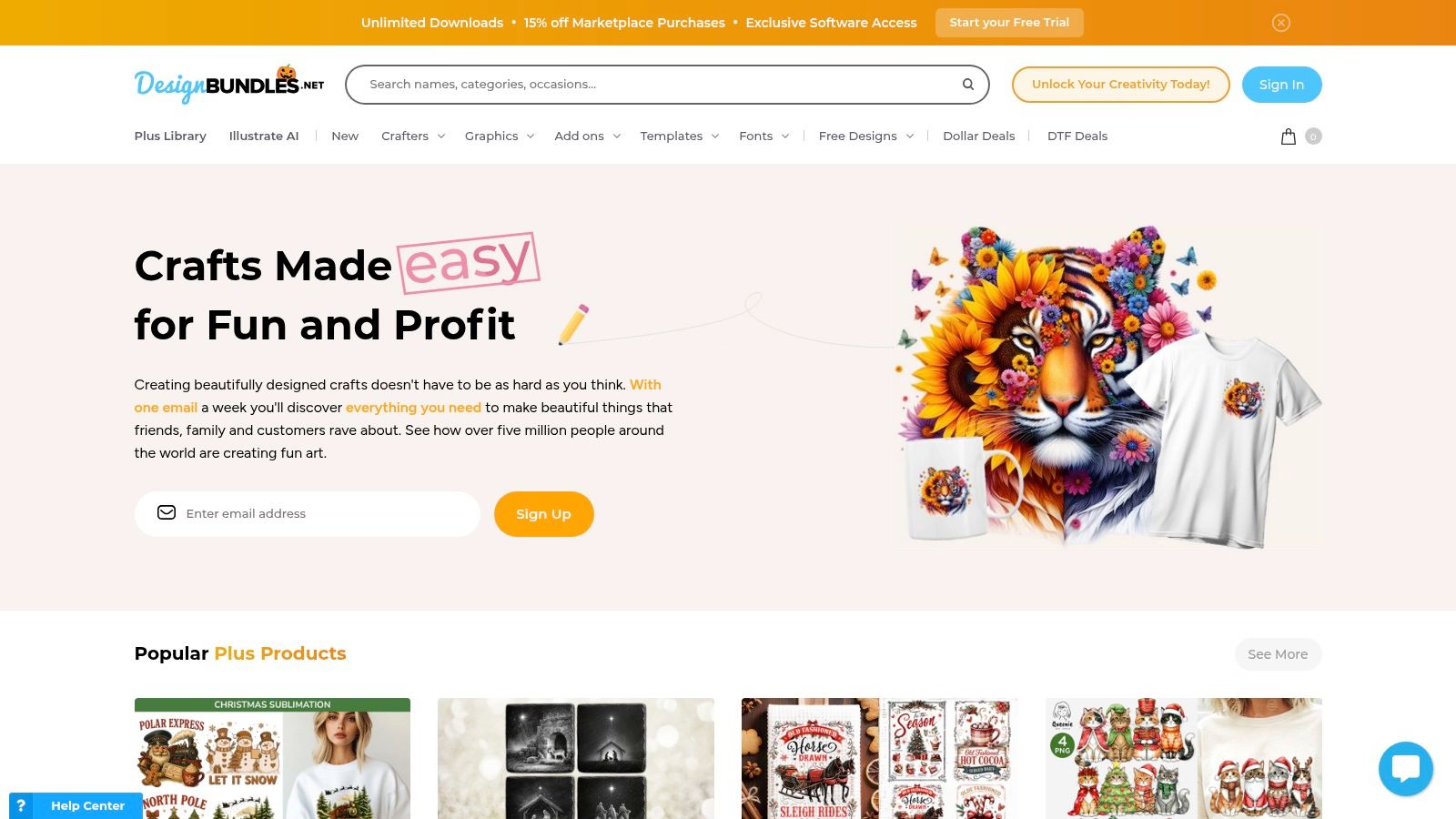
    5. Design Bundles

    Design Bundles is a design marketplace that serves as a treasure trove for marketers looking for pre-packaged, niche-specific lead magnet bundles. Unlike platforms where you build from scratch, its strength lies in offering complete, multi-page Canva and Adobe templates for ebooks, workbooks, and planners, sold by independent creators. This makes it an excellent resource for finding a fully realized lead magnet template you can purchase once and customize.

    Design Bundles

    The platform is ideal for users who want to bypass the initial design phase entirely. You can find bundles tailored to specific industries like wellness, coaching, or real estate, often including covers, chapter pages, and worksheets. Because these are sold with commercial licenses, you can adapt them for your business needs without recurring fees, offering a cost-effective alternative to subscription services.

    Key Features & Implementation Tips

    Design Bundles provides a different approach by focusing on curated, ready-to-edit packages that cater to specific business needs.

    • Niche-Specific Bundles: Search for terms like “coaching workbook Canva” or “real estate ebook” to find comprehensive packages often containing 20+ pages.
    • Commercial Licenses: Most templates are sold with a commercial use license, allowing you to use them for your business’s lead generation efforts. Always check the specific license terms.
    • One-Off Purchases: You buy what you need without a subscription. This is perfect for single campaigns or for building a library of templates over time.

    Practical Tip: Always review seller ratings and read the full item description. Descriptions typically list the exact number of pages, file formats (Canva, InDesign, etc.), and whether stock images are included. This ensures the lead magnet template you purchase meets your technical and content requirements.

    Pricing and Access

    • Per-Product Pricing: Prices vary significantly depending on the seller and the complexity of the bundle, ranging from a few dollars to $50+.
    • Plus Membership: A subscription option that provides credits for downloads and access to exclusive products, which can be cost-effective for frequent buyers.

    Website: https://designbundles.net

    6. Template.net

    Template.net is a massive resource library for those who prefer creating marketing assets within familiar office software over dedicated design platforms. Its unique value is providing lead magnet files in formats like Google Docs and Microsoft Word, alongside traditional PSD and Illustrator files. This makes it an excellent choice for teams that are more comfortable editing text and layouts in a word processor than a design canvas, allowing for the quick creation of a functional lead magnet template.

    The platform is geared toward practicality and speed for non-designers. You can find ready-to-edit layouts for ebooks, worksheets, and reports that can be customized and then exported directly to PDF for delivery. While the visual variety may not compete with design-centric sites, its strength is its accessibility for anyone who can use Google Docs, eliminating the learning curve associated with graphic design tools.

    Key Features & Implementation Tips

    Template.net serves users who prioritize content and structure over complex visual design, offering a straightforward path from template to finished PDF.

    • Multiple File Formats: Templates are available for Google Docs, Word, Apple Pages, PSD, and Illustrator, offering unparalleled flexibility for different workflows.
    • Broad Business Focus: Beyond marketing, the site includes templates for planning, reports, and other business documents, which can be repurposed as lead magnets.
    • Online Editor: For quick edits without downloading software, some templates can be customized directly on the website before being exported.

    Practical Tip: Use the Google Docs or Word version of a lead magnet template for collaborative content creation. Your writing team can finalize the copy directly in the document before a manager gives it a final review and exports it as a PDF, streamlining the entire production process.

    Pricing and Access

    • Free Templates: A selection of templates is available for free with attribution.
    • Pro Plan: Starts at $8.25/month (billed annually). This provides unlimited access to their entire library of pro templates, designs, and documents.

    Website: https://www.template.net

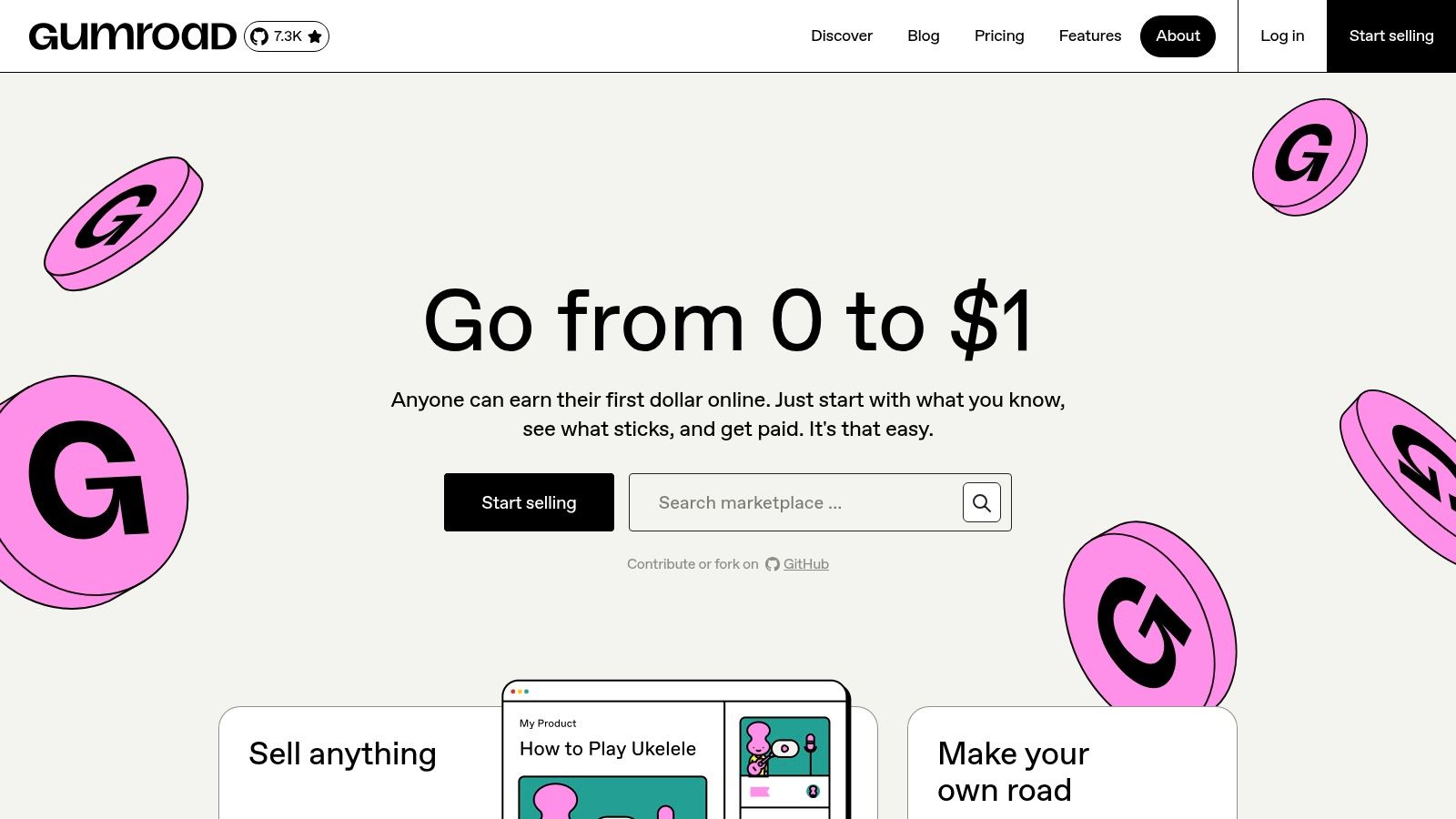
    7. Gumroad

    Gumroad is a popular marketplace for creators to sell digital products directly to consumers, making it a hidden gem for finding unique and specialized lead magnet templates. Unlike massive platforms, Gumroad hosts independent designers who often sell comprehensive template packs, which might include variations for ebooks, checklists, and social media graphics, all designed to work together cohesively. This direct-from-creator model means you can discover a lead magnet template with a distinct style you won’t find elsewhere.

    Gumroad

    The platform’s strength lies in its niche offerings and the added value provided by sellers. Many listings include not just the templates (often editable in Canva or Adobe software) but also video tutorials, usage guides, or direct support from the designer. This can be incredibly helpful for marketers who want to understand the strategic thinking behind the design and how to best adapt it for their own campaigns.

    Key Features & Implementation Tips

    Gumroad excels by offering direct access to unique, creator-driven template bundles that often cater to specific industries or aesthetics.

    • Niche-Specific Template Packs: Search for terms like “SaaS lead magnet” or “ecommerce checklist template” to uncover packs tailored to your industry.
    • Direct Creator Support: Many sellers offer support or include detailed instructions, providing more value than a simple template download.
    • Instant Delivery: Once purchased, digital files are delivered immediately to your inbox, allowing you to start customizing right away.

    Practical Tip: Before purchasing, carefully read the product description to check for software compatibility (e.g., Canva, Figma, Adobe InDesign) and licensing terms. Look at seller ratings and reviews to gauge the quality and support you can expect.

    Pricing and Access

    • Varies by Seller: Prices are set by individual creators. Templates can range from a few dollars for a simple checklist to $50+ for a comprehensive bundle with multiple assets and video tutorials. There is no subscription fee to browse or buy.

    Website: https://gumroad.com

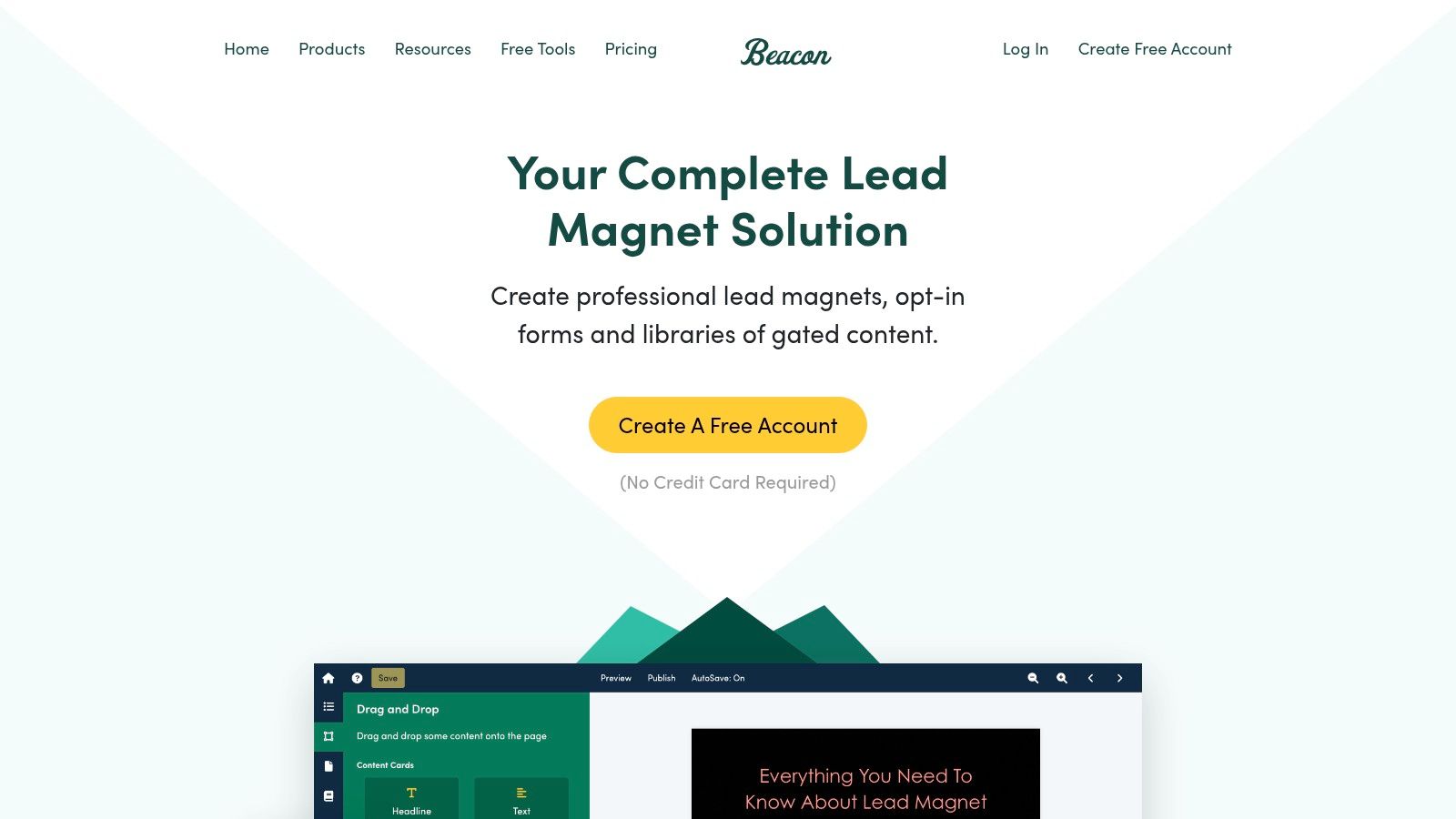
    8. Beacon

    Beacon is a specialized platform built from the ground up to create, publish, and manage lead magnets. Unlike general design tools, its entire workflow is optimized for lead generation, offering a suite of templates for ebooks, checklists, and resource guides that are designed to convert. This focus makes it an excellent choice for marketers who want an all-in-one solution for their lead magnet template needs.

    Beacon

    The platform’s standout feature is its ability to automatically convert existing blog posts into professionally designed lead magnets, saving countless hours of content repurposing. The user interface is clean, with a simple drag-and-drop editor that makes customization straightforward, even for those with no design experience. It also includes tools for creating opt-in forms and dedicated resource library pages to host your downloadable content.

    Key Features & Implementation Tips

    Beacon streamlines the entire process from content creation to lead capture, making it a powerful tool for content marketers.

    • Blog Post Recycling: Instantly turn any URL into a formatted ebook or checklist, preserving images and text structure.
    • Smart PDFs: Create lead magnets that include embedded call-to-action buttons and opt-in forms directly within the PDF.
    • Template Library: Access a collection of professionally designed templates for various formats, all fully customizable.

    Practical Tip: Use Beacon’s blog post recycling feature to identify your top-performing articles and quickly turn them into content upgrades. This is a highly effective way to offer relevant value based on a user’s interests. For deeper insights on matching your lead magnets to specific user groups, learn more about target audience segmentation.

    Pricing and Access

    • Free Forever: Create one lead magnet with Beacon branding.
    • Professional: Starts at $49/month. Includes unlimited lead magnets, custom domains, and no Beacon branding.

    Website: https://beacon.by

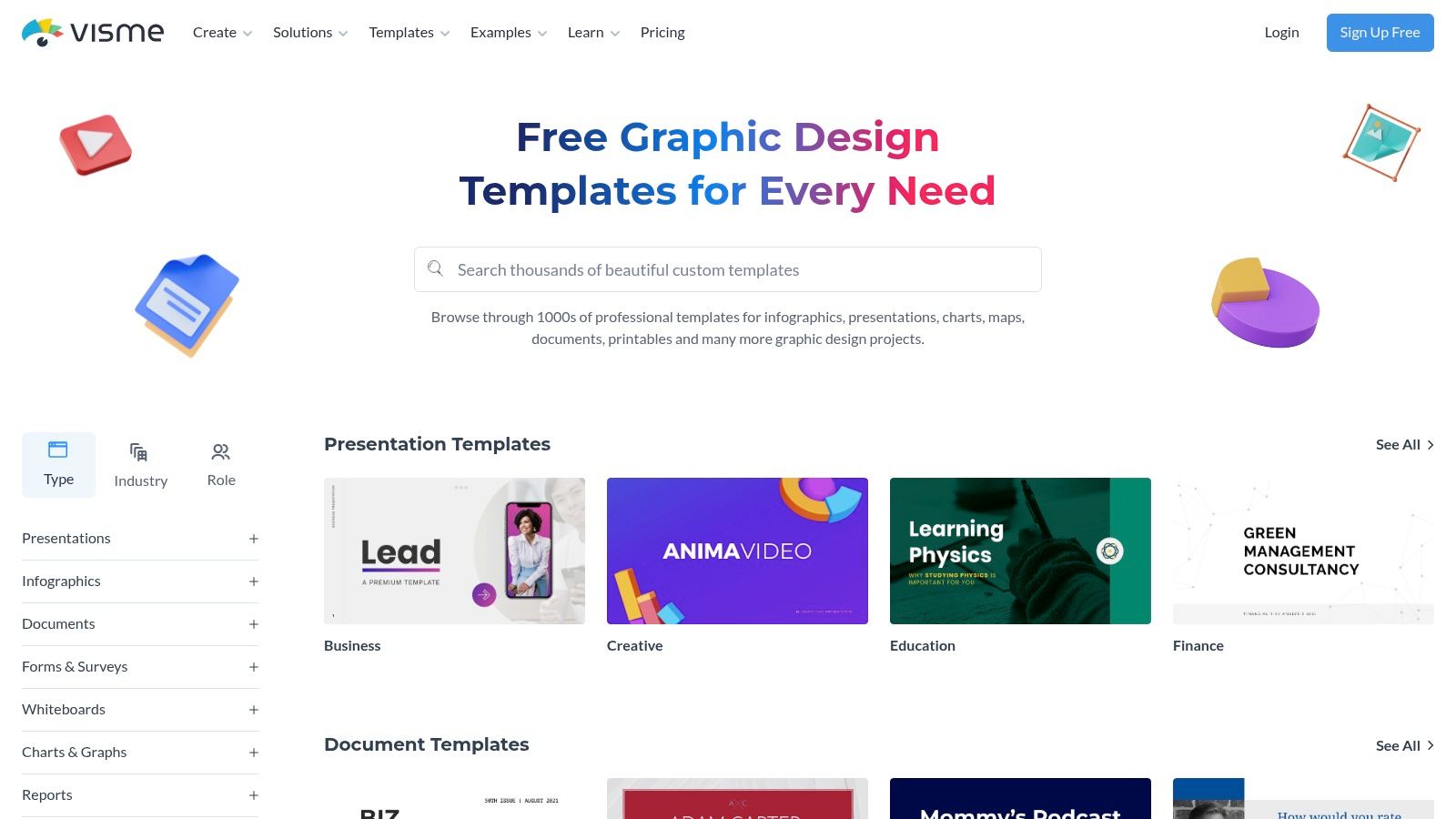
    9. Visme

    Visme is a powerful visual content platform that excels at creating interactive and animated lead magnets. While it offers standard formats like ebooks and checklists, its unique strength is in producing engaging, web-viewable content that goes beyond a static PDF. This makes it an excellent choice for brands wanting a more dynamic lead magnet template that captures attention.

    Visme

    The platform is designed for creating presentations, infographics, and reports, but these capabilities translate perfectly to lead magnets. You can embed videos, add animations, or create interactive flipbooks that provide a richer user experience directly in the browser. This approach is particularly effective for SaaS companies demonstrating features or e-commerce brands showcasing product lookbooks. The focus on interactive elements can significantly improve the perceived value and overall user experience of your lead magnet.

    Key Features & Implementation Tips

    Visme stands out by enabling marketers to build lead magnets that feel more like micro-websites than simple documents.

    • Interactive Outputs: Export your creations as HTML5 to embed them directly on a landing page or share them via a link. This allows for animations, clickable pop-ups, and embedded media.
    • Data Visualization Tools: Easily add professional charts, graphs, and maps to your lead magnets to present data in a compelling way.
    • Variety of Formats: Beyond PDFs, you can export your designs as high-resolution images (JPG/PNG) or even as animated GIFs and videos.

    Practical Tip: Use the “Flipbook” effect on your multi-page ebook template. This creates a realistic page-turning animation that is far more engaging than scrolling through a standard PDF, making your content feel more premium.

    Pricing and Access

    • Basic: The free plan offers limited templates, storage, and includes Visme branding on all projects.
    • Starter: Starts at $29/month (billed monthly) and removes branding, adds more templates, and unlocks PDF/JPG/PNG downloads.
    • Pro: Starts at $59/month (billed monthly) and includes full download options (including HTML5), brand kit features, and advanced analytics.

    Website: https://www.visme.co/templates

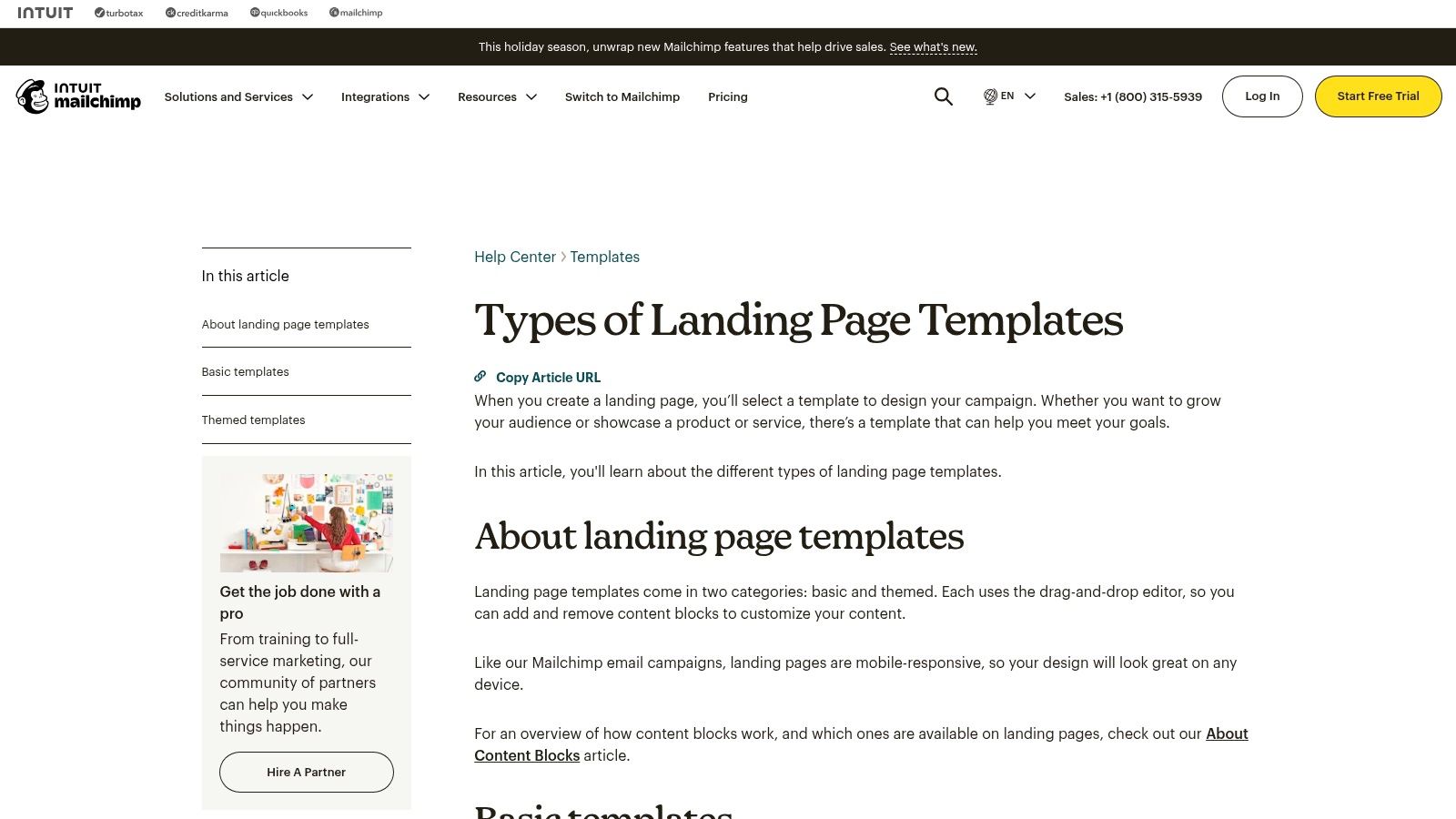
    10. Mailchimp (Landing Page Templates)

    While known primarily for email marketing, Mailchimp offers a powerful, integrated solution for deploying lead magnets through its free landing page builder. This is perfect for marketers who want a seamless system where a user signs up on a dedicated page and is immediately added to an email workflow to receive their requested resource. Instead of just a design tool, Mailchimp provides the complete capture-and-deliver mechanism.

    Mailchimp (Landing Page Templates)

    The platform’s strength is its direct integration with email automation. You can use a pre-built lead magnet template for your landing page, connect it to a specific audience, and automatically tag new subscribers based on which resource they downloaded. This functionality is crucial for segmenting your audience and sending targeted follow-up campaigns, turning a simple download into a long-term customer journey. The drag-and-drop editor is straightforward, making it quick to publish mobile-responsive opt-in pages.

    Key Features & Implementation Tips

    Mailchimp is ideal for those who need an all-in-one system for lead capture and nurturing without relying on third-party integrations.

    • Integrated Automation: Automatically trigger an email with your lead magnet attached the moment someone subscribes via your landing page.
    • Audience Tagging: Use tags to segment users who download specific lead magnets, allowing for highly relevant future marketing messages.
    • Simple Analytics: Track views and new contacts directly within your Mailchimp dashboard to measure the page’s effectiveness.

    Practical Tip: Create a dedicated “Welcome” automation for each lead magnet landing page. This allows you to deliver the promised PDF or link in the first email and then follow up with a series of related content to nurture the new lead. This is a proven strategy to boost conversions over time.

    Pricing and Access

    • Free Plan: Includes up to 500 contacts and allows you to publish landing pages, though Mailchimp branding will be present.
    • Paid Plans: Start at $13/month (Essentials) and remove branding, offer more advanced automation features, and provide larger contact and send limits.

    Website: https://mailchimp.com/help/types-landing-page-templates/

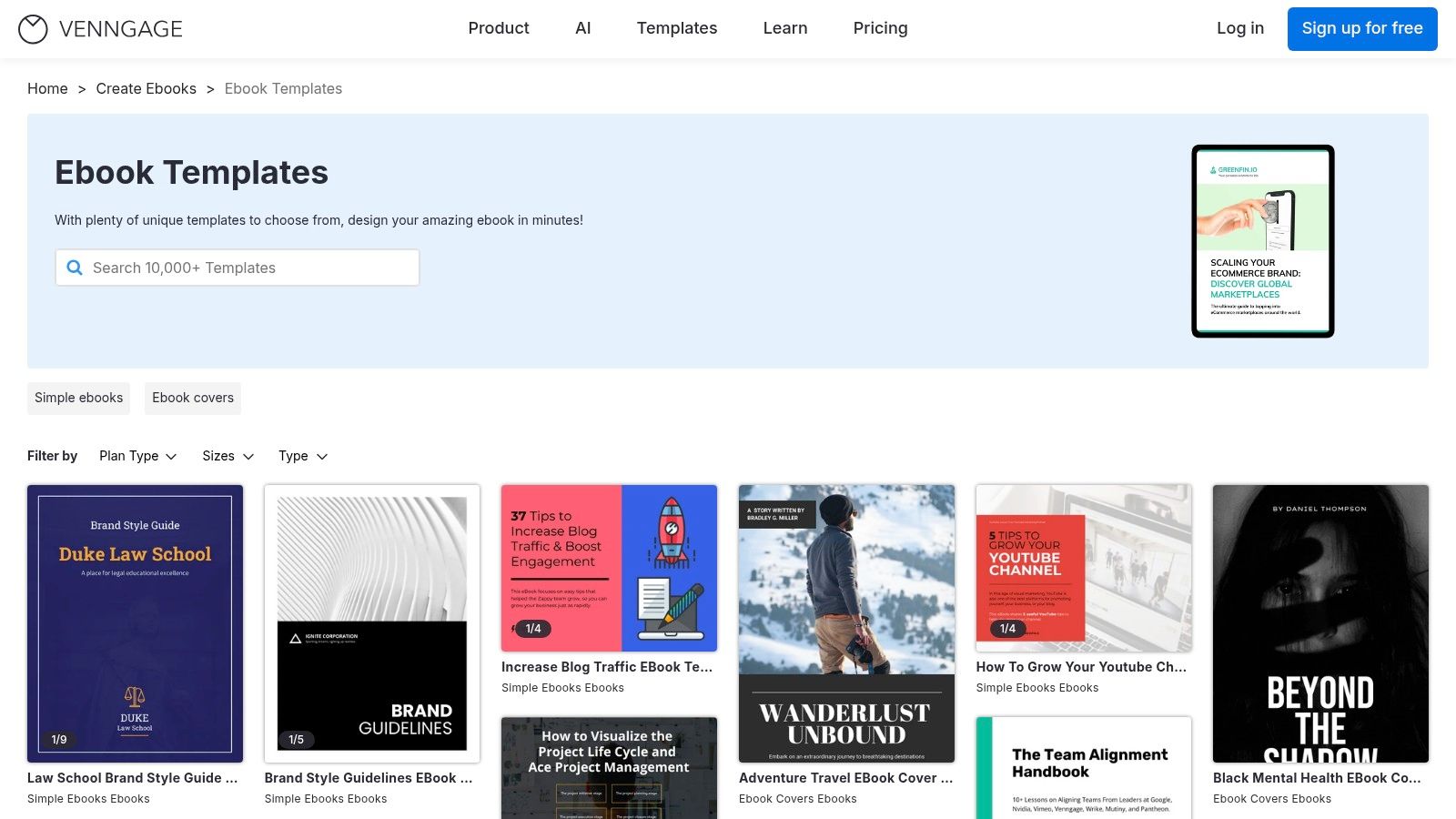
    11. Venngage

    Venngage is a powerful online design tool that specializes in data visualization and marketing-focused documents, making it a strong choice for creating professional ebooks and white papers. Its platform is particularly suited for non-designers who need to incorporate charts, graphs, and data into their content. Venngage provides a focused selection of templates designed specifically for lead generation, ensuring your final product is both informative and effective at capturing leads.

    Venngage

    The editor is intuitive and built around the needs of business communicators. Unlike more general design tools, Venngage’s templates are often structured around specific business use cases like marketing reports, project plans, and comprehensive guides. This focus makes it simpler to find a lead magnet template that aligns with B2B or data-driven content strategies, without getting lost in overly artistic options.

    Key Features & Implementation Tips

    Venngage excels at turning complex information into visually engaging and easy-to-digest lead magnets.

    • Marketing-Focused Templates: The library is curated for business needs, offering layouts for ebooks, white papers, and reports in standard US Letter/A4 sizes.
    • Built-in Charts & Graphs: Easily add and customize various charts by inputting your data directly, a standout feature for creating data-rich content.
    • AI-Assisted Editing: Use AI tools to help generate or refine text directly within your design, streamlining the content creation process.

    Practical Tip: Leverage the built-in chart tools to create a unique data-driven lead magnet. Compile industry statistics or proprietary data into a “State of the Industry” report or a data-backed white paper to offer exclusive value that competitors can’t easily replicate.

    Pricing and Access

    • Free Plan: Offers limited access to templates and features, with Venngage branding on exports.
    • Premium Plan: Starts at $19/month per user. Unlocks premium templates, high-quality exports (PNG HD, PDF), and more design elements.
    • Business Plan: Starts at $49/month per user. Adds brand kit functionality, team collaboration features, and multi-page PDF exporting.

    Website: https://venngage.com/templates/ebooks

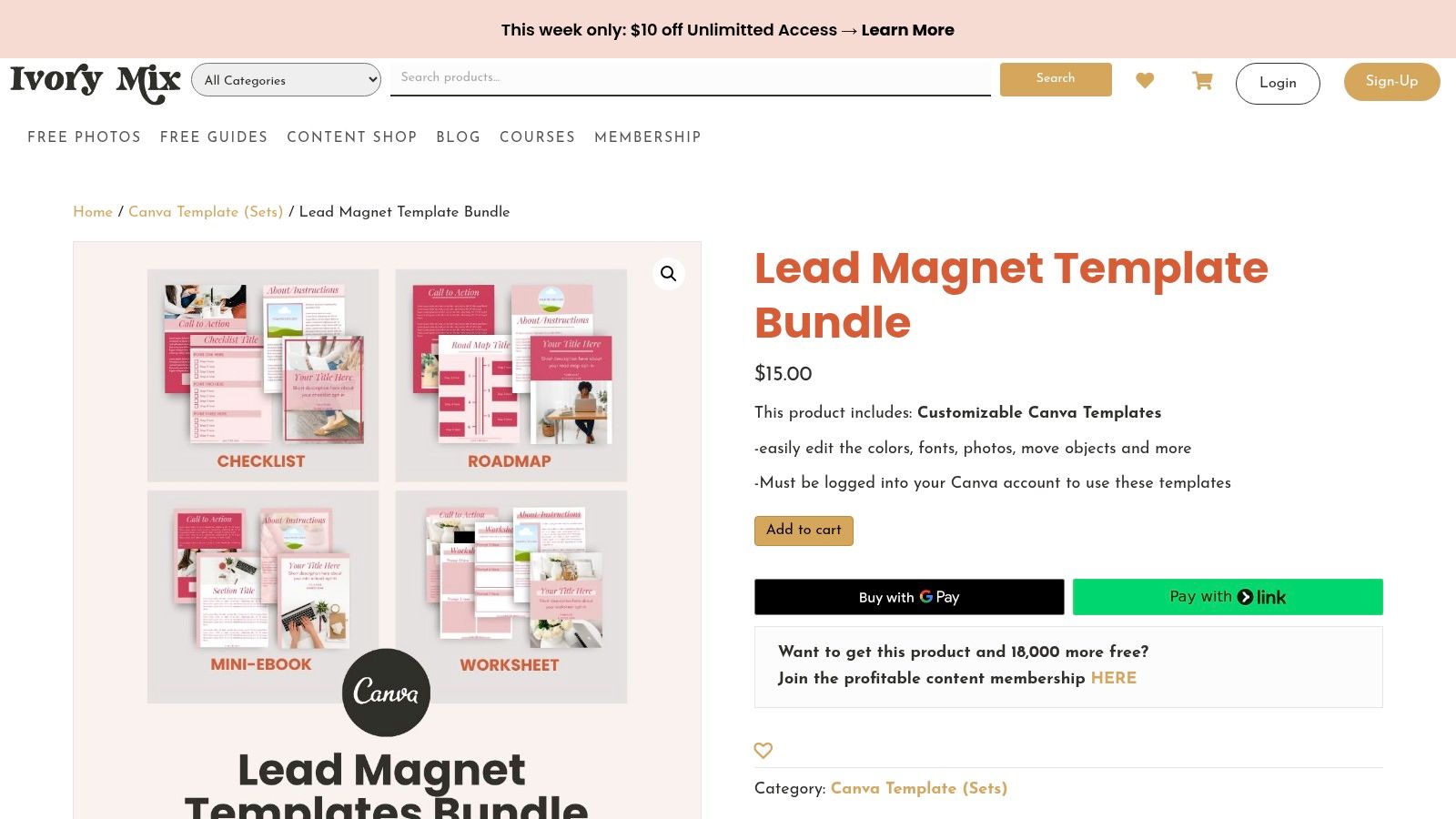
    12. Ivory Mix

    Ivory Mix is a specialized template shop and membership site designed for small business owners and content creators who rely heavily on Canva. It provides cohesive, ready-to-use lead magnet template bundles that include not just the core asset like an ebook or worksheet, but also promotional graphics. This bundled approach makes it a strong choice for marketers looking for an all-in-one solution to launch a new opt-in offer quickly.

    Ivory Mix

    The platform’s strength lies in its focus on practical, marketer-friendly layouts. Each template is built in Canva and comes with clear instructions, making the customization process straightforward even for beginners. While the catalog is smaller than massive marketplaces, the quality and thoughtful design of each lead magnet template ensure you can produce a professional-looking resource without needing design expertise.

    Key Features & Implementation Tips

    Ivory Mix excels by providing complete, aesthetically pleasing packages tailored for non-designers who need to move fast.

    • Cohesive Bundles: Templates often include multi-page ebooks, workbooks, checklists, and corresponding social media graphics to promote them.
    • Canva-Centric: All templates are fully editable in Canva, leveraging its user-friendly drag-and-drop interface for easy customization.
    • Mix-and-Match Pages: The templates are designed with versatile page layouts (sized for US Letter), allowing you to easily add, remove, or reorder pages to create a custom document.

    Practical Tip: When using an Ivory Mix bundle, start by customizing the “master” pages like the cover, introduction, and call-to-action page. Once these core elements reflect your brand, you can quickly assemble various lead magnets by duplicating and arranging the pre-designed content pages.

    Pricing and Access

    • Individual Templates: Bundles can be purchased a la carte, typically ranging from $27 to $67.
    • Ivory Mix Membership: Provides access to the entire library of templates, photos, and training resources for a recurring fee, offering better value for prolific content creators.

    Website: https://ivorymix.com/product/lead-magnet-template-bundle/

    Top 12 Lead Magnet Template Providers — Comparison

    Tool Core features UX / Quality Price & Value Target audience Unique selling point
    Canva Massive editable template library, drag‑and‑drop, export PDF/web ★★★★★ 🏆 💰 Free → Pro (brand kit, assets) 👥 Non‑designers & marketers ✨ Huge template ecosystem, Brand Kit
    Etsy Marketplace of instant digital template downloads, niche styles ★★★★☆ 💰 Low‑cost one‑offs 👥 Small businesses & niche buyers ✨ Unique, seller‑driven styles
    Creative Market Curated premium templates, commercial licensing, previews ★★★★★ 🏆 💰 Pay‑per‑item (higher avg price) 👥 Brands & designers ✨ Professional, brand‑ready packs
    Envato Elements Unlimited downloads subscription, multi‑format assets ★★★★☆ 💰 Subscription — great value for volume 👥 Agencies & frequent creators ✨ Unlimited downloads + commercial license
    Design Bundles Niche Canva packs and design bundles, frequent promos ★★★★☆ 💰 Affordable one‑offs, frequent deals 👥 Small businesses & marketers ✨ Clear pack contents, bargains
    Template.net Templates in Docs/Word/PSD/AI, online editing option ★★★☆☆ 💰 Some free + paid plans 👥 Office users & non‑designers ✨ Office‑format templates (Docs/Word)
    Gumroad Direct‑from‑creator template packs, instant delivery & updates ★★★★☆ 💰 Pay‑per‑item, often affordable 👥 Niche creators & buyers ✨ Direct seller support, unique packs
    Beacon Lead‑magnet builder, blog→lead conversion, opt‑in forms ★★★★★ 🏆 💰 Free tier → paid for advanced features 👥 Marketers & bloggers ✨ Purpose‑built lead‑gen workflows
    Visme Editable templates + interactive/animated outputs, flipbooks ★★★★☆ 💰 Freemium; paid for exports/advanced 👥 Visual marketers, web‑view lead magnets ✨ Interactive/HTML5 & animated outputs
    Mailchimp (Landing Pages) Lead‑gen landing pages, signup forms, automations ★★★★☆ 💰 Free start; paid for advanced automations 👥 Email marketers & small businesses ✨ Integrated delivery + automations
    Venngage Ebook/checklist templates, AI editing, charts & embeds ★★★★☆ 💰 Freemium → premium plans 👥 Marketers & data‑driven creators ✨ AI‑assist + built‑in charts
    Ivory Mix Canva‑ready lead magnet bundles, marketer tutorials ★★★★☆ 💰 Affordable bundles, membership option 👥 Small‑business marketers ✨ Marketer‑focused Canva packs & guides

    How to Deploy and Promote Your New Lead Magnet for Maximum Impact

    You’ve explored the landscape of high-converting lead magnet templates, from the design-forward options on Canva and Visme to the niche-specific treasures on Etsy and Ivory Mix. We’ve dissected everything from PDF checklists and swipe files to quiz templates and one-pagers, equipping you with the foundational assets to build a powerful lead generation engine. But possessing a professionally designed lead magnet template is only the first step. The real art lies in its strategic deployment and promotion, which ultimately determines whether it becomes a growth catalyst or simply a well-designed file sitting on your hard drive.

    The core takeaway is that value and visibility are a powerful combination. A lead magnet succeeds when it solves a specific, urgent problem for your target audience, and it thrives when it’s placed in their direct line of sight at the precise moment of need. Your choice of template and platform, as discussed, sets the stage for perceived value. Your deployment strategy brings that value to life.

    Key Takeaways and Actionable Next Steps

    To transform your newfound resources into tangible results, focus on these critical actions. This is where you move from planning to execution, ensuring your lead magnet template fulfills its ultimate purpose: converting visitors into leads.

    • Audit Your Audience’s Pain Points: Before customizing any template, revisit your ideal customer profile. What is their single most pressing challenge that your lead magnet can solve quickly? The best lead magnets offer an immediate win, not a comprehensive encyclopedia. A DTC brand might find a “10-Point Product Photography Checklist” far more effective than a generic “Guide to E-commerce.”
    • Match the Template to the Funnel Stage: A top-of-funnel visitor browsing blog posts will respond better to a low-commitment checklist or swipe file. A visitor on your pricing page, however, might be more inclined to download a detailed case study or ROI calculator. Align the lead magnet’s depth and format with the user’s intent at each stage of their journey.
    • Prioritize Strategic Placement: Don’t just bury your lead magnet on a dedicated landing page. Think contextually.
      • Blog Posts: Embed relevant CTAs within the content and use an exit-intent popup offering a related resource.
      • Homepage: A non-intrusive notification bar or a “hello bar” can capture attention without disrupting the user experience.
      • Product/Service Pages: Use slide-in CTAs that offer a buying guide or comparison sheet.
    • Craft Irresistible CTAs: Your call to action is the gateway to your lead magnet. Instead of a generic “Download Now,” use benefit-driven language. For example, change “Download Your Ebook” to “Get Your Free 5-Minute Website SEO Audit Checklist.” Highlight the speed and the specific outcome.

    Choosing Your Path Forward

    Selecting the right tool or platform from our list depends entirely on your team’s resources and goals.

    • For maximum creative control and brand alignment, platforms like Canva and Visme are unparalleled. They are ideal for in-house marketing teams that want to produce a high volume of unique, visually consistent assets.
    • For speed and variety, marketplaces such as Etsy, Creative Market, and Envato Elements provide a wealth of professionally designed, ready-to-go templates. These are perfect for startups, solo entrepreneurs, and agencies needing to launch campaigns quickly for multiple clients.
    • For an all-in-one solution that combines creation, hosting, and delivery, specialized tools like Beacon are a game-changer. This is the best route for teams who want to streamline their entire lead magnet workflow and minimize technical hurdles.

    Ultimately, the most effective strategy is to start small, deploy your chosen lead magnet template in one or two high-traffic locations, and meticulously track its performance. Measure your conversion rates, analyze the quality of leads generated, and don’t be afraid to iterate. The insights you gain from your first launch will be invaluable for optimizing future lead generation campaigns. Your journey from a simple template to a robust lead-generating machine begins now.


    Now that you have the perfect lead magnet, it’s time to put it in front of every visitor. LoudBar lets you deploy stunning, non-intrusive notification bars in seconds to promote your new checklist, guide, or quiz. Drive more downloads and capture more leads directly from your highest-traffic pages by visiting LoudBar.

  • Build a High-Converting Website Squeeze Page

    Build a High-Converting Website Squeeze Page

    Think of a website squeeze page as a landing page that’s been stripped down to its absolute essential purpose: to capture a visitor’s email address. It’s not a jack-of-all-trades page; it’s a specialist. The whole idea is to offer something so valuable in return—a free guide, a checklist, a discount—that visitors are more than happy to trade their email for it.

    Why a Squeeze Page Is Your Secret Weapon

    A person's hands holding a tablet displaying a lead capture form, symbolizing a website squeeze page.

    Let’s use an analogy. Your homepage is like a busy department store. There are dozens of aisles, countless products, and signs everywhere pulling for attention. Visitors can easily wander, get distracted, and walk out without a second thought.

    A squeeze page, in contrast, is like a pop-up shop with one amazing item in the window and a single door. Its job isn’t to show off everything you do; it’s to start one specific, valuable conversation.

    This intense focus is precisely what makes it so effective. By stripping away navigation menus, sidebars, and other competing calls-to-action, you create a clear, unobstructed path to one single action: signing up. This direct approach is a powerhouse for generating leads.

    The Power of a Singular Goal

    The core mission of a squeeze page is capturing a visitor’s contact information, which is why it’s a cornerstone of any good strategies for building an email list. You stop hoping visitors will stumble upon your newsletter signup form in the footer and instead present them with a clear, compelling value exchange right upfront.

    A squeeze page trades a valuable asset (like an ebook or a webinar seat) for the visitor’s email address. It’s a direct, transparent transaction that forms the foundation of a strong lead-nurturing relationship.

    This whole strategy is built on one simple truth: your email list is one of the most powerful assets your business can own. It’s a direct line to people who have already shown interest, allowing you to build trust and guide them toward a sale when the time is right.

    While a general landing page might have different goals, their average conversion rate hovers around 6.6%. A well-executed squeeze page, however, often blows past that number simply because it’s so hyper-focused.

    Squeeze Page vs Homepage vs Landing Page At a Glance

    To really get it, let’s quickly compare these three common page types. They all have different jobs to do.

    Page Type Primary Goal Number of Links Main Focus
    Squeeze Page Capture an email address One (the sign-up button) Lead Generation
    Landing Page Drive a specific action (sale, demo, etc.) One or a few, all for the same goal Conversion
    Homepage Introduce the brand & guide visitors Many Navigation & Exploration

    See the difference? The squeeze page is the most specialized of the three, designed with ruthless efficiency to do one thing and one thing only.

    The Anatomy of a Squeeze Page That Actually Converts

    A great squeeze page isn’t just a random assortment of text and buttons. It’s a finely tuned machine, with every single piece working toward one goal: getting that sign-up. When all the parts click into place, the experience for the visitor is seamless. It feels less like a hard sell and more like a generous offer they can’t refuse.

    Think of it as a puzzle. Each component has to fit perfectly to create the full, persuasive picture.

    An illustrated breakdown of a website squeeze page's core components: headline, copy, lead magnet, opt-in form, and CTA.

    Let’s break down the non-negotiable building blocks you’ll need to turn visitors into valuable leads.

    1. A Magnetic Headline

    You’ve got about three seconds. That’s it. Your headline is the first thing people see, and in that tiny window, it has to grab their attention and answer their unspoken question: “What’s in it for me?”

    A powerful headline is never vague. It’s crystal clear, focused on a benefit, and speaks directly to a problem your visitor is desperate to solve. For instance, “Sign Up for Our Newsletter” is weak. It does nothing.

    But “Unlock the 5 Secrets to Doubling Your Website Traffic in 30 Days“—now that gets a click. It promises a specific, highly desirable result, making it infinitely more compelling.

    2. An Irresistible Lead Magnet

    This is the core of the deal. The lead magnet is the valuable thing you’re offering in exchange for their contact info. This isn’t just a gimmick; it’s your first chance to prove your worth and show them a sample of the value you bring to the table. A truly effective lead magnet solves a real, nagging problem for your ideal customer.

    Some of the best-performing lead magnets are:

    • Checklists or Cheatsheets: Simple, actionable guides that make a complicated process feel easy.
    • Ebooks or Guides: Deeper dives that position you as an expert and offer comprehensive answers.
    • Webinar Access: An exclusive chance to learn from you or another expert live, which creates urgency.
    • Discount Codes: A straight-up monetary incentive that works like a charm for e-commerce brands.

    The trick is to offer something so genuinely useful that your visitors feel like they’re getting the better end of the bargain.

    3. Benefit-Driven Copy

    Keep your copy short, sweet, and powerful. This is not the place for your company’s life story. You need to relentlessly focus on the benefits for the user. What transformation will they experience after they get your lead magnet?

    Use short paragraphs and bullet points to make the value pop off the page. People scan, they don’t read.

    Your goal is to get visitors to enter their contact info, not show off your entire résumé. The text and visual elements on your squeeze page should serve the single purpose of convincing visitors to fill out your form.

    Talk like your audience talks. It builds an instant connection and shows them you truly get their struggles.

    4. A Simple and Obvious Opt-In Form

    Don’t make people jump through hoops. Your form should be dead simple and create as little friction as possible. In most cases, all you need is an email address. Seriously. Every extra field you add is another reason for someone to give up and leave.

    And please, make the form easy to find. Place it front and center so they can’t possibly miss it.

    5. A Strong Call to Action (CTA)

    Finally, the CTA button. This is your closer. It needs to tell the visitor exactly what to do next using clear, action-oriented language. “Submit” is boring and uninspired.

    Instead, try something that reinforces the value they’re about to receive, like “Get My Free Guide Now!” or “Send Me the Discount!” Make that button stand out with a bold, contrasting color that draws the eye and begs to be clicked.

    Design and Copywriting for Maximum Impact

    Just throwing the right elements onto a page isn’t enough. The real secret to a high-converting website squeeze page is the seamless dance between design and copy. It’s about creating an experience so persuasive and intuitive that saying “yes” feels like the most natural thing in the world.

    Think of it as a focused conversation. Your design sets the stage, making the visitor feel at ease and directing their attention. Your copy is the voice in that conversation, building rapport and making a compelling case. When they work together perfectly, conversions just happen.

    A split-screen image showing a well-designed website squeeze page on one side and compelling copywriting on the other, symbolizing their harmony.

    Guiding the Eye with Smart Design

    A great squeeze page design is so effective it’s almost invisible. It doesn’t shout for attention; it subtly steers a visitor’s gaze right where you want it to go—the form and the call-to-action button. This isn’t luck; it’s smart, strategic thinking.

    Here’s how you can make your design work for you:

    • Embrace Whitespace: Don’t be afraid of empty space. Crowding your page with text and images just creates noise. Generous whitespace makes your page feel clean and professional, allowing your headline and CTA to truly stand out. It gives your message room to breathe.
    • Create a Clear Visual Hierarchy: Use size, color, and placement to tell visitors what’s most important. Your headline should be the biggest, boldest thing on the page. Your CTA button needs a contrasting color that practically begs to be clicked.
    • Kill All Distractions: This is the cardinal rule. A true squeeze page has zero navigation links, no footer, and no social media buttons. Every single link that isn’t your submit button is a potential leak, draining away your hard-earned traffic.

    Writing Copy That Connects and Converts

    Your copy isn’t just there to describe your lead magnet. It’s there to sell a solution—a transformation. You need to speak directly to your visitor’s biggest headaches and deepest desires, using words they would use themselves. The goal is an instant “Aha!” moment where they think, “Finally, someone gets it.”

    A squeeze page trades a valuable asset for a visitor’s email address. Your design and copy must work in perfect harmony to make that trade feel like an incredible deal for the user, removing any hesitation.

    When it comes to copy, less is almost always more. Research actually shows that shorter landing pages can outperform longer ones by 13.5%. Every word has a job to do, so be ruthless in your editing. If you’re curious about the data, you can dig into the full research on landing page statistics.

    Using Psychological Triggers

    To really crank up your conversion rate, you can tap into some powerful, time-tested psychological principles. These aren’t sneaky tricks; they’re just ways of framing your offer that align with how people naturally make decisions.

    • Urgency: Phrases like “Offer ends Friday!” or “Limited spots available” create a sense of FOMO (fear of missing out). It nudges people to act now instead of putting it off for later.
    • Scarcity: “Only 50 free guides left” makes your offer feel more exclusive and valuable. When something is in short supply, we instinctively want it more.
    • Social Proof: Nothing builds trust faster than seeing that other people are already on board. Adding a couple of short testimonials or logos from recognizable clients can dramatically reduce a visitor’s hesitation.

    By blending these design and copywriting tactics, you’re not just building a webpage; you’re building a finely-tuned conversion machine. Of course, there are always more advanced techniques to explore, and you can learn more by checking out our other guides on website engagement.

    Let’s See Some Squeeze Pages in the Wild

    Reading about the theory is one thing, but seeing it in action is where the lightbulbs really go off. To get a feel for what a great website squeeze page looks like, we need to look at real-world examples that are actively turning browsers into leads.

    By breaking down what successful brands are doing, you can borrow ideas and get inspired for your own pages. Let’s look at a few common scenarios.

    The SaaS Sign-Up

    Software-as-a-Service (SaaS) companies live and die by the squeeze page. It’s often the front door for their free trials and product demos. Their whole game is about being crystal clear, showing off who trusts them, and getting the value proposition across in seconds. They know their audience is short on time and needs to see the “what’s in it for me” right away.

    • The Offer: Usually a free trial or a live demo.
    • The Headline: Always focused on the benefit, like “Start Building Better Reports in Minutes.”
    • Key Elements: You’ll almost always see very few form fields (sometimes just an email), logos from well-known customers to build instant trust, and one big, can’t-miss call-to-action button.

    This collection of landing pages shows just how focused these designs are.

    Notice how different they all look, yet they share that same laser focus. Everything on the page points you toward one single action, with zero clutter to get in the way.

    The E-commerce Discount Capture

    For an online store, a squeeze page is often the very first “hello.” The goal is straightforward: get an email address to grow their marketing list and, ideally, trigger a sale right then and there with a tempting offer. You’ll see these most often as pop-ups or full-screen entry pages.

    A squeeze page in e-commerce is a direct value exchange. The brand gets a valuable lead for future marketing, and the customer gets an instant discount. It’s a win-win that builds the foundation for a long-term relationship.

    This is such a powerful move because it catches people when their interest is at its peak—while they’re actively looking at products. The most common plays you’ll see are:

    1. Welcome Discount: Offering 10-15% off the first order is a time-tested classic. It gives people a little nudge to buy now and makes that first purchase feel like a no-brainer.
    2. Exclusive Access: “Be the first to know about new arrivals and sales.” This works because it makes shoppers feel like insiders and keeps them connected to the brand.
    3. Free Shipping Offer: Don’t underestimate the power of free shipping. For many shoppers, seeing that you’ll cover the shipping cost is an even bigger motivator than a percentage discount.

    The Content Upgrade

    Bloggers, coaches, and anyone in the business of information rely on squeeze pages to offer “content upgrades.” This is all about giving away a juicy piece of exclusive content—think an ebook, a handy checklist, or a spot in a webinar—in return for an email.

    This strategy does more than just build a list; it positions the brand as an expert. The copy on these pages isn’t just about the download itself, but about the transformation it provides. For instance, a page offering a free guide on financial planning won’t just say “Download our guide.” It’ll say something like, “Take Control of Your Financial Future Today.” That kind of aspirational language makes the offer feel incredibly valuable.

    Choosing Your Tools to Build a Squeeze Page

    Alright, you know what a squeeze page needs to do. Now comes the fun part: actually building it. The great news is you don’t need to be a coding guru to make this happen. There are plenty of tools out there that let you launch a professional-looking page fast, no matter your budget or tech skills.

    The right tool for you really boils down to what you’re already using for your website, how much control you want over the design, and where you’ll be sending all those new email subscribers. Let’s walk through the best options.

    Dedicated Landing Page Builders

    If you want the most straightforward, powerful path, dedicated landing page builders are your best bet. These platforms are purpose-built for one thing: creating pages that convert. They’re packed with features to make it as simple as possible.

    • Leadpages & Unbounce: These are the big names in the space. Think drag-and-drop simplicity, huge libraries of templates that are already proven to work, and built-in A/B testing. They connect with just about any email marketing service you can imagine.
    • Instapage: This one is a powerhouse, especially for teams. If you need deep analytics and tools for collaborating on page design, Instapage is worth a look.

    These are standalone services, so you’ll be paying a monthly fee. But honestly, the time you save and the lift in conversions usually make it a worthwhile investment.

    WordPress Plugins and Themes

    Running your site on WordPress? You’re in luck. There are tons of fantastic and affordable options available right inside your dashboard, making it incredibly convenient.

    A page builder plugin is usually the most flexible way to go.

    Elementor and Divi: These aren’t just simple page builders; they’re full-blown design frameworks for WordPress. You can build a squeeze page completely from scratch or grab one of their templates, all without writing a single line of code.

    You’ll also find that most email marketing services like Mailchimp or ConvertKit have their own WordPress plugins. These often let you create and pop simple landing pages and forms right into your existing site.

    All-in-One Marketing Platforms

    Many modern marketing platforms have realized it’s easier to bundle everything together. They often include a landing page builder alongside their email marketing, CRM, and automation tools, which keeps your whole operation in one place.

    Platforms like HubSpot and Kajabi are perfect examples. They might not have as many flashy templates as a dedicated builder like Leadpages, but their strength is how everything works together. When someone signs up on your squeeze page, their info automatically lands in your email list and kicks off your marketing funnels—no messy integrations required.

    This all-in-one approach is ideal for anyone looking to automate their lead nurturing from day one. And once your page is up and running, you need to make sure people see your offer. Understanding the benefits of attention-grabbing tools like LoudBar can give your most important messages the extra boost they need to get noticed.

    How to Test and Optimize Your Squeeze Page

    Getting your squeeze page live is a great start, but it’s just that—a start. The real gains come from what you do next: testing and refining. Think of yourself as a conversion detective, looking for clues and running experiments to uncover what truly motivates your visitors to act.

    A split-screen showing two versions of a squeeze page, with analytics data overlaid, illustrating A/B testing for optimization.

    This isn’t about throwing ideas at the wall and hoping something sticks. It’s about making smart, data-driven decisions that turn a decent page into an unstoppable lead-generation engine.

    Mastering the Art of A/B Testing

    Your most reliable tool for optimization is A/B testing (also called split testing). The idea is straightforward: you create two versions of your page, Version A and Version B, but you only change one single thing between them. Then, you show each version to different groups of visitors and see which one gets better results.

    The golden rule of A/B testing is to only change one variable at a time. If you swap out the headline and the button color, you’ll have no idea which change actually made the difference.

    Start by testing the elements that pack the biggest punch.

    • Your Headline: Does a direct, benefit-driven headline work better than one that piques curiosity?
    • Call-to-Action (CTA) Button: Try changing the text (“Get My Free Guide” vs. “Download Now”) or even just the color. You’d be surprised what a difference a color can make.
    • Images or Visuals: Does a photo of a person using your product outperform a clean graphic of your ebook cover?
    • Form Length: See what happens when you ask for just an email address compared to asking for a name and email. Does the conversion rate change?

    For a deeper dive into effective experimentation, there are some great guides on A/B testing for landing pages that can help.

    Key Metrics You Must Track

    You can’t fix what you don’t measure. Get comfortable in your analytics dashboard and keep a laser focus on the numbers that tell you the true story. The most important metric, hands down, is your conversion rate—the percentage of visitors who actually complete the form and sign up.

    Don’t forget about page speed, either. Every second matters. We’ve seen pages that load in just one second convert three times higher than pages that take five seconds to appear. In fact, every single second of delay can cause a staggering 7% reduction in conversions. That adds up fast.

    Keep a close watch on these numbers. They’re your roadmap to improvement. For more practical advice, check out our other posts on how to boost conversions.

    Got Questions About Squeeze Pages? We’ve Got Answers.

    Even after you’ve mapped out the perfect strategy, a few nagging questions can pop up when it’s time to actually build your squeeze page. Let’s tackle some of the most common ones head-on.

    How Long Should a Squeeze Page Be?

    Short. Really short.

    Think of it this way: your only job is to present a fantastic offer and make it incredibly easy for someone to say “yes.” Cut out everything else. Ideally, your visitor should see your killer headline, a quick list of benefits, and the sign-up form all in one glance—no scrolling required.

    Do I Really Need a Thank You Page?

    Yes, you absolutely do. A thank you page is more than just good manners; it’s a critical part of the user experience.

    It confirms that their submission went through, tells them what to expect next (like, “go check your inbox!”), and it’s a golden opportunity to deepen the relationship. You can use it to point them to your social media, offer a small upsell, or just share a bit more about your brand.

    Should My Squeeze Page Be Mobile-Friendly?

    That’s not even a question anymore—it’s a requirement. With so much traffic coming from phones, a clunky mobile experience is a conversion killer.

    In fact, mobile-optimized sites can see conversion rates 100% higher than pages that aren’t built for small screens. And considering that most mobile users will bounce if a page takes more than three seconds to load, you can’t afford to get this wrong. Check out some of the latest landing page performance data if you want to see just how much this matters.


    Ready to make sure your most important messages get seen? LoudBar helps you create unmissable, attention-grabbing notification bars that break through the noise and drive action.

    Start for free on LoudBar

  • Mastering Exit Intent Pop-Ups to Boost Conversions

    Mastering Exit Intent Pop-Ups to Boost Conversions

    Exit-intent pop-ups are your last, best chance to connect with a visitor right before they bounce. The tech behind them is designed to spot when someone’s mouse heads for the exit or back button. At that precise moment, it triggers a targeted message—maybe a special discount or a newsletter signup—to keep them on the page or, at the very least, capture their info for later.

    Understanding the Tech and Psychology Behind Exit-Intent Pop-Ups

    Illustration showing how exit intent pop-ups work on a website

    Ever been about to close a browser tab, only to have a perfectly timed offer appear out of nowhere? That’s an exit-intent pop-up doing its job. This isn’t a random annoyance; it’s a smart, digital safety net designed to catch visitors who are about to slip away for good.

    The technology is actually pretty straightforward. On a desktop, a script keeps an eye on the user’s mouse movements. When the cursor suddenly shoots up toward the top of the browser—where the tabs and close button live—it triggers the pop-up. It’s making an educated guess that the user is about to leave.

    Why This Moment Is So Powerful

    The real magic of exit-intent pop-ups is all in the timing. Unlike those pop-ups that jump out the second you land on a page, these wait until the visitor has already decided to go. At this point, you literally have nothing to lose and a potential customer to gain.

    This strategy plays on a few key psychological triggers:

    • Pattern Interrupt: The pop-up suddenly appears, breaking the user’s autopilot “close tab” action. It makes them stop and think for a second.
    • Fear of Missing Out (FOMO): A killer offer, like a “15% off, today only” discount, creates a sense of urgency. Suddenly, leaving feels like you’re missing out on a great deal.
    • Reciprocity: When you offer something valuable for free—a discount, a helpful guide, free shipping—it creates a subtle urge for the visitor to give something back, like their email address.

    The goal isn’t to annoy someone into staying. It’s to give them one last, compelling reason to reconsider leaving. You’re turning a lost visitor into a valuable lead or even a sale.

    To give you a quick idea of where these pop-ups shine, here’s a look at how different businesses put them to work.

    Exit Intent Pop-Up Use Cases at a Glance

    This table breaks down the most common and effective ways to use exit-intent pop-ups across different business models.

    Business Type Primary Goal Common Offer
    Ecommerce Reduce cart abandonment 10-15% discount, free shipping
    SaaS Capture leads Free trial, demo booking, ebook
    Content/Blog Build email list Newsletter signup, content upgrade
    B2B Services Generate qualified leads Case study, free consultation

    As you can see, the offer is always tailored to what a visitor in that specific context would find valuable at the moment they’re about to leave.

    Measuring the Impact of Exit Pop-Ups

    These things really do work. While an average conversion rate for a decent exit-intent pop-up is somewhere between 2% and 5%, a really well-targeted campaign can blow that out of the water.

    When the offer is compelling and speaks directly to what the user was looking at, I’ve seen businesses boost their email collection rates to 7% or even higher. That’s a lot of would-be bounces turned into valuable contacts.

    Ultimately, these pop-ups are a fantastic tool for improving your website engagement (https://blog.loudbar.co/tag/website-engagement/). To see what goes into a high-performing campaign, it’s worth checking out some examples of effective exit intent pop-ups to boost conversions. Once you start thinking about the user’s mindset as they’re heading for the door, you can craft messages that truly resonate, recover lost revenue, and build a stronger connection with your audience.

    Designing Pop-Ups That Actually Convert

    A screenshot of an OptinMonster exit-intent pop-up offering a discount on a website.

    Let’s be honest: the line between a pop-up that captures a lead and one that gets instantly closed is razor-thin. It all comes down to the design. This isn’t just about making it look pretty; it’s a careful mix of psychology, art, and conversion science to create something that feels less like an annoying interruption and more like a helpful, last-ditch offer.

    The first step is building immediate trust. Your pop-up has to look and feel like it belongs on your website. That means using the same fonts, brand colors, and overall design language. If it looks like a third-party ad, people will instinctively distrust it and close it without a second thought.

    Crafting a Magnetic Headline

    You have maybe three seconds. That’s it. Your headline is the most critical piece of copy on the entire pop-up, and its only job is to stop that visitor from leaving. Generic phrases like “Sign Up for Our Newsletter” are conversion killers.

    A great headline immediately answers the user’s unspoken question: “What’s in it for me?”

    • Weak Headline: “Join Our List”
    • Strong Headline: “Get 15% Off Your First Order”
    • Weak Headline: “Stay Updated”
    • Strong Headline: “Be the First to Know About New Drops”

    The goal here is to be direct and punchy. You’re asking for their email address, so you need to make the value exchange incredibly clear right from the start.

    Writing Benefit-Driven Copy and Microcopy

    Once the headline has done its job, the body copy and call-to-action (CTA) need to close the deal. Keep your main copy short and sweet—one or two sentences, max. This is your chance to reinforce the benefit you promised in the headline and maybe add a little urgency.

    For example, instead of a boring “Enter your email,” try something like, “Enter your email to unlock your exclusive discount.” This tiny change frames the action as a win for the user, not just a data-entry task for your benefit.

    The CTA button is where the action happens. Use strong, action-oriented verbs. Words like “Get,” “Claim,” “Unlock,” and “Reveal” are far more effective than a passive “Submit.” Don’t forget about color, either. Your CTA button should stand out with a contrasting color that naturally draws the eye.

    Key Takeaway: Treat every word on your pop-up as prime real estate. Use microcopy to guide the user, calm any hesitation, and make the benefit of converting feel both immediate and real.

    The Power of Visual Hierarchy and Imagery

    A wall of text is the fastest way to kill a pop-up’s effectiveness. You need to guide the user’s eye logically through the offer. A solid visual hierarchy does just that: headline first, then the specific offer, then the form field, and finally, the big, clickable CTA button.

    High-quality, relevant images can make a huge difference. If you’re an ecommerce store offering a discount, show a great shot of a best-selling product. If you’re a SaaS company offering a free template, show a polished graphic of what they’re getting. Visuals help people see the value, making the offer much more tempting.

    Remember, the design principles for exit-intent pop-ups aren’t isolated. They should work in harmony with your other on-site messaging tools. For a truly seamless experience, it’s a good idea to explore different ways to approach notification bar customization so your entire messaging strategy feels cohesive and well-planned.

    Crafting Offers That Actually Stop People from Leaving

    An image showing various compelling offers like discounts, free templates, and exclusive content displayed on a pop-up.

    You can have the most beautifully designed pop-up in the world, but without a genuinely compelling offer, it’s just a pretty box that people will close without a second thought. The offer is the real workhorse here—it’s the reason a visitor will pause, reconsider, and give you their attention.

    Think of it as a value exchange. You’re interrupting their exit, so you need to make it worth their while. A vague “Join our newsletter” just doesn’t have the same pull because it offers no immediate, tangible benefit. You have to give them something they want right now.

    Tailoring Offers for Ecommerce Conversions

    For online stores, the mission is crystal clear: prevent cart abandonment and clinch that sale. Your offers need to be direct, simple, and deliver that instant hit of gratification. One of the most common missteps I see is being too stingy; a 5% discount rarely moves the needle for someone already halfway out the door.

    Here are a few proven offers that get the job done in ecommerce:

    • Percentage-Based Discounts: It’s a classic for a reason. A solid 10-20% off is often the magic number that convinces a price-conscious shopper to pull the trigger.
    • Free Shipping: This is a psychological game-changer. Unexpected shipping costs are the #1 killer of conversions, so removing that barrier can be even more powerful than a discount.
    • Buy One, Get One (BOGO): A fantastic way to boost the perceived value of an order. It feels like a massive win for the customer and can help you move specific inventory.
    • Free Gift with Purchase: Tossing in a small, desirable bonus item makes the purchase feel more special and can create just enough delight to seal the deal.

    Context is everything. You wouldn’t show the same offer to someone who just landed on your homepage as you would to someone abandoning a $200 shopping cart. The latter needs a much more persuasive reason to stay.

    A great ecommerce offer doesn’t just cut the price. It resolves the customer’s final hesitation, whether that’s about cost, shipping, or getting the best possible value.

    High-Value Lead Magnets for SaaS and B2B

    In the SaaS and B2B world, the game shifts from immediate sales to long-term lead generation. Here, the goal is to capture an email address by offering something so valuable, so useful, that a visitor is happy to make the trade. We call these lead magnets.

    Your pop-up is essentially a promise. You’re not just begging for an email; you’re offering a concrete solution to a problem they’re actively researching on your site. For a deeper look at aligning your messaging with what users are actually looking for, exploring the different sides of personalized marketing can be a huge help.

    These are some of the most effective lead magnets I’ve seen work time and again:

    • Exclusive Case Studies: Show, don’t just tell. A detailed case study provides powerful social proof and demonstrates exactly how you solve real-world problems.
    • Free Templates or Checklists: Give them a tool that makes their job easier. Think “Content Calendar Template” or “New Hire Onboarding Checklist”—resources that deliver immediate value.
    • Webinar Invitations: If someone is reading a blog post on a specific topic, offering a pop-up invitation to a live webinar on that exact subject is incredibly relevant and effective.
    • Free Trial Extensions: Catching a user on your pricing page? An offer to extend their free trial from 14 to 30 days can be the perfect nudge to get them to sign up.

    The secret sauce here is specificity. A generic “Download Our Ebook” is weak. “Download Our 2024 Report on SaaS Churn Benchmarks” is powerful. The more your offer aligns with the content on the page, the more you show visitors that you understand their challenges—and the higher your conversion rates will be.

    How to Implement and Test Your Pop-Up Strategy

    A person A/B testing two different pop-up designs on a computer screen.

    Alright, you’ve got a great idea for an exit-intent pop-up. Now, how do you get it from a concept into a live, converting asset on your site? It’s not just about flipping a switch; it’s about making smart choices with your tools, your targeting, and your testing to make sure your efforts actually move the needle.

    Thankfully, modern tools have made this whole process incredibly straightforward.

    Your first big decision is what platform to use. You can go one of two ways here: a dedicated, best-in-class tool that specializes in pop-ups and on-site messaging, or the built-in pop-up builder that might already be part of your email service provider or CRM.

    Dedicated tools like OptinMonster or Sleeknote often give you much deeper analytics and more granular targeting options—a huge plus for optimization. On the other hand, using a feature that’s already in your marketing suite keeps your tech stack lean and all your data under one roof. There’s no single right answer; it really comes down to your budget, your team’s comfort level, and how complex you want to get with your campaigns.

    Configuring Smart Targeting and Display Rules

    Once you have your tool picked out, it’s time to define the “when” and “where” for your pop-up. Just blasting the same generic offer to every single visitor is a surefire way to annoy people and tank your conversion rates. This is where you get strategic.

    Smart targeting rules are what turn a generic interruption into a genuinely helpful, personalized message.

    Think about who should see your offer. You can (and should) set rules based on all sorts of visitor behavior.

    • Visitor Type: Is this for first-time visitors only? Or maybe it’s a loyalty offer meant for returning customers. Showing a “15% off your first order” pop-up to someone on their tenth purchase just feels clumsy.
    • Page-Level Targeting: Match the offer to the context. Someone leaving a specific product page could see an offer directly related to that item. Someone leaving a blog post? Offer them a related checklist or an ebook on the same topic.
    • Referral Source: You can even get fancy and tailor messages based on where people came from. If a visitor clicked through from a paid Instagram ad, your pop-up can echo the language and offer from that ad, creating a really smooth and consistent experience.

    Another critical piece of the puzzle is the frequency cap. This little setting controls how often a single person sees your pop-up. Hitting them with it on every single visit is just plain intrusive. A good starting point is to set it so that if a user closes the pop-up, they won’t see it again for at least 7 to 14 days. This respects their decision while leaving the door open for later.

    Your targeting rules are the brain of your exit-intent strategy. The goal is to make the pop-up feel like a helpful, timely suggestion rather than a disruptive, random advertisement.

    A Practical Approach to A/B Testing Your Pop-Ups

    Getting your first pop-up live is just the beginning. The real magic—and the real growth—comes from testing. You simply can’t know what works best until you let your audience’s behavior give you the answer. This is where A/B testing (or split testing) comes in.

    The golden rule of A/B testing is to change only one element at a time. If you change the headline, the image, and the button color all at once, you’ll have no idea which change actually made a difference.

    I always recommend starting with the highest-impact elements first. Here’s a simple testing roadmap I’ve used countless times:

    1. Test the Offer: This is the biggest lever you can pull. Pit a 15% discount against free shipping. Or for a SaaS site, test a free template against an exclusive case study. The value proposition itself is almost always the most significant factor.
    2. Test the Headline: Once you have a winning offer, work on the messaging. Try a clear, benefit-driven headline like “Unlock Free Shipping On Your Order” against something that creates urgency, like “Your Free Shipping Offer Expires Soon.”
    3. Test the Call-to-Action (CTA): With a solid offer and headline, it’s time to fine-tune the final click. Does “Claim My Discount” outperform “Get 15% Off Now”? You’d be surprised how much small word changes can impact behavior.

    When you’re looking at the results, don’t just fixate on the conversion rate. A pop-up with a bigger discount might convert more people, but does it kill your profit margin? Always look at the bigger picture. Continuous, methodical testing is what will turn a decent exit-intent pop-up into a serious revenue driver.

    Avoiding Common Pitfalls for a Better User Experience

    An exit-intent pop-up can be your last chance to make a good impression. Get it wrong, and you don’t just lose a potential lead—you might lose a visitor for good. A poorly timed or badly designed pop-up feels aggressive and can sour a person’s entire experience with your brand.

    The goal is always to re-engage, not to annoy. Let’s walk through some of the most common mistakes I see people make and how you can steer clear of them.

    Don’t Treat Mobile Like a Tiny Desktop

    The single biggest misstep is using a one-size-fits-all approach. What works on a desktop just doesn’t fly on mobile. On a desktop, the technology is pretty slick; it tracks the mouse cursor heading for the back button or the ‘X’ to close the tab. Simple enough.

    But mobile is a completely different ballgame. There’s no cursor.

    Instead, mobile exit-intent has to rely on other signals. Things like a user suddenly scrolling up the page (a good sign they’re about to tap the URL bar) or hitting the browser’s back button can act as a trigger. Some of the more sophisticated tools can even pick up on when a user is about to switch browser tabs.

    This is why just shrinking your desktop pop-up for a mobile screen is a recipe for disaster. It almost always leads to text that’s impossible to read and buttons you can’t tap without zooming in. You need to think mobile-first. That means large, clear fonts and, most importantly, a close button that’s easy to see and even easier to tap.

    Never, ever make a user hunt for the ‘X’ to close your pop-up. Hiding the close button or making it a tiny, transparent pixel is a shady tactic that absolutely destroys trust. Make it as easy for them to close the pop-up as it is to leave your site.

    Remember, you want to be helpful, not hostile. A clear exit path respects your visitor’s choice and keeps the interaction from feeling like you’ve trapped them.

    Stop Using Shady Language and Dark Patterns

    Another trap I see brands fall into is using manipulative language, sometimes called “confirmshaming.” You know the ones. The main call-to-action is an amazing offer, but the opt-out link is phrased to make you feel stupid or cheap for saying no.

    For example:

    • The Offer: “Yes! Get 15% Off My First Order”
    • The Shady Opt-Out: “No thanks, I enjoy paying full price.”

    This stuff might trick a few people into clicking, but it comes at a huge cost to your brand’s reputation. It leaves a bad taste and feels disrespectful. Always stick to clear, straightforward language. Your pop-up should win people over with genuine value, not by pressuring them. A simple “No, thanks” or “Maybe next time” is all you need.

    Don’t Ignore Privacy and Compliance

    In a world where everyone is (rightfully) concerned about their data, you simply can’t afford to ignore privacy laws. Regulations like Europe’s General Data Protection Regulation (GDPR) have very specific rules about how you can collect and handle personal information.

    If your exit-intent pop-up is asking for an email, you have to be compliant. This generally boils down to a few key things:

    • Get Clear Consent: Tell people exactly what they’re signing up for. No surprises.
    • Provide an Easy Opt-Out: Make it simple for them to unsubscribe later on.
    • Link to Your Privacy Policy: Always include a link so people can understand how you handle their data.

    Getting this wrong can lead to hefty fines, but the bigger issue is the loss of customer trust. Being transparent isn’t just about ticking a legal box; it’s a core part of building an honest, lasting relationship with your audience.

    To help you spot these issues in your own strategy, here’s a quick-reference table of common mistakes and how to get them right.

    Common Exit Intent Pop-Up Mistakes and How to Fix Them

    Mistake Impact Solution
    One-Size-Fits-All Design Looks broken on mobile, causing frustration and high bounce rates. Design mobile-first with large, tappable elements and legible text.
    Hidden or Tiny Close Button Traps the user, creating a negative brand experience and eroding trust. Make the ‘X’ or close button prominent, obvious, and easy to tap.
    “Confirmshaming” Copy Manipulates users and damages brand reputation, even if it gets a click. Use neutral, respectful language for opt-out links, like “No, thank you.”
    Ignoring Legal Compliance Risks significant fines (e.g., under GDPR) and alienates privacy-conscious users. Include clear consent language and a prominent link to your privacy policy.
    Triggering Too Early Interrupts the user before they’ve had a chance to engage, feeling intrusive. Test and refine your triggers. Trigger on true exit intent, not just scrolling.

    Ultimately, a great exit-intent strategy is built on a foundation of respect for the user. By sidestepping these common pitfalls, you can make sure your pop-ups build genuine goodwill while still doing their job of capturing valuable leads.

    Answering Your Lingering Questions About Exit-Intent Pop-ups

    Even with the best strategy, it’s natural to have a few questions before you go all-in on exit-intent pop-ups. I’ve heard them all over the years. Let’s walk through some of the most common concerns I see from marketers so you can launch your next campaign with total confidence.

    We’ll tackle the tricky topics—like how they work on phones, whether they’ll get you in trouble with Google, and how to design a form that actually converts.

    Do Exit Intent Pop-Ups Work on Mobile Devices?

    They do, but it’s a completely different ballgame. On a desktop, the tech is simple: it watches for the user’s mouse to bolt towards the top of the screen. Easy. But on mobile, there’s no cursor to track. The triggers have to be much cleverer.

    This is a crucial point because if you just try to shrink your desktop pop-up for mobile, you’re setting yourself up for failure. It just won’t work and will frustrate users.

    Instead, mobile exit-intent technology relies on specific user behaviors. Common triggers include:

    • Rapid Scrolling Up: A user quickly flicking their thumb to scroll back up the page is a strong signal they’re about to hit the back button or type a new URL.
    • Back Button Taps: Some of the more sophisticated tools can actually detect when a visitor taps the browser’s back button, giving you one last chance to make an offer.
    • Tab Switching Attempts: On some mobile browsers, the tech can sense when someone is about to jump to another open tab.

    The takeaway here is simple: you absolutely need a pop-up tool with dedicated, mobile-specific triggers and designs. A shrunken desktop pop-up isn’t just ineffective; it creates a terrible user experience.

    Will Exit Intent Pop-Ups Hurt My SEO Ranking?

    This is probably the number one question I get asked, and I get why. The short answer is no, as long as you do it right.

    Google’s real beef is with what they call “intrusive interstitials.” These are the annoying pop-ups that block the entire screen the second you land on a page from a search result, especially on a phone. That’s a bad user experience, and Google will penalize it.

    But exit-intent pop-ups are different. They show up at the end of the user’s visit, not the beginning. They’re triggered by the user’s own action to leave, which means they’ve already had a chance to see your content.

    The golden rule is to prioritize the user experience. As long as your pop-up offers real value and has a clear, easy-to-find close button, it’s highly unlikely to cause any SEO issues.

    Think about it from Google’s perspective. A helpful, last-second offer for a discount isn’t the same as an aggressive, content-blocking ad.

    How Many Fields Should I Include in My Pop-Up Form?

    Keep it simple. Fewer is almost always better. An exit intent pop-up is your last-ditch effort to get a conversion, so you need to make it as frictionless as possible. Every single field you add is another reason for someone to close the window and leave for good.

    For most goals, like signing up for a newsletter or getting a coupon code, just ask for an email address. That’s it. It’s the lowest-commitment ask you can make.

    If you’re convinced you need a first name for personalization, you need to prove it. Run an A/B test with a single-field form against your two-field version. More often than not, you’ll find the conversion drop-off from that extra field just isn’t worth the data. Only ask for what is absolutely critical for the very next step in your follow-up.


    Ready to turn those departing visitors into loyal customers? LoudBar helps you create unmissable, conversion-focused notification bars that grab attention without being intrusive. Start for free and see the difference. Get LoudBar today.